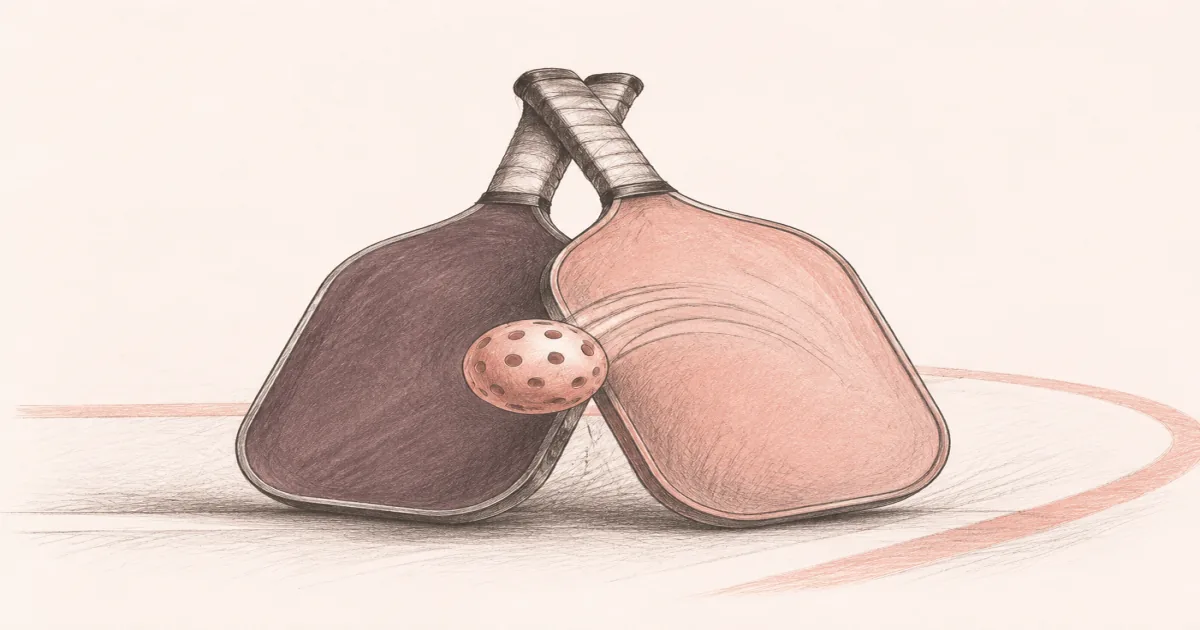
Best Pickleball Paddle for Doubles (2026): Control and Power Picks
Paddles
Doubles rewards soft hands and quick blocks. These three paddles fit the kitchen lane, with notes on 14mm vs 16mm and what most players use on open play.
Our picks
Pickleball doubles is mostly a kitchen game. You and your partner trade resets, blocks, and dinks while one player keeps the third shot low. The paddle job is different from singles. Reach and big baseline drives matter less. Soft hands, a forgiving face, and quick exchanges at the non-volley zone matter more.
Doubles is one use case, and the pickleball paddle section covers the other shapes and play styles.
For an all-court shortlist before you specialize, use the best pickleball paddles pillar. The 14mm vs 16mm breakdown lives in best 14mm pickleball paddle and best 16mm pickleball paddle. This page stays doubles-specific: control, power when you want it, and what most players actually carry.
What doubles changes about the paddle job
If your week is mostly doubles, do not force an elongated power blade. If you play ladder singles often, the reach tradeoff is worth it. Most club players benefit from a wider 16mm paddle that stays quiet on soft shots and still pops when you swing.
Quick comparison
Top control pick: JOOLA Vision 16mm
The JOOLA Vision Pickleball Paddle (16mm) is the doubles pick when kitchen touch and resets matter more than free pop. The Carbon Grip Surface adds spin on dinks without losing the dwell you want on blocks. The 16mm polypropylene core forgives late contact in hand battles.
The Aero Curve head shape keeps a forgiving sweet spot for kitchen blocks. Most recreational doubles players find the shape easier to live with than a narrow elongated face.
Who it is for: Soft-game first teams, intermediates cleaning up long misses, and any doubles pair that loses points on pop-up dinks.
Pros
- Carbon Grip Surface adds spin without harsh trampoline
- 16mm core forgives late contact in hand battles
- Aero Curve shape keeps a usable sweet spot
- Plays well with a fresh overgrip
Cons
- Stock count runs thin, confirm the listing before ordering
- Put-aways take more of your own swing pace
- Less brand cachet at open play than Selkirk or signature JOOLA lines
Shop: JOOLA Vision 16mm on Amazon
Top power pick: JOOLA Perseus 16mm
The JOOLA Ben Johns Perseus Pickleball Paddle (16mm) is the doubles pick when your team finishes points with pace. The charged carbon surface puts free pace on drives and overheads. The 16mm build keeps soft game honest enough to keep dinks down.
Use it when your partner covers kitchen resets and you take the attacking role. The Perseus does not need a huge swing to put balls away. That helps when the ball is already at chest height and you have one shot.
Who it is for: Teams that finish points with drives, intermediates ready for a carbon upgrade, and doubles players whose misses are short rather than long.
Pros
- Charged carbon face for free drive pace
- 16mm core keeps soft game usable
- Encased carbon build feels stable in long kitchen exchanges
- Familiar JOOLA open-play feel
Cons
- Premium lane; not a budget choice
- Less forgiving on off-center contact than a wider control board
- Free pop can hide timing problems for newer players
Shop: JOOLA Perseus 16mm on Amazon
Best value: Vatic Pro Prism Flash 16mm
The Vatic Pro Prism Flash Carbon Fiber 16mm is the value carbon answer for doubles teams that want pop without a signature price. The raw T700 carbon face with foam-injected walls feels more stable than hot thermoformed trampolines.
It often lands near the $100 lane with a paddle cover included. That makes it the practical pick when you want a carbon upgrade without paying signature pricing.
Who it is for: Budget doubles teams, players stepping up from a starter set, and any pair that wants carbon pop on a club-friendly budget.
Pros
- Carbon face and foam walls at a fair price
- Often includes a cover
- Cooler feel than hot thermoformed trampolines
- Plays well across soft and drive exchanges
Cons
- Less brand familiarity at open play
- Not a true XL elongated shape
- Variants and weight bands vary, so check the listing carefully
Shop: Vatic Pro Prism Flash 16mm on Amazon
14mm vs 16mm for doubles
Most doubles players do well with a 16mm paddle because blocks and resets dominate the points. A 14mm paddle gives you livelier pace on drives and overheads, but it punishes mishits at the kitchen where most doubles points are decided.
Pick 14mm when your partner already runs soft game well and you take the attacking lane. Pick 16mm when soft hands lead your points and you want forgiveness on every kitchen exchange. The deep-dive on core thickness lives in best 16mm pickleball paddle and best 14mm pickleball paddle.
Control and power in one paddle
Many doubles players want a single paddle for both kitchen touch and finishing pace. The closest middle is a 16mm carbon paddle with a stable widebody shape. Both the JOOLA Perseus 16mm and Vatic Pro Prism Flash 16mm sit in that band. They have enough carbon pop for putaways and enough thickness to forgive late blocks.
Pure control boards feel slow when you need to attack. Pure 14mm thermoformed boards spray on soft exchanges. A balanced 16mm paddle is the realistic compromise.
Shape and weight for doubles
Widebody shapes usually suit doubles because blocks, resets, and fast hands near the kitchen reward a forgiving face. Elongated shapes add coverage but punish off-center hits. If you play mostly doubles, start widebody. If you split singles and doubles evenly, you may want two paddles.
Weight matters more than players expect. Ultra-light paddles feel fast for a few points and then feel twitchy in long kitchen exchanges. Heavy paddles plow through blocks but tire shoulders in two-hour doubles nights. Aim for the middle of the published weight range on the listing.
When to upgrade from a starter paddle
Move up from a beginner set when blocks fly on you and you are losing points on contact errors rather than strategy errors. A stable 16mm widebody usually fixes most of those problems for doubles players.
Skip the upgrade if you are still spraying long. That is a soft-game timing problem, not a paddle problem. The framework in how to choose a pickleball paddle helps you sort gear from habit.
Common doubles buying mistakes
Picking an elongated power paddle because your favorite pro uses one. Buying 14mm pop because marketing says faster. Ignoring your partner's paddle choice and ending up with two narrow blades on the same side. Choosing the lightest paddle on the shelf because it felt great in the store for two minutes. None of these make you a better doubles player.
Match the paddle to the shot you actually take, not the shot you wish you took. That is how most recreational doubles players end up with the right paddle.
Who should skip a control-first doubles paddle
If your team finishes points with drives and overheads and you rarely hit a third-shot drop, lean toward a 14mm power paddle instead. If you play mostly singles, best pickleball paddle for singles is the right page. If your misses are long, read best pickleball paddle for control before chasing pop.
Bottom line
The best pickleball paddle for doubles is the one that survives your kitchen exchanges. A 16mm widebody with carbon face and stable shape is the safe default. Start with JOOLA Vision 16mm when soft hands lead. Choose JOOLA Perseus 16mm when your team finishes with pace. Pick Vatic Pro Prism Flash 16mm for value carbon on a club budget.
Frequently Asked Questions
What is the best pickleball paddle for doubles?
Most recreational doubles players do well with a control-first widebody around 16mm. The JOOLA Vision 16mm is the soft-game default. Choose the JOOLA Perseus 16mm when your team finishes with pace, or the Vatic Pro Prism Flash 16mm for value carbon.
Is a 14mm or 16mm paddle better for doubles?
A 16mm paddle usually wins for doubles because it absorbs pace on blocks and forgives late contact on resets. A 14mm paddle is livelier and helps finishing pace, but it punishes mishits at the kitchen. Pick 16mm if soft hands lead your point patterns.
What is the best pickleball paddle for both control and power in doubles?
If you want one paddle for both jobs, a 16mm carbon paddle with a stable shape is the closest middle. The JOOLA Perseus 16mm and Vatic Pro Prism Flash 16mm are both balanced enough to handle kitchen blocks and finishing drives. Pure control boards feel slower on putaways; pure 14mm power boards spray on mishits.
What paddle do most pickleball players use in doubles?
At open play in 2026, you will see a lot of midweight 16mm widebodies from Selkirk, JOOLA, CRBN, and Vatic Pro. Signature-name thermoformed paddles show up too. The common thread is a thicker core, a stable shape, and a grip most hands can hold for two-hour doubles nights.
Do I need an elongated paddle for doubles?
Not usually. Widebody shapes give you a bigger sweet spot for blocks and resets at the kitchen. Elongated shapes help reach on stretches, but they punish off-center hits. Most doubles players do better with a wider face first.
Should doubles and singles players use different paddles?
Often yes. Singles rewards reach and pace. Doubles rewards soft hands and a forgiving face. If you play both, consider one elongated paddle for singles-heavy weeks and a wider 16mm paddle for doubles-heavy weeks. Read the best pickleball paddle for singles page for that lane.
Is a thermoformed paddle good for doubles?
Yes if you already keep dinks down. Thermoformed carbon faces have more pop and feel locked-in. They punish late contact more than a non-thermoformed 16mm board. Pick thermoformed only when your soft game already works.
What weight works best for doubles?
Most players do well in the midweight band. Ultra-light paddles feel quick for a few points and then get twitchy in long kitchen exchanges. Heavier paddles plow through blocks but tire shoulders in long doubles sessions. Aim for the middle of the published weight range on the listing.