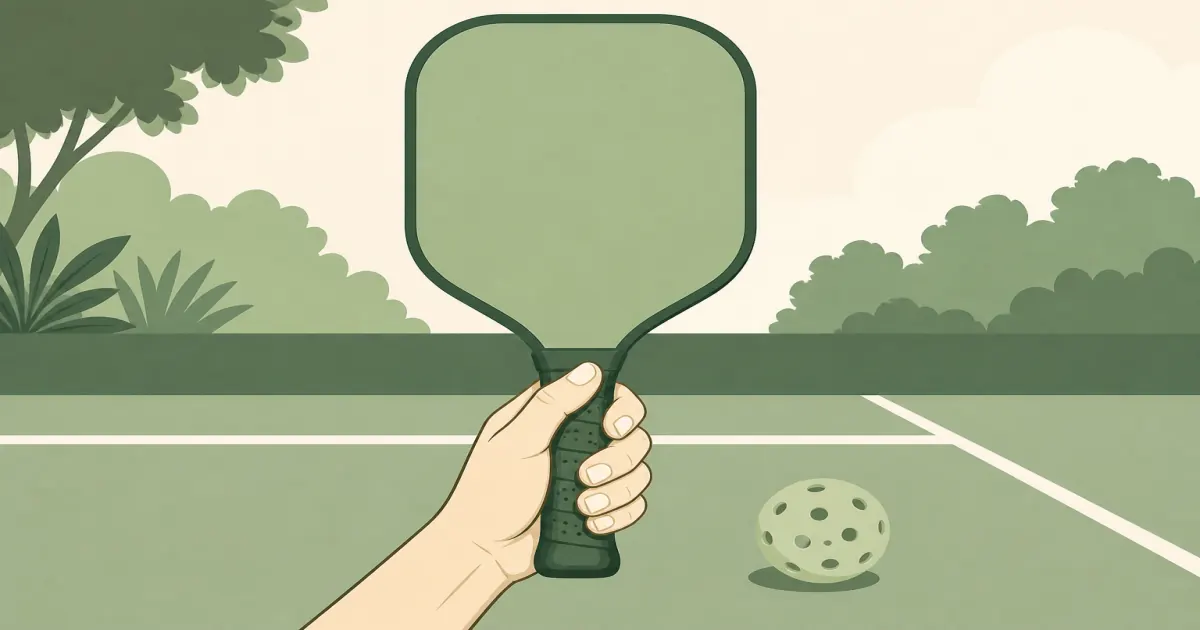
How to Hold a Pickleball Paddle: Continental Grip, Pressure, and Fixes
Paddles
Most mishits start in the hand. Learn how to hold a pickleball paddle so dinks stay soft, drives stay clean, and your wrist stops twisting mid-rally.
Our picks
Learning how to hold a pickleball paddle sounds basic until soft balls sail long and every reset pops up. Grip is the cheapest fix in pickleball. You do not need a new paddle to stop fighting the handle. You need a stable hand position, honest pressure, and a size that matches your fingers.
Grip technique is one skill, and the best pickleball paddles pillar covers the gear side, while the paddle guide roundup keeps the guides in one place.
This guide covers the default recreational grip, pressure by shot type, common mistakes, and when grip size or wrap changes matter more than technique tips. Soft shots need a quiet hand. Drives need a firmer hold without a death squeeze.
If the handle already feels wrong before you even take a swing, start with pickleball paddle grip size. Size problems masquerade as form problems. For wrap refresh and product picks, see best pickleball grips, how to wrap a pickleball paddle, and pickleball overgrip.
The default hold most players should learn first
Stand the paddle on edge so the face is vertical. Shake hands with the handle the way you would greet someone. The V between your thumb and index finger should sit near the top bevel of the handle, not buried under the butt or twisted onto the side face.
Your fingers wrap under the handle. The heel of your hand supports the butt end enough that the paddle will not fly on a miss-hit, but not so much that you choke the throat. Leave a little daylight at the very end of the butt cap if that helps you feel the handle length.
This continental-style position lets you dink, reset, and drive without flipping to a full eastern forehand or western extreme mid-point. Tennis players sometimes chase familiar grips. At the kitchen, those extremes often open the face at the wrong moment.
Pressure: soft for touch, firmer for pace
Grip pressure is half the skill. On dinks and resets, hold like you are carrying a full paper cup. Too tight and the paddle face stays stiff. The ball pops up or sails. On drives and serves, you can firm up a notch so the face stays square through contact.
Practice the change on purpose. Hit ten soft kitchen balls at a three out of ten squeeze. Then hit ten drives at a five or six. If your forearm locks the whole time, you never learned two gears. You only learned panic.
Sweat changes pressure too. When the handle gets slick, people crush harder. That is a wrap problem first. Add or replace an overgrip before you blame your hands.
Forehand and backhand without constant grip changes
Recreational pickleball rewards one stable hold. Turn the paddle face with a quiet wrist and forearm instead of spinning the handle into a new tennis grip every ball. Fast exchanges at the NVZ do not give you time for a full grip switch.
Two-handed backhands are optional. If you use a second hand for stability on high balls, keep the dominant hand in the same continental seat. The helper hand is support, not a new primary grip story.
If you came from tennis and insist on a mild eastern forehand for drives, return to continental before soft kitchen work. Mixed grips are fine for advanced players with clean habits. Mixed grips plus panic equals open faces.
Grip size, overgrips, and when hardware is the real issue
Technique tips fail when the handle is a size mismatch. A too-small grip makes you over-clench and can aggravate the elbow. A too-large grip slows quick face resets and makes soft touch feel clumsy.
Check size with the common finger-gap method: hold the paddle in your dominant hand, then see whether your non-dominant index finger fits between fingertip and heel pad with a small gap. Too much space often means undersized. No space and a forced stretch often means oversized.
One overgrip can bump circumference slightly and add tack. Stacking three wraps to fake a size usually creates a mushy, uneven handle. Prefer the right base grip, then one quality overgrip. Details live in the grip size guide.
Common mistakes when learning how to hold a pickleball paddle
Death grip on every ball. You will feel strong for two points and inaccurate for the rest of the game. Soften the hand on purpose.
Hammer grip with the wrist locked under the handle. That closed position fights natural paddle face angles and makes backhands awkward.
Fingertip-only hold with no palm support. The paddle twists on off-center hits and feels nervous at contact.
Constant tennis-style grip flipping at the kitchen. Save big grip changes for deliberate practice, not for panic mid-rally.
Ignoring a worn, slick wrap. Technique cannot outwork a slippery handle. Replace the wrap when tack is gone.
A simple on-court checklist
Before the first game, set continental, check that the V sits on the top bevel, and bounce a ball softly while watching face angle. If soft balls already climb, loosen pressure before you change paddles.
During play, notice whether misses cluster on touch or on pace. Touch errors often mean squeeze. Pace errors with a stable hand more often mean contact point or paddle specs, which is a paddle choice problem rather than a grip lecture.
After play, if your forearm or elbow complains, audit squeeze and grip size before you buy braces and hope. Many “weak arm” stories start with a tiny, slick handle held too hard.
When to go deeper
Grip is the starting layer. Shape, weight, and thickness still matter once your hand is quiet. Use the full framework in how to choose a pickleball paddle when you are shopping, not just regripping.
If spin and face texture are your next rabbit hole after a stable hold, read about surface grit and materials in sibling paddle guides on the blog. Hold the paddle well first. Specs only help once the hand stops inventing new grips every point.
Grip products that support a better hold
Squeezing harder is a bad fix for a slick handle. Put on a fresh GAMMA Supreme Overgrip and keep the hand relaxed so the paddle can still bevel-turn for soft shots.
When the factory cushion is dead and bevels feel round, install a Gamma Honeycomb Cushion Grip for Pickleball Paddles, then one overgrip. Holding technique gets easier when the handle still has shape.
Frequently Asked Questions
What is the best way to hold a pickleball paddle for beginners?
Start with a continental-style grip: shake hands with the handle so the V between thumb and index finger sits near the top bevel. Keep pressure light enough to dink without squeezing white knuckles.
Should I use the same grip for forehand and backhand?
Most recreational players keep one consistent continental hold and rotate the paddle face with the wrist and forearm. Extreme tennis-style grip changes mid-rally create mistimed faces at the kitchen.
How tight should I grip the paddle?
Think three out of ten on soft shots and five or six on drives. A death grip kills touch and can feed elbow irritation. If your forearm burns after one game, you are squeezing too hard.
Does grip size change how I hold a pickleball paddle?
Yes. A handle that is too small makes you over-clench. Too large slows wrist resets. Measure with the finger-gap method in our grip size guide, then add an overgrip only if you still need a slight bump.
Where should my index finger sit?
Index can rest with the other fingers or ride slightly up the bevel for feel. Avoid a full tennis “trigger finger” cocked so hard that the paddle face flips open on soft balls.
Why do my dinks pop up even when my form looks fine?
Often the hand is too tight or the wrap is slick. Soften pressure first, then refresh tack with a GAMMA Supreme Overgrip before you blame the paddle face.
When should I replace the base grip instead of adding overgrips?
When bevels feel round, cushion is gone, or you are stacking wraps to fake comfort. Rebuild with a Gamma Honeycomb Cushion Grip, then one fresh overgrip.
Is an eastern tennis grip okay for pickleball?
Mild eastern can work on drives for some tennis converts, but return to continental for kitchen soft game. Constant mid-rally grip flipping is what breaks timing.