Indoor vs Outdoor Pickleball Balls: Holes, Hardness, and Bounce
Accessories
Indoor and outdoor balls look similar until you play. Here is the difference in holes, hardness, and bounce, plus which sleeve to pack for each court.
Our picks
If you have ever wondered why one open-play ball feels soft and floaty while the next one rockets off the paddle, you are probably mixing constructions. Indoor balls are softer, with larger holes, for gym floors. Outdoor balls are harder, with smaller holes, so they stay round on asphalt and concrete. Keep the sleeves labeled. Mixing them in one game wrecks timing faster than a new paddle ever will.
Ball construction is one choice, and the pickleball accessories guide collection covers the rest of the small gear.
When you want named outdoor models, read best outdoor pickleball balls. For a single guide that covers outdoor, indoor, and bulk buys, use best pickleball balls. Keep both types in separate pockets of a pickleball backpack.
Why indoor and outdoor balls exist
Pickleball courts are not one surface. Outdoor hard courts are abrasive, hot in summer, and unforgiving on plastic. Indoor gym floors and sport courts are smoother, cooler, and kinder to soft shells.
Manufacturers tune balls for those loads. Outdoor balls are built to stay round longer on rough acrylic and concrete. Indoor balls are built for control and quieter pace on finished floors. Treating them as interchangeable is how rallies feel random from point to point.
If your group plays both venues, buy two sleeves and label them. Switching constructions mid-session is more confusing than changing paddles.
Holes: size, count, and airflow
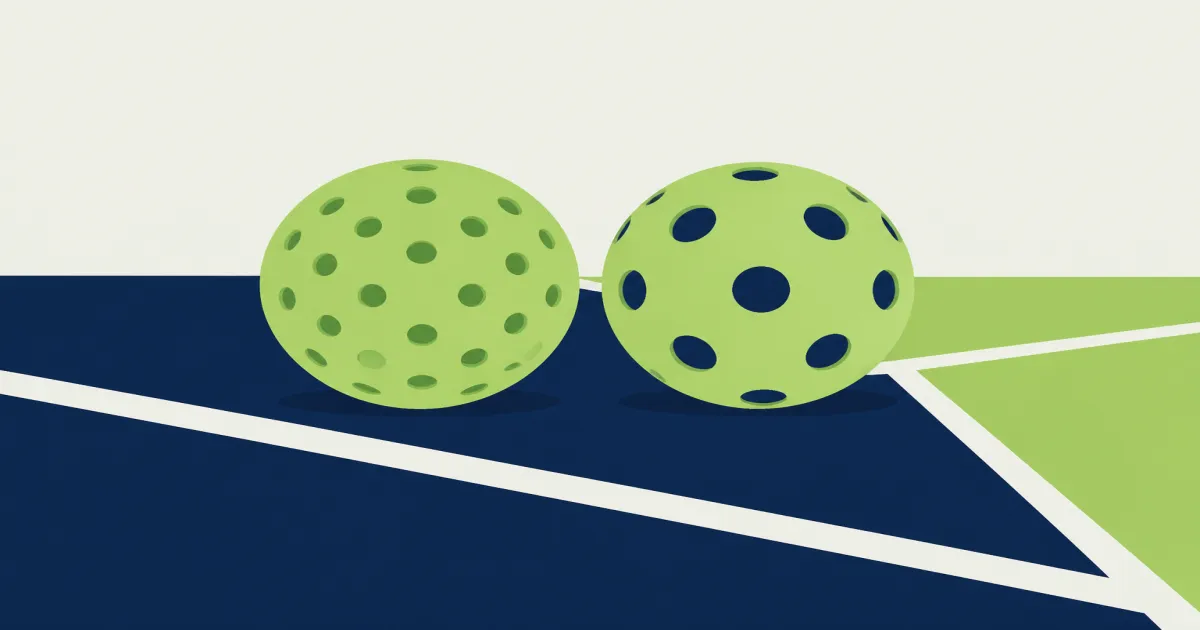
Look at the ball, not just the packaging. Outdoor balls typically use smaller holes. The classic outdoor pattern is often around 40 holes with a tighter diameter. Indoor balls usually open up with larger holes so air moves differently through the shell.
Smaller outdoor holes help the ball hold a firmer flight on windy courts and keep the shell stronger where pavement scuffs it. Larger indoor holes contribute to a softer, slower feel that suits gym play and closer kitchen exchanges.
Do not shop by hole count alone if the listing is vague. A ball marketed as "outdoor" with soft toy plastic still fails outdoors. Confirm outdoor or indoor construction in the product title and description, then check hole size visually when the pack arrives.
Hardness and shell feel
Hardness is the difference you feel on the first serve. Outdoor balls are harder. They make a sharper sound off the paddle and hold shape better against asphalt grit. Indoor balls are softer. They compress more on contact and sound duller.
That softer indoor shell is a feature indoors. It slows the game slightly and reduces the "pop" that can feel harsh on polished floors. Take that same soft ball outside and heat plus pavement turn it oval, cracked, or egg-shaped fast.
Cold weather flips the problem for outdoor balls. Hard shells get brittle in winter. Warm a few balls in a pocket or bag before hard smashes if the court is freezing. Never leave outdoor balls baking on a hot dashboard either. Extreme heat softens plastic and shortens life.
Bounce and pace on real courts
Bounce is where indoor vs outdoor pickleball balls confuse new players. On outdoor hard courts, a good outdoor ball should bounce true and feel predictable after a short warm-up. On gym floors, a good indoor ball should feel controllable without skidding wildly.
Put an indoor ball on outdoor asphalt and bounce often looks dead or weird after a few points. Put an outdoor ball on a slick indoor floor and pace can jump, especially for beginners still learning soft hands at the kitchen.
Wind matters outdoors too. Lighter, softer indoor balls catch more breeze and float. Outdoor constructions generally track straighter in light wind, which is another reason clubs standardize by surface.
If bounce feels unfair mid-session, check the ball before blaming your paddle. A cracked, flattened, or mixed-type ball will mess with timing more than a midweight paddle ever will.
Surface checklist: what to pack
Use this simple map:
- Outdoor asphalt, concrete, acrylic hard courts: Outdoor balls only.
- Indoor wood or sport-court gym floors: Indoor balls.
- Covered outdoor courts that still use hard outdoor surfaces: Outdoor balls.
- Backyard driveway practice: Outdoor balls if the surface is rough; accept faster wear.
If your facility posts a preferred brand, follow it. Consistency across four courts matters more than your personal favorite sleeve when you join open play.
Traveling between venues? Pack both types and keep them in separate bag pockets. A quick visual check of hole size before you walk on court prevents the most common mix-up.
Durability and when to retire a ball
Outdoor balls die from abrasion, seams, and heat cycles. Indoor balls die from soft deformation, seam stress, and getting stomped in a gym bag. Either way, rotate several balls in a session instead of beating one ball until it fails mid-point.
Retire a ball when it:
- Goes out of round or wobbles in flight
- Cracks near a seam or hole
- Softens so bounce feels mushy compared with a fresh ball from the same sleeve
- Has flat spots from being left under a paddle or shoe
Rough public courts eat outdoor balls faster than smooth private courts. Budget for rotation if you play several times a week. Bulk outdoor packs make sense once you know your preferred construction; our outdoor balls guide covers pick options without forcing you to reinvent the checklist.
Common mistakes with ball choice
Buying the cheapest multipack with no surface label. Mystery balls waste a session. Read indoor or outdoor on the listing before checkout.
Mixing types because "they look the same." Players notice bounce differences even when photos look identical. Keep sleeves separate.
Using soft indoor plastic on asphalt "just for tonight." One night becomes a bag of ovals. Save indoor balls for indoor floors.
Ignoring temperature. Cold brittle outdoor balls crack. Hot car storage warps both types. Treat plastic like gear, not trash.
Blaming paddles for ball problems. If everyone on court is spraying the same floaty shots, check the ball first.
Quick reference
Shopping the right ball for your court
Once you know indoor vs outdoor pickleball balls by feel, shop outdoor sleeves for the courts you play most and keep a labeled indoor pack for gym nights. Start with best outdoor pickleball balls for researched outdoor options, then organize sleeves in your pickleball backpack. For paddle setup that matches consistent bounce, see how to choose a pickleball paddle.
More gear explainers live on the Paddlefoundry homepage. Pack the right ball for the surface, rotate before shells fail, and your open-play timing stays honest.
Indoor vs outdoor: live ball examples
The Onix Recruit Ready-to-Play Indoor Pickleball Balls and Franklin X-40 Outdoor Pickleballs 3-Pack make the category difference obvious in one shopping trip. Label two pockets. The Onix Pure 2 Outdoor Pickleball Balls Yellow 6-Pack covers outdoor weeks when one tube is not enough.
Frequently Asked Questions
What is the difference between indoor and outdoor pickleball balls?
Outdoor balls use a harder shell and usually smaller holes for asphalt and concrete. Indoor balls are softer with larger holes for gym floors. Keep them separate so bounce stays consistent.
Can I use indoor balls outdoors?
You can for a short backyard hit, but soft indoor shells deform, crack, and bounce oddly on asphalt and concrete. Use outdoor balls on outdoor courts.
How many holes do indoor vs outdoor pickleball balls have?
Outdoor balls typically use smaller holes (often around 40). Indoor balls usually have larger holes and a softer feel. Count and diameter both matter more than brand color.
Which ball bounces higher?
On the same hard court, outdoor balls usually feel firmer and livelier. Indoor balls feel softer and slower, especially on gym floors. Surface still changes the result.
Do clubs mix indoor and outdoor balls in one session?
Good clubs do not. Mixed bounce wrecks timing. Keep sleeves labeled in your bag so someone does not toss the wrong ball onto the court.
What should beginners buy first?
Match the surface you play on most. Most US open play is outdoor hard court, so start with outdoor balls. Add indoor balls when you join gym or sport-court nights.
Can I use outdoor balls indoors?
You can, but pace often jumps on slick gym floors and the ball can feel harsh for soft kitchen play. Prefer indoor construction when the facility allows it.