Pickleball Grip Replacement: When and How to Swap the Base Grip
Accessories
Replacement grips restore cushion when overgrips stop helping. Here is when to swap the base layer and how to keep handle size honest.
Our picks
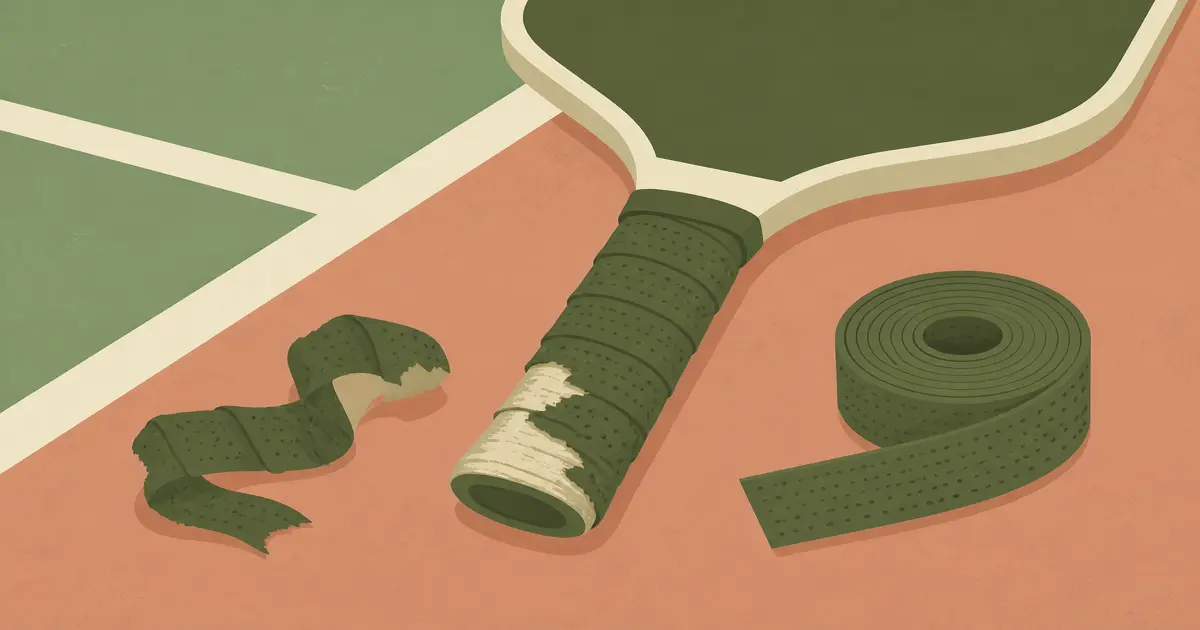
Overgrips hide a lot of sins until they cannot. This guide covers when you need a true pickleball grip replacement, how it differs from a quick rewrap, and how to avoid ballooning handle size. Rebuild the base when foam is flat. Change overgrips when tack dies.
Replacement grips are one job, and the pickleball accessories guide collection covers the related tape and tools.
Related how-tos: pickleball overgrip, how to wrap a pickleball paddle, and pickleball paddle grip size.
Overgrip refresh vs base replacement
An overgrip is thin and frequent. A replacement grip is thicker and less frequent. If a brand-new overgrip still feels harsh, thin, or oddly square, suspect the base.
Signs you need pickleball grip replacement:
- Cushion feels like hard plastic even with a new overgrip
- Base grip is cracking, splitting, or sliding on the handle
- You see foam crumbs or adhesive failure
- Handle bevels feel collapsed or weirdly rounded from old compression
If tack is the only problem and the cushion still springs back, rewrap the overgrip and stop there.
Choose thickness and material on purpose
Replacement grips vary in thickness and firmness. Thicker grips raise circumference. Softer foams feel plush but can compress faster. Firmer grips keep bevels clearer for players who like precise hand placement.
Match the finished size to your hand. If your paddle already felt large, pick a thinner replacement or plan on a single thin overgrip only. If it felt small, a slightly thicker base can help more cleanly than three overgrips.
Tennis replacement grips often fit pickleball handles. Confirm length covers your handle with a little overlap for the finish.
How to replace the base grip
- Remove all overgrips. Peel the old replacement grip carefully. Use a plastic card if adhesive fights you. Avoid gouging the handle bevels with metal tools.
- Clean residue with a bit of adhesive remover safe for plastics, or careful rubbing alcohol on a cloth. Let the handle dry fully.
- Dry-fit the new grip to confirm length. Some grips include a starter tape or tapered end. Read the pack.
- Anchor at the butt cap. Wrap upward with even tension and slight overlap, following the same discipline you use for overgrips.
- Finish at the top with finishing tape or the grip’s built-in collar method so the end cannot unwind.
- Add one fresh overgrip if that is your normal stack.
- Do the finger wrap size check before your next match, not during it.
First installs take longer. The second one is faster. If the wrap looks spiral-ridged, redo it. A bad base wrap under an overgrip feels worse than a worn stock grip.
Size control after replacement
Measure after the base is on, then again after one overgrip. Players often install a plush replacement, add two overgrips out of habit, and wonder why the paddle feels like a club.
Write down what you used if you like consistency across paddles. Same base plus same overgrip is an easy way to keep two paddles feeling alike.
If your hand goes numb or you cannot close your fingers, the stack is too big. Peel and rethink thickness rather than toughing it out.
Care so the new grip lasts
Use an overgrip as the sacrificial layer. Wipe sweat. Do not soak the handle. Avoid storing the paddle under heavy bags that crush the foam on one side for weeks.
When the overgrip dies, replace that first. Save pickleball grip replacement for real cushion failure. That rhythm costs less and keeps feel stable.
When to get help or rethink the paddle
If the handle itself is damaged, cracked, or missing a butt cap, a new grip will not fully solve it. Some OEM handles are odd sizes; specialty shops can help with stubborn installs.
If every grip feel wrong, reconsider whether weight and balance are the real issue. A handle fix will not cure a paddle that is too head-heavy for your shoulder. Pair grip work with how to choose a pickleball paddle when the whole setup feels off.
Tools that make the job easier
A plastic scraper or old gift card helps lift adhesive without scarring bevels. Sharp knives are how people nick carbon fiber handles. Keep a small towel and isopropyl alcohol nearby for residue.
Good lighting matters. Wrapping in a dim garage leads to uneven overlaps you feel later in the fingers. Sit at a table, clamp the paddle lightly with a soft towel if needed, and work in sections.
If the butt cap is loose, fix or replace that hardware before you wrap a beautiful new grip over a wobble. A spinning butt cap will twist the new install.
Break-in and first-session checks
Play a short session after pickleball grip replacement before you commit to a tournament day. Confirm there are no hot spots, ridges, or finish-tape edges catching your palm. Adjust overgrip tension if the stack feels slightly large.
Hands swell in heat. A grip that feels perfect in a cool house can feel tight outdoors. If you play in summer humidity, err slightly smaller rather than building a maximum cushion stack.
Re-check screws or stakes on modular paddles if your model has them. Grip work should not leave hardware loose.
Cost mindset and multipaddle consistency
A quality replacement grip costs far less than a new paddle and restores comfort when the base is truly done. Keep one spare grip in your gear drawer so you are not forced into a random thickness at a big-box store the night before league.
If you own two paddles, build the same stack on both when you can. Matching pickleball grip replacement and overgrip models reduces the “wrong paddle” feeling mid-match. Notes on shopping criteria for wraps live in best pickleball grips.
When the handle is the only thing you dislike about an otherwise great paddle, replacement is the right lever. When weight, shape, and power profile are wrong, spend on a better paddle instead of endless grip experiments.
Replacement grip kit
Start with the Gamma Honeycomb Cushion Grip for Pickleball Paddles for the base rebuild. Take your time around the butt cap and keep tension even so the bevels stay readable.
Finish with GAMMA Supreme Overgrip. Keep extras in the bag. The whole point of a healthy base grip is that overgrips become a five-minute refresh instead of a desperate stack of tape.
Frequently Asked Questions
What is pickleball grip replacement?
It means swapping the thicker cushioned base grip on the handle, not just the thin overgrip on top.
Can I replace the grip myself?
Yes for most recreational paddles. You peel the old grip, clean residue, wrap the new base grip from the butt up, and finish securely. Take your time on the first one.
Do I still need an overgrip after replacement?
Usually yes. The replacement grip sets cushion and size. The overgrip is the sweat layer you change more often.
Will replacement change my grip size?
It can. Choose thickness intentionally. Measure after install with the finger wrap test before you add multiple overgrips.
How long does a replacement grip last?
Months for many weekly players, shorter if you sweat heavily and rarely use an overgrip. The overgrip should take most of the abuse.
What is the best replacement grip for a pickleball paddle?
The Gamma Honeycomb Cushion Grip restores cushion and bevel feel as a clean base for fresh overgrips. Finish it with GAMMA Supreme Overgrip for tack.
How do I keep grip size from growing after a replacement?
Choose the replacement thickness on purpose, then measure after the base and again after one overgrip. Do not stack multiple overgrips out of habit.