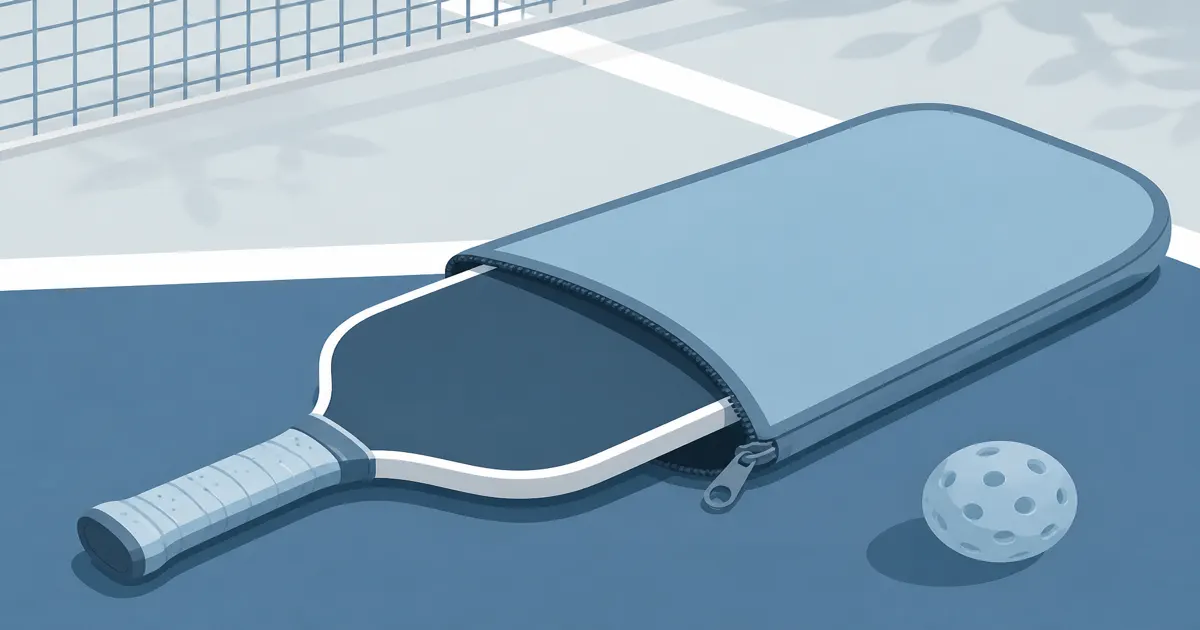
Pickleball Paddle Cover: When a Sleeve Beats a Bare Bag Pocket
Accessories
A pickleball paddle cover keeps grit from rubbing off in the bag. Use a universal sleeve for most paddles, or a padded cover when you want more protection.
Our picks
A bare paddle in a shared bag is how faces get dull before the core dies. Keys, bottles, zippers, and a second paddle all sand the grit you paid for. A pickleball paddle cover is a small, boring fix that actually extends how the face plays. If you play outdoors two or three times a week, that bag abrasion shows up faster than most people expect.
A cover is one small purchase, and the pickleball accessories guide collection covers the rest of the kit.
A cover keeps keys, bottles, and a second paddle from rubbing the face in the bag. If your paddle already feels glassy, clean it first with the cleaning guide before you assume you need a new paddle. A cover is what you add after so the next month of bag time does less damage.
What a cover actually protects
The job is the face and the edge, not the handle. Neoprene (or a padded zipper case) stops rubbing. That preserves texture for spin and keeps the edge guard from picking up nicks in the trunk.
It will not stop a cracked core. It will not replace a real backpack. It will not make a cheap paint face last forever. Think of it as a sock for the hitting surface.
If you want the lifespan picture, read how long do pickleball paddles last. Covers show up in the "habits" column, not the warranty column.
Hero pick: JOOLA Universal cover
The JOOLA Universal Pickleball Paddle Cover is the one to buy when you do not want to measure. JOOLA lists a fit up to 8.5 inches wide and 16.5 inches long. That covers most standard, widebody, and elongated rec paddles, including 14mm and 16mm cores with an edge guard or lead tape.
The sleeve is thick neoprene with a zipper. Owner notes usually say it is snug, which is what you want. A floppy cover lets the face slide and rub anyway. If you own mixed brands, this is the gift that does not require knowing the exact model.
Buy this if: You want one cover that works across household paddles.
Skip if: Your paddle is an extra-long specialty shape and the throat still peeks out after you zip it.
Check the universal cover on Amazon
When to use a padded sleeve instead
The Selkirk Sport SLK Pickleball Paddle Cover is the padded alternative. It fits standard and elongated shapes, and the neoprene shell keeps the face clean between games. It is still slim enough to slide into a bag pocket.
Keep this as a specialist. Do not buy two covers "just in case" unless you own two very different shapes. One well-fitting sleeve is better than a pile of loose neoprene in the trunk.
Check the Selkirk SLK cover on Amazon
Cover vs backpack pocket
A pickleball backpack with a padded paddle slot is still the right carry system. The cover is the liner. If your bag already has a fleece-lined paddle sleeve that never shares space with shoes, you can skip a second cover. Most rec bags do not get that luxury.
Fit checks before you order
- Measure length and width of the face, including the edge guard.
- Add a little room if you use an extra overgrip or lead tape.
- Prefer a zipper you can work with sweaty hands.
- Avoid unpadded "fashion" sleeves that are just printed fabric.
If the listing does not publish a max size, treat it as a maybe. Universal JOOLA publishes 8.5 by 16.5. That is the bar.
Storage habits that matter more than the brand
Zip the cover after the face is dry. Do not bake the paddle in a hot car inside neoprene. Do not stack two uncovered paddles face to face in a cubby. Those three habits do more than upgrading from a $20 sleeve to a $40 case. If you travel with two paddles, give each one its own cover so the faces never touch.
If grit is already gone, a cover will not bring it back. Use an eraser or a careful clean, then protect what is left. See pickleball paddle grit for wear signs.
Bottom line
A pickleball paddle cover is cheap insurance for the face you actually hit with. Buy the JOOLA Universal for almost every rec paddle. Use the Selkirk Sport SLK Pickleball Paddle Cover when you want a padded cover that fits a long face. Put it inside a real bag, not instead of one.
Next, if the paddle itself is the weak link, go back to how to choose a pickleball paddle instead of buying a third cover.
Frequently Asked Questions
Do I need a pickleball paddle cover if I already have a backpack?
Often yes. A backpack pocket still lets faces rub keys, bottles, and other paddles. A sleeve is the cheap layer that protects grit. See best pickleball backpack for carry, and use a cover inside the pocket.
Will a cover stop edge chips?
It helps against bag scrapes. It will not save a paddle you slam into a fence. Pair it with decent edge guard habits.
Universal or brand-specific?
Buy universal if you own mixed shapes or you gift covers. Buy elongated if your paddle is already long and a generic sleeve rides up the throat.
Can I leave the cover on between points?
No. Take it off to play. The cover is for transport and storage, not hitters.
Does a cover hide moisture?
Wipe the face first. Sealing a wet paddle in neoprene overnight is a bad habit. Dry, then cover.
What size paddle cover do I need?
Measure the face length and width, including the edge guard, and add room if you use an extra overgrip or lead tape. The JOOLA Universal fits up to 8.5 by 16.5 inches, which covers most standard, widebody, and elongated paddles.
Is a pickleball paddle cover worth it?
Yes if you care about face grit. A cover keeps keys, bottles, and a second paddle from rubbing the face in the bag, which preserves the texture you paid for.