Best Pickleball Paddle for Two-Handed Backhand (2026): Long Handles, Real Reach
Paddles
Best pickleball paddle for two-handed backhand: Selkirk SLK Dauntless Elongated for handle room and reach, 11SIX24 Hurache-X Power 2 for Gen 4 spin, Vatic Pro Prism V7 long handle for under $100.
Our picks
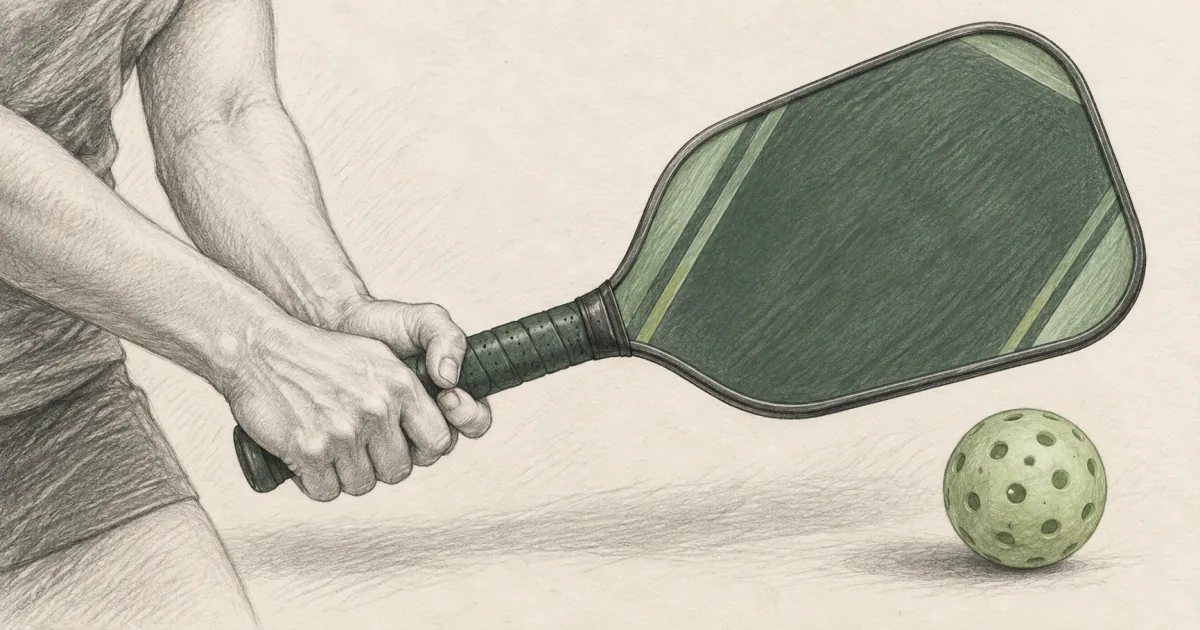
A two-handed backhand asks one specific thing of a paddle: enough handle for the second hand. Most pickleball handles are 4.5 to 5.25 inches, which crowds a second grip and forces you to compromise on placement. The fix is not a different swing. It is a longer handle, usually on an elongated shape, paired with a thicker 16mm core that absorbs the extra force a second hand adds.
This is the shopping owner for two-handed backhand paddles. For definitions of handle length and grip sizing, see pickleball paddle handle length and pickleball paddle grip size. For the broader elongated buying guide, see best elongated pickleball paddle. More paddle guides sit in our paddle category and the best pickleball paddles pillar.
What actually matters on a two-handed backhand paddle
Three specs separate a two-handed backhand paddle from a regular elongated:
- Handle length. 5.5 inches or longer. Anything shorter and the second hand crowds the hitting hand. Standard handles are 4.5 to 5.25 inches; the long-handle variants on the picks below clear 5.5 inches.
- Core thickness. 16mm is the safe default. The extra thickness absorbs the pace a two-handed drive adds and keeps the sweet spot forgiving when contact is slightly off. A 14mm core is faster off the face but punishes the late contact that is more common on a backhand.
- Shape. Elongated is the natural pairing with a longer handle. You get reach and leverage on the backhand side without losing the handle room. Widebody shapes can work with a long enough handle, but you give up some reach.
After those three, the secondary specs are weight (7.7 to 8.3 oz is the easy default for two-handed players), swing weight (lower is faster at the net, higher is steadier on drives), and face texture (raw carbon for spin, fiberglass for a softer feel at the cost of grip).
Why a 16mm core beats a 14mm on a two-handed backhand
The two-handed backhand adds force on the back side of the swing. A 14mm core returns that force quickly, which sounds like a feature until you miss-hit and the ball flies. A 16mm core absorbs more of the impact and gives the ball a longer dwell time on the face. That extra contact lets you place the ball where you want it rather than where the paddle happened to be.
For a two-handed player, this is the difference between a backhand that lands in the kitchen and a backhand that sails long. The 16mm core is also more forgiving on off-center contact, which is more common when the second hand adjusts the swing mid-motion.
Side-by-side: how the three picks differ
None of these are the wrong answer. The choice comes down to which constraint hits you first: handle length, face texture, or price.
Top pick: Selkirk SLK Dauntless Elongated
The Selkirk Sport SLK Dauntless Pickleball Paddle (Elongated 16mm) is the everyday two-handed backhand pick. The 5.8 inch handle is the second longest in this trio and clears a second hand without palm crowding. The 16mm PureFoam SoloCore absorbs pace and gives the ball a longer dwell time on the face, which is what you want on a backhand drive. The MOI Tuning System shifts weight toward the perimeter, which forgives off-center hits and keeps the paddle stable when contact is slightly off.
The 7.7 to 8.1 oz weight range is midweight, which is the easy default for a two-handed player. Lighter paddles whip but can feel unstable on two-handed drives; heavier paddles plow but punish fast net exchanges. The SLK Dauntless sits in the middle.
Who it is for: The default pick for a two-handed backhand player who wants handle room, 16mm core, and reach without overthinking it.
Spin & reach runner-up: 11SIX24 Hurache-X Power 2
The 11SIX24 Hurache-X Power 2 (Elongated 16mm) is the modern pick when handle length and face spin matter more than muted feel. At 6 inches, the handle is the longest in this trio and clears any second-hand crowding. The HexGrit surface posts high measured spin numbers (2,335 RPM) and keeps its bite after 100+ hours of play, which matters when you hit the same backhand drive a hundred times a week.
The 8.0 to 8.3 oz weight is on the heavier side but the swing weight is tuned for control rather than whip. The 12-month warranty and 30-day test drive from 11SIX24 are the easiest return policy in this list if the paddle does not match your swing.
Who it is for: Players who want the longest handle in the list, modern spin, and a 30-day return window to test the paddle.
Best under $100: Vatic Pro Prism V7 long handle
The Vatic Pro Prism V7 16mm (Long Handle) is the budget pick when the two-handed backhand paddle has to land under $100. The long handle variant ships at 5.6 inches, which clears a second hand. The raw T700 carbon face and foam injected walls deliver a real carbon feel at a price that most competitors cannot match for a long-handle elongated.
The 8.1 to 8.5 oz weight is the heaviest in this trio. Two-handed players who like a heavier swing weight will appreciate the plow-through on drives. Players who want faster hands at the net will want a lighter option. Make sure the listing you order shows the long handle variant; the standard 5.3 inch handle is too short for most two-handed backhanders.
Who it is for: Two-handers on a budget, club players buying multiple paddles, and anyone who wants the long handle and carbon face without the premium tax.
How to choose in one afternoon
- Measure your hand and pick your grip size. See pickleball paddle grip size for the ruler test.
- Confirm you want a long handle. Standard handles (under 5.25 inches) will not work for most two-handed backhands.
- Pick a 16mm core. The extra thickness is what makes a two-handed backhand feel planted rather than springy.
- Decide your weight. Midweight (7.7 to 8.3 oz) is the safe default. Heavier if you want plow, lighter if you want hand speed.
- Test the handle before you commit. If the local pro shop carries a similar shape, hold it with a two-handed grip and feel the room.
If you are coming from a tennis background, the muscle memory from a 2-handed backhand transfers directly. See best pickleball paddle for tennis players for the full transfer guide.
Who should skip the long-handle elongated
Players who play mostly at the net and rarely use a two-handed backhand. A long handle adds swing weight and the elongated shape trades some off-center stability for reach. If you live at the kitchen and your backhand is one-handed, a widebody shape with a standard handle is faster.
Players who need maximum forgiveness. The elongated shape has a smaller sweet spot than a widebody at the same price. If mishit forgiveness is the priority, see the widebody options in best pickleball paddles instead.
Players whose hands are very small. A long handle helps the second hand, but if the dominant hand is already at the upper limit of its grip size, the second hand will feel cramped. See pickleball paddle grip for small hands for the right pick.
Mistakes that fake a "bad" two-handed backhand paddle
Buying a standard handle by accident. The standard 5.3 inch handle on the Vatic Pro Prism V7 is the same SKU as the long handle in some listings. Always confirm the handle length in the product title before you order.
Wrapping a long handle too thick. A long handle with a thick overgrip is the same circumference as a shorter handle. The overgrip is what crowds the second hand, not the handle. Use a thin overgrip like ADV MaxTac if circumference is a concern.
Skipping the 16mm core. A 14mm core on a two-handed backhand punishes late contact more than the same 14mm core on a one-handed backhand. The second hand adds force; the core has to absorb it.
Bottom line
The best pickleball paddle for a two-handed backhand is a long-handle, elongated, 16mm core paddle. Start with Selkirk SLK Dauntless Elongated for the default. Pick 11SIX24 Hurache-X Power 2 for the longest handle and modern spin. Choose Vatic Pro Prism V7 long handle when the budget is the real constraint. For definitions of handle length, see pickleball paddle handle length. For the wider elongated shortlist, see best elongated pickleball paddle.
Frequently Asked Questions
What is the best pickleball paddle for a two-handed backhand?
A two-handed backhand paddle needs a long handle (5.5 inches or more), an elongated shape for reach, and a 16mm core for control. Start with the Selkirk SLK Dauntless Elongated for the best mix of all three.
How long should the handle be for a two-handed backhand?
At least 5.5 inches. Standard pickleball handles run 4.5 to 5.25 inches, which crowds the second hand. A 5.5 to 6 inch handle leaves the non-dominant hand room to grip without bumping the hitting hand.
Do I need an elongated paddle for a two-handed backhand?
Not always, but the elongated shape usually pairs with the longer handle and adds reach on the backhand side. Widebody shapes can work with a long enough handle, but you give up some reach and leverage.
Is a 16mm or 14mm core better for a two-handed backhand?
16mm is the default for a two-handed backhand. The extra core thickness absorbs pace when the second hand adds force and keeps the sweet spot forgiving. A 14mm core is faster off the face but punishes late contact, which is more common on a backhand.
What if my hands are small?
A 5.5+ inch handle is the requirement. Wrap thickness matters more than the handle itself. Use a thin overgrip to keep the circumference honest. See pickleball paddle grip size for how to measure.
Is the Vatic Pro Prism V7 long handle really a two-handed backhand paddle?
Yes, the long handle version is 5.6 inches and ships at $99.99. The standard handle is 5.3 inches, which is too short for most two-handed backhanders. Make sure the listing shows the long handle variant before you order.
What weight range works best?
7.7 to 8.3 oz is the safe zone for two-handed backhand players. Lighter paddles whip but can feel unstable on two-handed drives. Heavier paddles plow through but punish fast net exchanges. Midweight is the easy default.
Can I use a tennis racket instead?
No, tennis rackets are not USAPA approved for pickleball. Pickleball paddles are wider and have a different sweet spot shape, but the handle length logic from tennis translates directly to pickleball. See best pickleball paddle for tennis players for the full transfer guide.