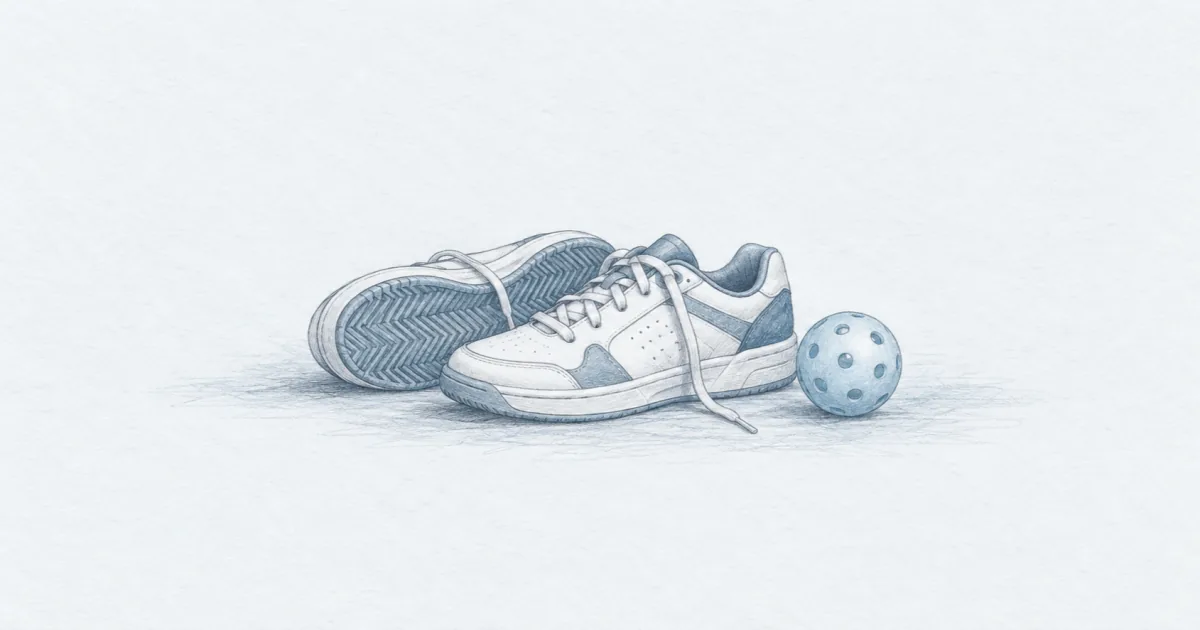
Best Pickleball Shoes (2026): 4 Court Picks, Warranty Checked
Shoes
Running shoes slide on kitchen cuts. These four court shoes give you lateral grip, toe drag armor, and cushion that survives outdoor sessions, from $86.97 to $115. We also checked which ones carry a real sole warranty.
Our picks
Running shoes are fine for the walk to the court. They are a poor bet once you start making hard cuts at the kitchen. The best pickleball shoes give you lateral grip, a locked heel, and toe armor that survives drag serves on rough outdoor courts.
Browse the full shoe guide roundup for fit, outdoor, indoor, and width guides. The four pairs below are all-court shoes you can compare on Amazon and take to open play without guessing.
If you already know you need true Wide lasts, jump to best pickleball shoes for wide feet. Shopping a women's last? Use best pickleball shoes for women. Mostly gym floors? Read indoor pickleball shoes. If you roll your ankle on cuts, start with best pickleball shoes for ankle support.
What actually matters in a court shoe?
Lateral stability comes first, then an outsole suited to your surface, then cushion you can still plant on. Hard stops, short sprints, and hours on abrasive outdoor surfaces are what matter.
Cushion should not turn into mush that rolls an ankle. Pickleball-labeled shoes and hard-court tennis shoes both work if the platform is built for side cuts. Running shoes are not a shortcut.
Lateral stability
You want heel lock and midfoot support on kitchen cuts, so the foot does not slide inside the shoe when you plant. A reinforced lateral side and a stable heel are the two features that keep a hard side push from rolling your ankle.
Outsole for your surface
Rubber that grips hard courts matters most outdoors, where acrylic and concrete chew softer compounds. Indoor gym floors want non-marking grip instead. Match the outsole to where you actually play.
Cushion you can plant on
Recreational players do not need a lightweight racing shoe unless they already have strong feet and short indoor sessions. A little cushion saves your knees on concrete, as long as the platform still feels stable.
What is unique about pickleball shoes?
The tread pattern, the outer-toe armor, and the firm heel: three things a running shoe does not give you. Cushion is not the difference.
Pickleball is a side-to-side sport played in a small box. A court shoe puts a herringbone or pivot-circle pattern on the outsole so it bites when you push sideways, adds a reinforced patch where drag serves scrape the toe, and keeps the heel counter stiff so your foot does not roll inside the shoe.
Running shoes do the opposite. Their rocker geometry is built to roll you forward, and their soft lateral walls fold under a hard cut. That is why a pair that feels great on a treadmill feels sketchy on a kitchen lunge.
USA Pickleball does not require a pickleball-specific shoe. Rule 18.B.2 only asks for soles that do not mark or damage the playing surface. A hard-court tennis shoe meets that bar. Your foot decides the rest.
Which pickleball shoes offer a sole warranty?
Almost none, and none of the four picks here. The guarantee exists in tennis, and it usually excludes the toe drag that pickleball players wear first.
Here is how the brands actually write it, read from their own pages on November 2, 2026.
The terms are narrower than the marketing suggests. A claim usually needs a hole through the rubber that exposes the midsole or insole, filed within 180 days, one replacement per purchase, US addresses only. Wear to the toe bumper or the upper is excluded, and so is a sole that has gone smooth without breaking through.
That last line matters. Most pickleball players retire a shoe because the pivot zone is slick, not because there is a hole in it. On the written terms, that is not a warranty claim.
A survey of retailer listings in October 2026 counted 46 men's shoes under a six-month outsole guarantee, and 43 of them were tennis models. The one pickleball-named shoe on it, the Selkirk Legacy Pro, stated no guarantee length at all.
So treat a guarantee as a tiebreaker, not a plan. Buy the outsole that suits your court, rotate two pairs if you play four times a week, and expect to replace them.
Quick comparison
Specs at a glance
What do these four cost per hour of play?
At about 40 hard outdoor hours a pair, which is the low end of what owners report, the four land between $2.17 and $2.88 an hour. The cheapest pair is not automatically the best value, but the gap is smaller than most people expect.
That is why the hourly number matters more than the sticker. Divide the price by the hours you actually get. Owners of the K-Swiss report roughly 100 hours per pair on a three-pair rotation, which drops the same shoe to about $1.15 an hour. A player who only manages 25 hours before the pivot zones go smooth is paying $4.60 an hour for a $115 shoe.
The four span $28.03, or about 24 percent of the top price. That is a smaller spread than the marketing around each brand would suggest.
Top pick: K-Swiss Men's Express Light Pickleball Shoe
The K-Swiss Express Light is the default answer when someone asks for the best pickleball shoes without a special foot issue. It is built as a pickleball court shoe, not a running shoe with a pickleball sticker. You get DragGuard-style toe protection, a court outsole for hard stops, and a lighter feel than many cushion-heavy tennis tanks.
That mix fits the common routine: mixed indoor and outdoor play, quick kitchen resets, and enough sessions per week that a soft trainer starts to feel sketchy. If you already know tapered tennis lasts crush your pinky toe, try the Express Light on before you force a half-size upsize on a narrow shoe.
The quick reset feel and a toe cap that survives outdoor drag are what keep people in this shoe. Width is the sticking point, so buy a true wide last rather than a longer shoe.
Who it is for: Players who want a dedicated pickleball shoe for open play and league nights.
Pros
- Purpose-built pickleball platform
- Toe drag armor for outdoor scuffs
- Quicker feel than heavy cushion shoes
Cons
- Standard width may feel tight for wide feet
- Not the plushiest midsole in the category
Check the K-Swiss Express Light on Amazon
Best stability: Wilson Men's Pickle Pro Pickleball Shoes
The Wilson Pickle Pro is the move when you want a more planted court feel. Wilson built it as a pickleball shoe with a wider toe box, midfoot support for lateral stops, an OrthoLite EVA sockliner, and a Duralast outsole meant for abrasive surfaces.
It will feel heavier than a featherweight race shoe. That tradeoff is exactly why you would choose it. If you play long outdoor blocks, or you are coming from running shoes that roll on cuts, the Pickle Pro gives you a chassis that stays under you when you plant and change direction.
Toe room and confidence on hard stops are the two things you notice first. Skip it if you hate any extra mass and only play short indoor games. A lighter pickleball shoe will feel happier for that schedule.
Who it is for: Frequent outdoor players, players who hate tapered tennis toe boxes, and anyone prioritizing midfoot lock over the lightest possible shoe.
Pros
- Wider toe box for a planted cut
- Midfoot support on kitchen lunges
- Durable hard-court rubber
Cons
- Heavier than lightweight pickleball models
- Some owners report early outsole wear
Check the Wilson Pickle Pro on Amazon
Most comfortable: Skechers Men's Viper Court Pro Pickleball Sneaker
The Skechers Men's Viper Court Pro Pickleball Sneaker is a pickleball-labeled shoe that lands in a friendlier price lane for many shoppers. Arch Fit cushioning and a court-focused Goodyear Gold compound outsole make it a solid "I play a few times a week" choice when you do not want to stretch into premium tennis pricing.
Comfort out of the box and traction on cuts are what people like about it. The thing to watch is outdoor concrete chewing the outsole over a long season. Rotate pairs or retire the shoe when the pivot zones go smooth.
Confirm width and colorway on the listing you buy. Skechers offers Wide variants on other listings, so this pick is for players who fit a standard last and want pickleball-specific branding without top-shelf pricing.
Who it is for: Recreational players who want arch support and court grip without paying premium court money.
Pros
- Arch Fit insole for longer open play
- Goodyear Gold outsole with real grip
- Lowest price of the four at $86.97
Cons
- Roomy last can feel loose on narrow feet
- Some owners report soles failing early
Check the Skechers Men's Viper Court Pro Pickleball Sneaker on Amazon
Best second pair: AVW Men's Pickleball Shoes High-Traction Court Sneakers
The AVW Men's Pickleball Shoes High-Traction Court Sneakers are the rotation answer when you want a stable court shoe without paying premium tennis money. The build pairs a warp-weft woven upper with toe and side TPU reinforcement, a TPU torsion plate for lateral support, and a rubber herringbone outsole for quick stops.
That mix fits the player who plays a few times a week on mixed surfaces and wants a second pair to swap in without stretching the budget. It is a court shoe first, so it holds up better on hard stops than a running shoe, and the reinforced upper takes the scuffs that kill a mesh toe.
Who it is for: Recreational players who want a stable, budget-friendly second pair for open play and rotation.
Pros
- Woven upper with toe and side TPU reinforcement
- TPU torsion plate for lateral support
- Herringbone outsole for quick stops
- Lower price than the premium picks
Cons
- Fewer buyer reviews than the bigger brands
- Not a wide-specific last
Check the AVW High-Traction Court Sneaker on Amazon
Do pickleball shoes run true to size?
Mostly yes, with three exceptions worth knowing before you order. K-Swiss advises a half size up for toe room, Skechers builds a roomy forefoot on this model, and wide feet should never size up to find width.
What does each brand say about sizing?
K-Swiss puts the advice in the listing: size up a half if you want toe room. Wilson's Pickle Pro runs close to a standard tennis fit with a wider toe box than most. The Skechers pair runs relaxed through the forefoot, so a narrow foot may want a thinner sock rather than a smaller size.
Why sizing up is the wrong fix for wide feet
Adding length does not add width. If your forefoot is crushed, a longer shoe leaves the heel loose and the toes still pinched. Buy a true Wide last, or move to the Wilson toe box if the pinch is mild. Our wide feet guide has the width-first picks.
Should you bring your playing socks?
Yes. Thick crew socks can change the fit by half a size, and thin dress socks hide how tight a shoe really is. Try the pair on with what you actually wear on court.
Which surface do your shoes need to handle?
Outdoor acrylic and concrete reward tougher rubber and toe drag protection. That is why the Express Light and Pickle Pro make sense as default outdoor-capable pairs. Gym floors and sport court want non-marking grip that does not feel sticky or loud.
If most of your week is indoors, do not force an outdoor asphalt shoe to do gym duty forever. Use our indoor pickleball shoes guide for non-marking court platforms built for finished floors. Many clubs allow outdoor shoes if they are non-marking, but the tread still feels different on polished surfaces.
For surface-first outdoor picks, see best outdoor pickleball shoes. The four picks here cover mixed play when you need one pair to do both.
Do you really need special shoes for pickleball?
No rule requires a pickleball-specific shoe. USA Pickleball's rulebook only asks for soles that do not mark or damage the playing surface. That said, a court shoe still beats a running shoe, because pickleball is side-to-side and running shoes are built to roll forward. A hard-court tennis shoe is fine if the width fits.
The practical test is the sole and the heel lock, not the word pickleball on the box. Lace up, cut sideways on a clean floor, and reject any pair where the heel lifts or the foot slides inside the shoe.
How long do pickleball shoes last?
Most recreational players get one to two seasons from a court shoe, and heavy outdoor players replace a pair every three to four months. The outsole pivot zones wear out before the upper does, so watch the tread rather than the toe cap.
What wears out first?
The pivot zones under the ball of the foot and the outer edge of the heel. That is where every hard stop scrubs the rubber, and it is why a shoe can look fine on top and still be unsafe.
How many hours do they last?
A three-pair K-Swiss owner reports roughly 100 hours per pair, while a player on court 12 to 15 hours a week burns through Wilson court shoes in about 3.5 months. Treat those as honest ranges, not guarantees.
When should you replace them?
Replace a pair when the outsole is smooth in the pivot zones, the midsole feels dead, or your knees complain more than usual after normal sessions. Smooth pivot zones are a fall risk, not a sign you saved money.
How should pickleball shoes fit?
Lace up and do a hard side cut in the store aisle or at home on a clean floor. Heel slip is a reject. Toes should not jam the tip on a plant. If only the fifth toe burns, a wider toe box may be enough. If the whole forefoot feels crushed, buy true Wide instead of hoping break-in fixes structure.
Who should skip these picks
Skip the K-Swiss Express Light if you already know you need a true Wide last. Start with our wide-feet shoe guide instead.
Skip the Wilson Pickle Pro if you hate any extra mass on your feet and only play short indoor games. A lighter pickleball shoe will feel happier.
Skip the Skechers Men's Viper Court Pro Pickleball Sneaker if you destroy outsoles monthly on abrasive outdoor courts and want the most durable rubber first. Look harder at the Wilson Duralast platform or a heavy-duty hard-court tennis shoe.
Skip the AVW pair if you want plenty of buyer ratings behind the shoe. Twenty-seven ratings is enough to know it is not a dud, not enough to promise three seasons.
Common mistakes
- Buying running shoes for court play. Forward roll midsoles fight lateral stops.
- Sizing up instead of buying Wide. Extra length leaves the heel loose on cuts.
- Ignoring toe drag. Outdoor players who scrape serves need reinforced toe caps.
- Waiting until the outsole is bald. A slick pivot zone is a fall risk, so replace the pair before it gets there.
- Buying for a warranty you will never collect. Most court shoes carry no outsole guarantee at all.
- Using one soft indoor pair on rough outdoor courts every week. You will burn through the outsole and blame the brand.
Before you lock a model, confirm how should pickleball shoes fit for length, midfoot lockdown, and width. A great outsole does not help if your foot slides inside the shoe.
Care tips that extend shoe life
Knock grit out of the tread after outdoor sessions. Let damp pairs dry open overnight instead of sealed in a hot car. Rotate two pairs if you play four-plus days a week so midsoles recover.
When the pivot circles go slick, retire the pair even if the upper still looks fine. Outsole grip is the safety feature. For carry, a bag with a ventilated shoe garage keeps dirty soles off paddles. Start with our best pickleball backpack guide.
Bottom line
The best pickleball shoes are court shoes with real lateral support, not running shoes with a pickleball label. Buy the K-Swiss Express Light at $115 for dedicated pickleball play, or the Wilson Pickle Pro at $110 when you want a wider planted fit.
Take the Skechers Viper Court Pro at $86.97 for the most comfort and the lowest price, or the AVW High-Traction Sneaker at $89.99 as a rotation pair. Then match the pair to your surface, and replace it when the outsole goes smooth, because the warranty will not do it for you.
Frequently Asked Questions
What are the best pickleball shoes for most players?
Start with a court shoe made for lateral stops, not a running shoe. The K-Swiss Express Light is the safest all-around pick for dedicated pickleball play. Choose the Wilson Pickle Pro when you want a wider toe box and midfoot lock, or the Skechers Viper Court Pro when cushion and arch support matter more than a light feel.
Which pickleball shoes offer a sole warranty?
Very few. K-Swiss covers only its Ultrashot 4 tennis shoe with a six-month outsole guarantee, and Wilson covers its Rush Pro line, not the Pickle Pro. Selkirk covers the CourtStrike and Legacy pickleball shoes, and SQAIRZ covers the XRZ. None of the four picks on this page carries one.
What does a sole warranty actually cover?
Usually a hole through the rubber that exposes the midsole, claimed within 180 days, one replacement per purchase, US only. Toe bumper and upper damage are excluded, which is awkward because toe drag is exactly where pickleball players wear first. A sole worn smooth is not covered as written.
What is unique about pickleball shoes?
The outsole pattern and the lateral chassis, not the cushioning. Court shoes use herringbone or pivot-circle tread for side-to-side grip, a reinforced outer toe for drag serves, and a firm heel counter. Running shoes are built to roll forward, so they fight the direction pickleball moves.
Can I wear tennis shoes for pickleball?
Yes for many recreational players. Hard-court tennis shoes share the side-cut demands of pickleball. Confirm the outsole is meant for hard courts, not clay-only patterns. See our pickleball shoes vs tennis shoes guide.
Do pickleball shoes run true to size?
Mostly yes, with one catch. K-Swiss advises going up a half size for toe room, and the Skechers pair has a roomy forefoot, so a narrow foot can feel loose in it. Try the pair on with the socks you play in before you cut the tags.
Which pickleball shoes are the most comfortable?
The Skechers Viper Court Pro is the comfort pick here. Its Arch Fit insole is podiatrist-certified and built from 120,000 foot scans, and the relaxed forefoot leaves room for swelling late in a session. If comfort means ankle stability instead, read the ankle support guide.
What do women wear to play pickleball?
A women's-last court shoe with the same lateral support and toe protection, plus whatever top and skirt or shorts you can move in. Women's lasts are narrower through the heel and midfoot, so a unisex shoe sized down often fits worse, not better. Start with our best pickleball shoes for women guide.
Why do running shoes feel wrong on court?
Running shoes are built to roll forward. Pickleball asks for hard side cuts at the kitchen. Soft running outsoles can roll under your foot and leave you sliding when you plant.
Do I need Wide shoes?
If your toes smear the upper on every lunge, look for true Wide, 2E, or 4E options instead of sizing up. Our best pickleball shoes for wide feet guide covers width-first picks. A roomier toe box like the Wilson Pickle Pro can help mild pinky hot spots, but it is not a substitute for true Wide when your whole forefoot feels crushed.
Indoor vs outdoor pickleball shoes?
Outdoor hard courts chew outsoles faster and reward tougher rubber plus toe drag protection. Indoor gym floors care more about non-marking grip. If outdoor acrylic is your main surface, see best outdoor pickleball shoes. If gym nights are your main routine, see indoor pickleball shoes. Most recreational players still buy one outdoor-capable court shoe and rotate pairs when tread goes flat.
How often should I replace pickleball shoes?
When the outsole is smooth in the pivot zones, the midsole feels dead, or your knees complain more than usual after normal sessions. Heavy outdoor players may need a new pair every season.
How should pickleball shoes fit?
Locked heel, snug midfoot, and a thumb of room at the longest toe. No sliding on a hard side cut. Full checklist: how should pickleball shoes fit.
What shoes help if my ankles feel unstable?
A low platform with a locked heel and a reinforced lateral side helps most. If you roll your ankle often, look for a stability-first pair and add support. Our best pickleball shoes for ankle support guide covers that lane.