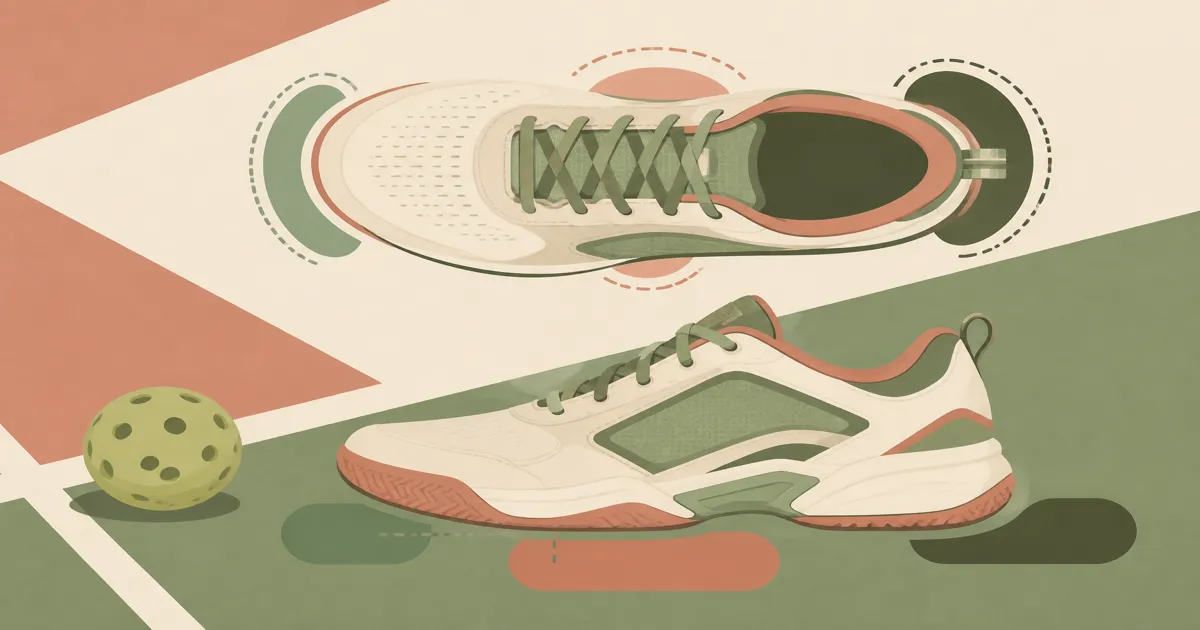
How Should Pickleball Shoes Fit? Toe Room, Heel Lock, and the Shuffle Test
Shoes
Pickleball shoes should hug the midfoot, leave a thumb of toe room, and hold the heel on cuts. Use this checklist before your first hard plant.
Our picks
“How should pickleball shoes fit?” is the question that prevents rolled ankles and black toenails. Court shoes only help if your foot stays planted inside them when you stop, cut, and plant for a backhand.
This guide covers length, width, lockdown, and socks in plain checks you can do in a store or at home. Heel down, a thumb of toe room, midfoot snug. If you size up instead of buying Wide, the heel slips on a cut. Browse more court footwear in pickleball shoes, then shop named models on best pickleball shoes.
Court vs tennis context: pickleball shoes vs tennis shoes.
Start with the shuffle test, not the length
Most people check shoe fit the way they check a dress shoe: stand up, press the toe, walk a few steps. That test misses the thing that matters most in pickleball.
Pickleball loads the foot sideways. A shoe can feel perfect walking the aisle and still let your foot slide over the edge of the platform on a hard lateral push. That slide tilts your ankle on a step you meant to be flat, and it makes you feel a step slow even when you are not.
So test it the way you play. Lace up, get into a ready position, and shuffle hard side to side. Push off aggressively, the way you would to cover a wide dink. Feel whether your foot moves toward the outside edge of the shoe while the shoe itself stays planted. If it does, the shoe is too wide for your foot or the upper is too soft to hold you.
Do that shuffle before you judge anything else. If the side-to-side check passes, then work through length, heel hold, and width in that order.
Length: room without swimming
You need a little space in front of the toes for hard stops. If toes jam the end on a plant, expect bruised nails after long sessions. If there is a big gap, your foot will slide and the heel will slip.
A quick check is a small gap when standing normally, then a lunge and a hard stop in place. The shoe should not let your toes slam repeatedly. It also should not feel like a boat.
Try shoes later in the day when feet are a bit larger. Morning-only fittings lie.
Midfoot and heel lockdown
Pickleball is lateral. The midfoot should feel hugged when laced for play. Heel slip on cuts means blisters and late plants. You can adjust lacing, but the shoe still needs a sensible shape for your foot.
Walk, then cut side to side. If your foot moves inside the shoe, go down in volume or change model. Do not fix a swimming fit with two pairs of socks.
Pressure on the top of the foot from the tongue or lace bite is a different problem. That is not lockdown success. That is a shape mismatch.
Width: do not fake it with longer sizes
Wide feet need width, not extra length. Sizing up to relieve width creates heel slip and toe bang on stops. If you need width, read pickleball shoes for wide feet and look for true wide options.
Narrow feet can drown in a wide last. Use lockdown features and the right last instead of cranking laces until your foot goes numb.
Socks, insoles, and break-in
Trial in your playing socks. Cushion socks change volume. If you use a custom insole or orthotic, bring it to the fitting. Stock fittings without your insert are fiction.
Break-in should soften materials, not fix a bad last. Painful hot spots on day one rarely become perfect by day ten. Mild stiffness can ease. Sharp pressure usually does not.
On-court fit test
If the return window allows, play a real session. Note hotspots, heel slip, and toe bang after hard plants. Also note whether the outsole grips your usual courts. Fit and traction both matter.
Pay attention at minute sixty. Swelling and fatigue change how a shoe feels. A perfect five-minute store walk can fail in open play.
Common fit mistakes
Buying runners because they feel cushioned in the aisle. Sizing up for wide feet. Ignoring heel slip because the colorway is right. Lacing so tight that forefoot goes numb, then calling it “secure.”
Another mistake: assuming tennis-court shoes automatically fit pickleball movement for your foot. Many do work. Fit still needs the same lockdown checks.
Quick fitting checklist
- Playing socks on.
- Small toe room, no swim.
- Midfoot hug and heel hold on cuts.
- No sharp pressure points.
- Width solved with width, not length.
If those five pass, then compare cushion and durability across models in best pickleball shoes. Fit first. Spec sheet second.
When to choose a different model
If lockdown fails after lacing changes, switch models. If width is the blocker, switch to a wide last. If length is fine but the toe box shape is wrong, do not keep hoping break-in will redesign the shoe.
Your best pickleball days start with feet that stay quiet in the shoe so you can watch the ball instead of your toes.
Lacing patterns that actually help
If the heel slips but the toe box is right, try a runner’s loop or heel-lock lace at the top eyelets. If the midfoot feels loose while the toes are fine, skip an eyelet or change lace tension through the middle. Small lace changes can save a nearly right shoe.
Do not lace so hard that the top of the foot goes numb. Numbness means volume mismatch. Unlock a bit and reassess, or change models.
Surfaces, outsoles, and fit feel
Fit and outsole work together. On dusty outdoor courts, a perfect fit still slips if the gum is wrong for the surface. On sticky indoor paint, a slightly roomy shoe can feel safer than it is because the shoe itself grabs. Still fix internal slide. Traction should not hide a swimming foot.
If you play both indoor and outdoor often, prioritize the surface where you cut hardest. Many players cut more violently outdoors on rough paint and need lockdown most there.
Signs your current shoes already fail the fit test
Black toenails after hard plants, blisters on the heel, hotspots under the ball of the foot, and ankles that feel late to the plant are fit clues. Worn outsoles are a separate durability issue. You can have sticky rubber and bad fit at the same time.
Replace shoes when cushion collapses or outsole is bald in the push-off zones. Do not wait until a rolled ankle makes the decision for you.
Fit for wide, narrow, and in-between feet
Wide feet: true width, not longer length. Narrow feet: lower volume lasts and careful lacing. In-between feet: try both standard and wide when brands allow, because lasts differ. Brand A’s standard can feel like Brand B’s wide.
If you use orthotics, fit with them from the first try-on. Removing the stock insole to make space is normal. Cramping an insert on top of a thick stock bed is not.
A ten-minute store script
- Playing socks on, inserts in if you use them.
- Stand, lunge, hard stop, side cut.
- Check toe room, heel hold, midfoot hug, hotspots.
- Walk five minutes, then cut again.
- Only then compare cushion and looks.
That order keeps marketing out of the first decision. Once fit passes, shop models with best pickleball shoes using criteria that match your courts and session length.
Fit example: Wilson Pickle Pro
A dedicated court shoe such as the Wilson Pickle Pro is the right category for fit testing. It has a midfoot saddle for lateral hold, a wider toe box than a typical tennis last, and a durable Duralast outsole. Do lateral cuts in the aisle if you can. Heel slip is a no.
Wide-feet example: Skechers Viper Court Pro 2.0
Wide feet should not force a narrow last. The Skechers Viper Court Pro 2.0 is a clear path to genuine Wide sizes with cushioned arch support and a durable outsole. It suits players who want a stable forefoot without moving into a heavy stability shoe.
Frequently Asked Questions
How should pickleball shoes fit in the toes?
Keep a small amount of room in front so toes are not jammed on hard stops, but not so much that your foot slides forward. About a thumb’s width is a common starting check, then confirm on court.
Should pickleball shoes feel tight?
Midfoot and heel should feel secure. Painful pressure points are not “break-in required.” Lockdown is good. Numbness is not.
Can I wear running shoes for pickleball fit reasons?
Running shoes are built for forward stride, not hard lateral cuts. See pickleball shoes vs tennis shoes. Fit comfort in a runner does not equal court stability.
What if I need wide sizes?
Use true width options instead of sizing up in length. Fit rules live in pickleball shoes for wide feet; named Wide/2E buys live in best pickleball shoes for wide feet.
Do socks change fit?
Yes. Trial shoes in the socks you play in. Thick cushion socks can turn a perfect fit into a pressure fit.
How much break-in is normal?
Mild stiffness can ease over a few sessions. Sharp hotspots, numb toes, or heel slip on day one are not break-in. Those are shape mismatches. Change size, width, or model instead of waiting for pain to become comfort.
How do I know if my pickleball shoes fit?
Run three checks. Press a thumb of space in front of your longest toe, rise onto your toes and feel for heel lift, then shuffle hard side to side and feel whether your foot slides toward the edge of the platform while the shoe stays planted. If your foot moves and the shoe does not, the fit is wrong no matter how the length feels.
Should pickleball shoes be tight?
Snug, not tight. You want no internal sliding and no heel lift, with toes able to spread. A shoe you have to cinch painfully to stop the sliding is too wide or the wrong last, not a shoe that needs tighter laces.