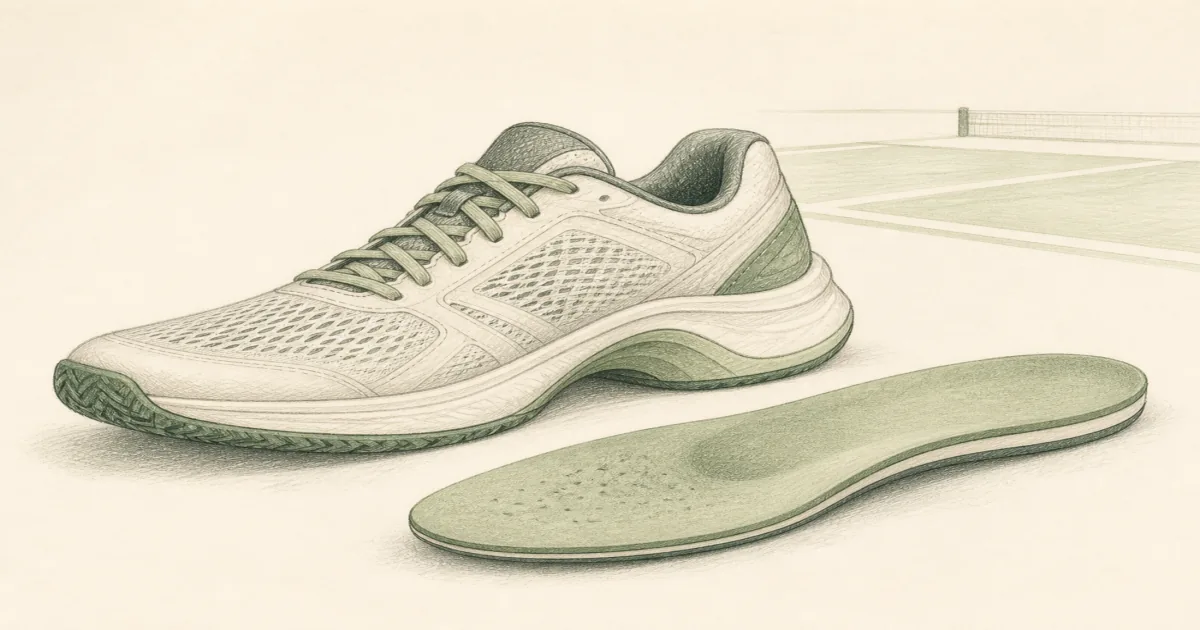
Best Pickleball Shoes for Plantar Fasciitis (2026): Court Picks That Help
Shoes
Plantar fasciitis needs arch support and a court shoe that does not flex sideways. Two Amazon picks plus how to fit an insole without making the shoe too tight.
Our picks
Plantar fasciitis makes every hard stop feel like a test. The first move is to make sure the shoe locks your heel, supports your arch, and stays planted on side cuts. A court shoe that does those three jobs is more useful than a soft running sneaker that feels pillowy for ten minutes and sloppy for the next two hours.
Arch support is one need, and the pickleball shoe guides cover the rest of the fit and surface picture.
If you need a wider overview before you buy, start with best pickleball shoes. For other pain-condition pages, see best pickleball shoes for heel pain and best pickleball shoes for knee pain. The flat-foot companion page lives at best pickleball shoes for flat feet. This page stays plantar-specific: arch support, heel cushion, and how to think about an insole swap.
What plantar fasciitis actually needs from a shoe
Three things matter. Arch support that matches your foot, heel cushion that absorbs impact without letting the heel roll, and a stable base that does not flex sideways during a kitchen cut. If a shoe misses one of these, the others cannot carry the load.
A court shoe with a firm midfoot usually beats a soft running shoe for this job. Running shoes are built forward. Pickleball asks you to stop and move sideways. A soft foam midsole that feels great for a road mile can feel unstable during a split-step on the kitchen line.
Quick comparison
Top stability pick: K-Swiss Pickleball Supreme
The K-Swiss Men's Pickleball Supreme Shoe is the pickleball-specific stability answer for plantar fasciitis. The plantar support chassis adds midfoot structure that you can feel during a side cut. The base is wide enough to keep your foot planted when you push off the kitchen line.
It is not a soft, pillowy shoe. That is the point. A heavier, firmer midsole with good arch support usually handles daily doubles sessions better than a thin foam trainer that compresses after a few weeks.
Who it is for: Players with arch or heel pain who want a pickleball-specific shoe with structure, and doubles players who need stable side cuts without heel slip.
Pros
- Plantar support chassis for midfoot structure
- Wide base keeps foot planted on side cuts
- Strong buyer feedback on comfort and court grip
- Room for an aftermarket insole if the stock arch is not enough
Cons
- Heavier and firmer than a casual sneaker
- May need a short break-in period before long sessions
- Fewer color options than lifestyle runners
Shop: K-Swiss Pickleball Supreme on Amazon
Best arch-fit alternative: Skechers Viper Court Pro 2.0
The Skechers Pickleball Viper Court Pro 2.0 is the lighter alternative for players who want built-in arch cushioning without a heavy stability trainer. The Skechers Arch Fit insole gives a structured arch shape straight out of the box. The shoe still has a court outsole and lateral support for pickleball movement.
This is the practical pick when you want a softer underfoot feel but still need real court traction. Confirm the insole arch matches your foot before you keep the shoe. A built-in arch that does not match your foot is worse than a neutral insole plus an aftermarket swap.
Who it is for: Players with mild arch pain who want a lighter pickleball shoe, and players who find K-Swiss too heavy for their weekly sessions.
Pros
- Skechers Arch Fit insole for built-in arch support
- Lighter than a heavy stability trainer
- Stable enough for outdoor hard courts
- Easier break-in than a firmer midsole
Cons
- Arch shape may not match every foot
- Less midfoot structure than a stability trainer
- Confirm the exact variant on the listing before ordering
Shop: Skechers Viper Court Pro 2.0 on Amazon
Best wide-fit arch support: FitVille Wide Pickleball Shoe
Best for: Players with plantar fasciitis and wide or bunion-prone feet who need forefoot room plus arch support.
The FitVille Men's Wide Pickleball Shoe solves the fit half of the plantar fasciitis problem. A narrow court shoe presses across the ball of the foot and can push the arch into the wrong place. FitVille cuts the toe box extra wide, with a generous forefoot that tapers below the bunion area, so your toes spread instead of stacking. The removable ArchCore insole then gives you a structured arch you can feel, and it lifts out if you want to run your own orthotic instead.
The support story holds up on court. A TPU heel ring keeps the rearfoot planted, and a torsion shank resists the midfoot twist that a soft running shoe allows. The rubber outsole grips hard courts and gym floors, and the mesh upper stays cool through a long summer session.
It is the roomiest, cheapest way into arch support on this list. The tradeoffs are fit consistency and outsole life on rough concrete. If you already know your New Balance width code and want the same repeatable fit every time, stay with a wide tennis platform. If you want maximum toe room and an arch you can adjust, start here.
Who it is for: Wide, flat, or bunion-prone feet that need arch support and forefoot room in one shoe.
Pros
- Extra-wide toe box with 2E and 4E options on many listings
- Removable ArchCore insole for arch support or a custom orthotic
- TPU heel ring and torsion shank for midfoot stability
- Less expensive than most wide court shoes
Cons
- Runs a touch large for some buyers
- Outsole life varies on rough outdoor concrete
- Fit consistency trails New Balance
Shop: FitVille Wide Pickleball Shoe on Amazon
Best durable court shoe: K-Swiss Express Light
The K-Swiss Men's Express Light Pickleball Shoe is the durable court option for players who want a stable platform with cushioned landings. The toe box is roomy enough to fit most aftermarket arch insoles without crushing the toes, and the DragGuard outsole holds up on abrasive outdoor courts.
This is the third option when you want a durable outdoor outsole on top of arch support. K-Swiss Pickleball Supreme and Skechers Viper Court Pro 2.0 remain the more pickleball-specific choices.
Who it is for: Players who want a durable, cushioned court platform and a roomy toe box for aftermarket insoles.
Pros
- Cushioned midsole for hard-court sessions
- Strong lateral-support design for court movement
- Durable outsole for outdoor hard-court sessions
- Roomy toe box for an aftermarket insole
Cons
- Less lateral support than a dedicated stability shoe
- Heavier than a lightweight pickleball shoe
- More shoe than an occasional player needs
Shop: K-Swiss Express Light on Amazon
Do you need to swap the insole?
Often yes. The stock insole on most court shoes is a flat foam slab that does not match an aggressive arch. Players with plantar fasciitis commonly add an aftermarket insole such as Superfeet Green or Powerstep Pinnacle to get a structured arch and a deeper heel cup.
A few rules. The aftermarket insole should match the inside curve of your foot, not press hard into it. It should still leave a thumb width of toe room. It should not crush the heel against the back of the upper. If you swap the insole and the shoe suddenly feels tight, size up or look for a wider version.
Pickleball court shoes vs running shoes for plantar fasciitis
Running shoes flex forward and are built for straight-line cushioning. Pickleball asks for side-to-side cuts and quick stops. A running shoe often feels unstable during a kitchen exchange, which can aggravate plantar pain even when the cushioning feels fine on a road mile.
A court shoe with a wider base, a stable midfoot, and a court-specific outsole is the safer starting point. If you want extra cushioning, pick a court shoe with cushioning or similar impact absorption, not a road running shoe.
Fit checks before you buy
Try the shoes late in the day when your feet are slightly swollen. Wear the socks you actually play in. Lace the midfoot snug without choking the top of the foot. Stand on one leg and make a few side steps. Your heel should not slide. Your arch should not press hard into the insole.
If the arch feels wrong in the store, it will not improve on the court. Return the shoe before the laces get broken in. The fit window is shorter than most players expect.
When footwear is not the answer
A new shoe is not a treatment plan. Stop play and seek medical advice for sharp morning heel pain, swelling, pain that changes how you walk, or symptoms that get worse across a week. Reduce court load while you work out what is going on. Use the shoe purchase as one tool among several, not as the only fix.
If you have already seen a clinician, follow the home routine they gave you. Stretch the calf and the plantar fascia gently. Ice after flare-ups. Build back into sessions slowly. The right shoe helps. It does not replace the routine.
Replace worn court shoes in time
A compressed midsole or a smooth pivot area can change how your arch handles a stop. Check tread and insole condition before a busy season. If the insole has flattened or the heel no longer locks, replace the shoe before the next league night. A worn shoe often makes plantar pain worse even if the upper looks fine.
Common buying mistakes
Buying a soft running shoe because it felt pillowy for ten minutes in the store. Skipping the insole swap because the stock one looked fine. Choosing a shoe that crushes the heel because the toe box felt roomy. Ignoring morning pain because the new shoes felt better during a quick try-on. None of these fix the underlying problem.
Match the shoe to your foot, your court surface, and your weekly volume. That is how most players with plantar fasciitis end up with the right shoe.
Bottom line
Plantar fasciitis needs arch support, heel cushion, and a stable court shoe. The K-Swiss Pickleball Supreme is the pickleball-specific stability answer with a plantar support chassis. The Skechers Viper Court Pro 2.0 is the lighter Arch Fit alternative. The FitVille Men's Wide Pickleball Shoe is the wide-fit pick with an extra-wide toe box and a removable arch insole.
The K-Swiss Express Light is a durable court platform with cushioned landings. Combine the right fit with an insole swap when needed, and replace the shoe before the midsole goes flat.
Frequently Asked Questions
What are the best pickleball shoes for plantar fasciitis?
Pick a court shoe with arch support, a stable base, and a heel that locks on side cuts. The K-Swiss Pickleball Supreme is the pickleball-specific stability pick with a plantar support chassis. The Skechers Viper Court Pro 2.0 adds built-in Arch Fit cushioning in a lighter package. The FitVille Wide Pickleball Shoe is the wide-fit option with an extra-wide toe box and a removable arch insole.
Can shoes fix plantar fasciitis?
No. Shoes can improve arch support, heel cushion, and side-to-side stability, but they do not diagnose or treat plantar fasciitis. If pain is sharp, worst in the morning, or getting worse, stop and talk to a clinician before adding more court time.
Should I use a softer running shoe for plantar fasciitis?
Usually no. Running shoes flex forward and can feel unstable on lateral pickleball cuts. A court shoe with a stable base and a supportive insole is the safer starting point for regular play.
Do I need to swap the insole?
Often yes. Aftermarket arch insoles (such as Superfeet Green or Powerstep Pinnacle) are common add-ons for players with plantar fasciitis. Make sure the aftermarket insole still leaves toe room and does not crush the heel.
Are court shoes better than running shoes for plantar fasciitis?
For pickleball, yes. Court shoes keep your foot planted on side cuts, which reduces the slipping that can aggravate plantar fascia. Running shoes are made for forward motion and often feel unstable during quick lateral stops.
How do I know if a shoe fits my arch?
Stand in the shoe with the laces snug through the midfoot. The arch of the insole should match the inside curve of your foot, not press hard into it and not gap underneath it. If the arch feels wrong in the store, it will not improve on court.
When should I replace pickleball shoes if I have plantar fasciitis?
Replace them when pivot areas become smooth, the insole has compressed flat, the upper no longer holds your heel, or the midsole feels dead. A worn shoe often makes plantar pain worse even if the upper looks fine.
Should I rest my feet between sessions?
Yes. Stretch the calf and the plantar fascia gently before play, and avoid jumping straight into long sessions after a flare-up. Shoes are a tool, not a treatment.