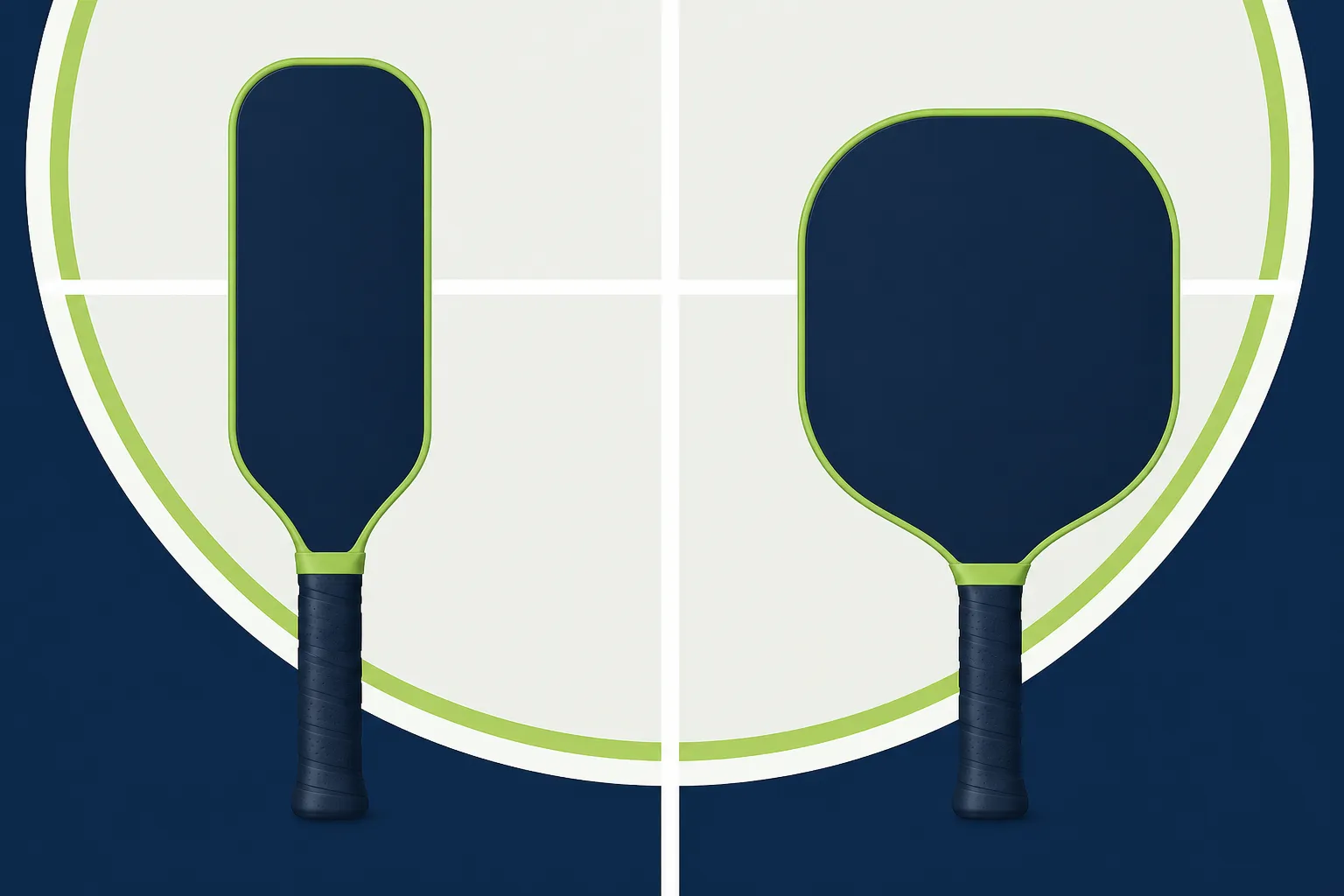
Elongated vs Widebody Pickleball Paddle: Shape Guide
Paddles
Shape changes reach and forgiveness more than marketing adjectives. Compare elongated vs widebody faces before you chase a pro template.
Our picks
Shape is the spec you can see from ten feet away, which makes it easy to overvalue. Elongated vs widebody pickleball paddle choice should follow your contact consistency and court position, not what the best player at open play carries. Extra length helps stretch volleys and overheads. Extra width helps when you miss left and right across the face.
Shape is one choice, and the best pickleball paddles pillar shows the models behind it, with the paddle buying guides as the index.
Use the five shopping questions in how to choose a pickleball paddle. When you are ready to buy a specific outline, see best elongated pickleball paddle or best widebody pickleball paddle. Value shapes live in best pickleball paddle under 100.
What widebody and elongated mean on spec sheets
Widebody paddles keep a broader face width with a more classic pickleball outline. The sweet spot feels centered and roomy. Blocks and returns forgive slight mis-hits because you still engage core material.
Elongated paddles stretch face length, often with a narrower width profile. You gain reach at the net and on overheads. The tradeoff is a smaller effective sweet spot and harsher feedback when you miss center.
Hybrid shapes split the difference with moderate length and width. Many "all-court" models live here. Read listed length and width in inches instead of trusting adjectives alone. Face shape is also not pickleball paddle handle length. An elongated face can still have a short grip.
Widebody: forgiveness first
Widebody geometry helps players who:
- Are learning dinks, serves, and resets
- Mishit blocks and volleys often
- Want stability over stretch on tight kitchen exchanges
Widebody pairs well with mid to thick cores for beginners. Forgiving shape plus forgiving thickness buys time to fix footwork and paddle prep without constant pop-ups.
If you come from tennis and still hit long, widebody often beats elongated reach. Reach does not help if the face punishes your contact point while you retrain touch.
Elongated: reach and leverage
Elongated faces help when you:
- Already find center contact on most drives and volleys
- Want extra reach on stretch dinks and overheads
- Prefer a slightly head-forward feel for put-aways
Elongated setups often show up in power-oriented builds: thinner cores, stiffer faces, midweight to slightly heavy swing weights. They reward clean mechanics and punish lazy blocks.
Intermediate players sometimes buy elongated because it looks pro. If your soft game still flickers, widebody or hybrid is usually the smarter training tool.
Hybrid shapes and marketing names
Brands use terms like elongated hybrid, standard with extended reach, or power shape. Translate marketing into numbers:
- Face length near 16 to 17 inches often signals elongated territory
- Wider profiles near 8 inches classically read widebody
- Hybrid models sit between those bands
Compare numbers across two paddles at the same price before you compare logos. Shape interacts with weight and thickness, so read all three lines on the listing.
Match shape to how you actually miss
Use your miss pattern, not your ego:
Grip size still comes first. A long face you cannot hold correctly is just a expensive way to spray balls.
Shopping elongated vs widebody without regret
- Confirm grip circumference fits your measured hand.
- Pick thickness band using our thickness guide mindset: forgiving thick for learning, thinner when power is the goal.
- Choose shape from the miss table above.
- Buy with returns when switching shapes for the first time.
When your shape target is set, shop the best elongated pickleball paddle or the best widebody pickleball paddle. Value shapes also live in best pickleball paddle under 100. Refresh handle feel with best pickleball grips if reach feels good but the paddle twists in hand.
Shape upgrades are normal. Start forgiving, prove consistency, then stretch the face when your game asks for reach instead of margin.
Shape and thickness pairings that work
Pairings are guides, not laws. A widebody thin paddle can still feel demanding if weight is head-heavy. Read the full spec line every time.
Tournament vs rec shape choices
Rec open play tolerates experimentation. Local tournaments may check paddle dimensions against USA Pickleball guidelines. If you plan to test events soon, verify face length and width on the listing before you commit to an extreme elongated template.
Most retail elongated models aim at legal limits, but marketplace listings occasionally blur model names. Buy from spec-clear pages with returns when in doubt.
When to demo before you decide
Demo or borrow when you:
- Switch from widebody to elongated for the first time
- Drop from 16mm to 13mm in the same session week
- Feel good on drives but lose kitchen battles after shape changes
Ten minutes of dinks and blocks tells you more than reading three more Reddit threads. Bring your measured grip size and compare apples to apples with similar weight.
Elongated vs widebody: two live examples
The Selkirk Sport SLK Halo Control Max Pickleball Paddle shows what elongated control feels like when you want reach without a pure power identity. The JOOLA Anna Bright Scorpeus 3S 14mm Pickleball Paddle shows the widebody side: more face to work with at the kitchen, less length for stretch gets.
Frequently Asked Questions
What is the difference between elongated and widebody pickleball paddles?
Elongated paddles stretch length for reach on volleys and overheads. Widebody paddles keep a broader face for a larger sweet spot and more forgiveness on mishits.
Which shape is better for beginners?
Widebody for most beginners. It forgives off-center contact while you learn timing at the kitchen and on serves.
Do elongated paddles give free power?
Not free power. They can add leverage and head speed when contact is clean, but mishits suffer more than on widebody faces.
Are elongated paddles legal in rec play?
Most consumer elongated faces meet USA Pickleball length and width limits, but always check the listing if you plan to tournament test. Rec open play is usually flexible.
Can I switch shapes later?
Yes. Many players start widebody, then move elongated once blocks and dinks stabilize. Buy with returns when experimenting.
Does an elongated paddle have a smaller sweet spot?
Usually yes. Stretching the face length with a narrower profile shrinks the effective sweet spot and gives harsher feedback when you miss center.
Which shape is better for doubles at the kitchen line?
Widebody favors hand battles and forgiveness, while elongated helps reach on stretch volleys and overheads. Pick based on whether you miss left and right or need extra reach.