Pickleball Paddle Eraser: Clean Residue and Bring Spin Back
Accessories
A pickleball paddle eraser clears ball plastic from raw carbon faces so grit and spin come back. Here is when to use one and which bag-sized bar to buy.
Our picks
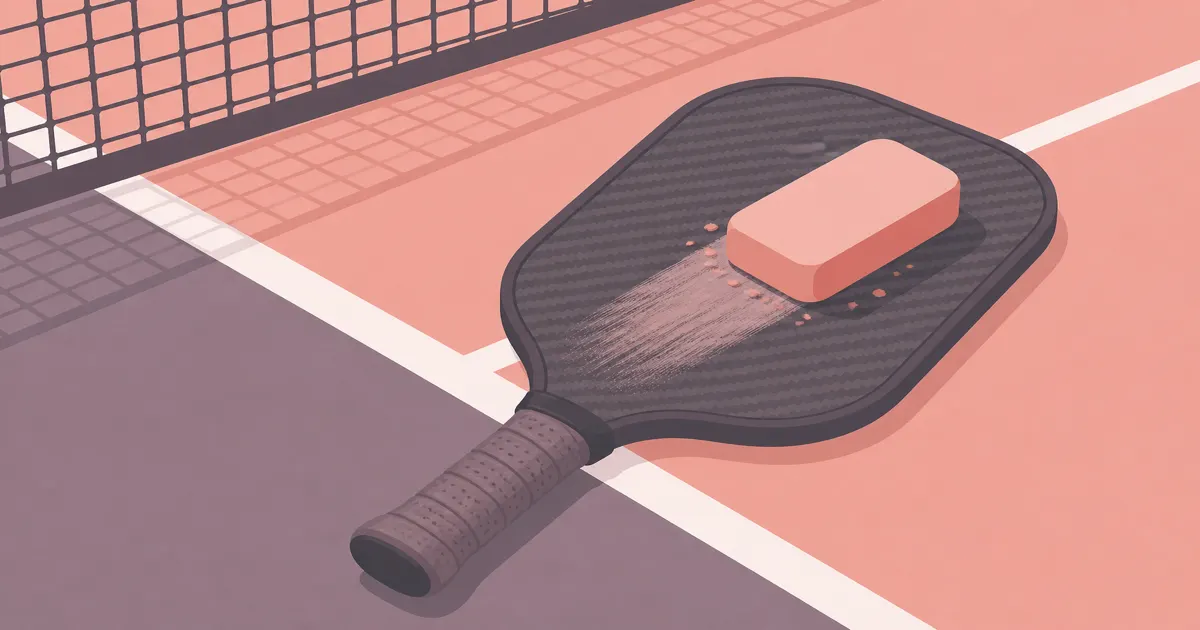
Raw carbon paddles collect plastic dust from balls. That film fills the face texture, softens bite on rolls, and makes a once-grippy paddle feel glassy. A pickleball paddle eraser is the small rubber bar that scrapes that film off without soaking the face in mystery spray.
An eraser is one care item, and the pickleball gear guides cover the rest of the small gear.
This is a how-to first, product second. Spec and care notes follow common player patterns: wipe grit, do not gouge the face, and stop when the surface looks glazed.
For broader cleaning (edges, grips, sweat), start with how to clean a pickleball paddle. For grit and spin context, see pickleball paddle grit and best pickleball paddle for spin.
When residue is the real problem
You miss a few rolls and blame your hands. Sometimes it is residue. White scuffs on the face, a chalky haze after outdoor play, or a sudden loss of bite after a hot asphalt day all point to clogged texture.
Residue builds faster outdoors because pavement dust mixes with ball plastic. Indoor gym play still leaves film, just usually slower. If your paddle felt spinny last month and lifeless this week without a face change, clean before you upgrade.
An eraser will not fix a face that is polished smooth from months of abrasion. Cleaning restores what grit remains. It does not invent new grit.
How to use a paddle eraser
- Dry the face. Wipe loose dust with a clean microfiber first. Wet mud turns into paste under the eraser.
- Rub with light pressure. Short strokes across the face. You should see dark or white residue transfer onto the rubber.
- Brush crumbs away. Flick eraser crumbs off the face and edge guard so they do not grind back in.
- Spot-check the sweet spot. The center collects the most film. Do not ignore the outer face if you miss wide.
- Stop if the face feels gummy. Some sprays leave residue that smears. Stick to dry erasing unless your paddle maker says otherwise.
Do this after dusty outdoor sessions, before league night when spin matters, or whenever the face looks glazed.
If you play mostly outdoors, plan on more frequent cleaning. Asphalt dust and soft outdoor ball plastic stack up faster than clean indoor gym floors. A thirty-second wipe after the last game beats a frantic scrub in the parking lot before the next one.
What erasers do not fix
Deep scratches that catch balls oddly. Edge-guard separations. Dead cores. Worn-out grit that has already polished away. If the paddle still feels dead after a clean face, the problem is elsewhere.
Also skip aggressive sanding advice from random videos. You can destroy a face faster than you restore it. An eraser is maintenance, not a rebuild.
Players sometimes confuse a dirty face with a dying paddle. Try the eraser first. If spin returns, you saved money. If nothing changes, look at grit wear, core feel, and whether you simply outgrew the paddle.
Hero pick: CRBN Pickleball Paddle Eraser
The CRBN Pickleball Paddle Eraser 2-Pack is the bag-sized pick for most carbon-faced paddles. Soft rubber lifts residue quickly, the form factor fits a pocket or side pouch, and a two-pack means you can leave one in the car and keep one courtside.
CRBN markets the bar for carbon faces across many brands, not only CRBN paddles. Check the latex note on the listing if you have a latex allergy.
Who it is for: Players with raw carbon paddles who notice spin fade after a few weeks of play.
Pros
- Fast dry cleaning without soaking the face
- Compact enough for every bag
- Spare unit in a two-pack
Cons
- Latex content for some users
- Will not resurrect a polished-out face
Alternatives in the same category include other carbon-cleaner bars with similar rubber construction. Prefer listings with clear “raw carbon” guidance, recent buyer photos of residue on the bar, and a size that actually fits your bag. Avoid mystery blocks with no sport labeling. If a listing only shows lifestyle photos and no residue results, skip it.
Pair cleaning with the rest of your gear care
Wipe the edge guard so grit crumbs do not re-scratch the face. Refresh an overgrip when sweat makes you squeeze harder. Store the paddle out of a baking car so the face and core age slower.
Bag a tiny habit stack: balls in one pocket, overgrips in another, eraser next to the towel. Accessories only help when they travel with you.
If you are shopping a new spin-focused paddle after cleaning still feels meh, read pickleball paddle for spin before you spend. Clean first. Upgrade second.
When to erase vs when to replace the paddle
Erase when the face looks chalky, when roll serves lose bite, or after a dusty outdoor weekend. Replace when the face is polished smooth, the core feels dead, or cracks show in the edge. Cleaning cannot reverse months of abrasion.
Keep one old ball and one fresh ball for a quick home check. If both feel glassy off the face after erasing, the texture is worn. If only the dirty outdoor ball felt dead before cleaning, residue was the villain.
Common mistakes
Erasing a soaking wet face and smearing grit into mud.
Pressing so hard you round the edge guard or leave rubber streaks you then scrub with harsh chemicals.
Expecting an eraser to fix every miss. Footwork and contact still matter more than a perfect face wipe. An eraser also will not fix pickleball paddle delamination. If a bubble or rattle remains after a clean, retire the paddle.
Buying three cleaners and never putting one in the bag you actually carry.
Using a kitchen scrub pad “just once.” Once is enough to polish away the grit you wanted to save.
Bottom line
A pickleball paddle eraser is cheap insurance for raw carbon faces. Wipe dust, erase residue with the CRBN Pickleball Paddle Eraser, and only then decide whether your spin problem is gear or timing. Keep the bar next to your overgrips so cleaning becomes habit, not a once-a-season panic.
Frequently Asked Questions
What does a pickleball paddle eraser do?
It rubs away plastic residue, dirt, and light scuffs from a raw carbon paddle face so the texture can grip the ball again.
Do I need an eraser if I already wipe with a towel?
A towel removes dust. An eraser lifts embedded ball plastic that clogs the face. If spin feels dead after a few weeks, try the eraser before blaming the paddle.
Will a paddle eraser work on fiberglass faces?
Most rubber erasers are sold for raw carbon faces. Fiberglass and painted faces may not need the same treatment, and some makers warn against aggressive rubbing.
How often should I erase my paddle?
When the face looks chalky with white plastic, or when roll serves stop biting. Many players wipe after dusty outdoor sessions and do a deeper erase weekly.
Can an eraser restore a dead paddle forever?
No. Erasers clear residue. They do not rebuild worn grit. If the face is polished smooth from months of play, look at replacement, not more rubbing.
Is a paddle eraser safe for fiberglass or painted faces?
Not necessarily. Most rubber erasers are sold for raw carbon faces, and some makers warn against aggressive rubbing on fiberglass and painted faces. Stick to the face type the listing names.
Can a paddle eraser damage my paddle?
It can if you press hard. Use light strokes to lift residue, and stop if the face feels gummy or the edge guard starts to round. An eraser is maintenance, not a rebuild.