Pickleball Paddle Delamination: How to Spot a Dead Core
Paddles
Delamination is the face pulling away from the core. Learn the sounds and feel that mean replace the paddle, not just clean it.
Our picks
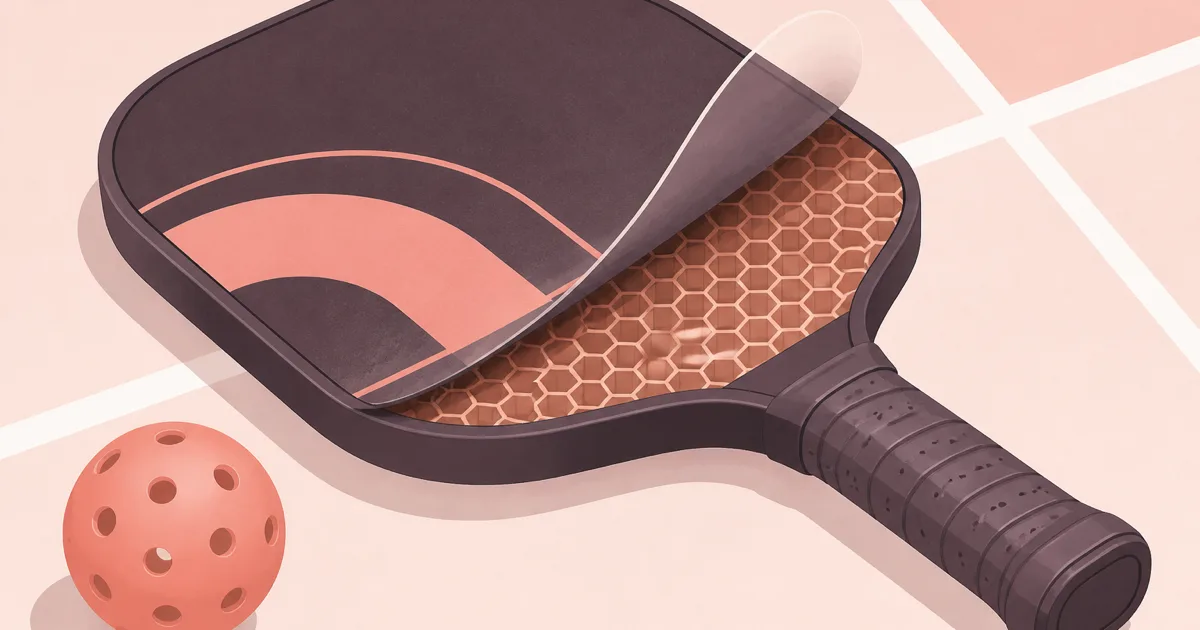
A dead-feeling paddle is not always a dead core. Residue can make a carbon face feel glassy. Grit can wear down. The edge guard can crack. Delamination is the more serious failure: the face and core are no longer one piece.
Damage is one failure mode, and the best pickleball paddles pillar helps you plan the replacement, while the pickleball paddle guides cover the rest.
A rattling face, a bubble under the surface, or a sudden dead spot is usually delamination, not a mystery core. If a paddle is under warranty, photograph it before you keep hitting.
For the slow-wear version of this problem, read how long do pickleball paddles last first. Cleaning steps live in how to clean a pickleball paddle. Texture detail is in pickleball paddle grit.
What delamination looks and sounds like
Work through these checks in order.
Sight. Look across the face in raking light. Bubbles, waves, or a patch that sits higher than the rest of the face are classic signs. A small ding on the edge guard is not delamination.
Sound. A healthy paddle has a consistent pitch off the sweet spot. Delamination often adds a dull thud, a rattle, or a different note on one side of the face. Compare both faces if the paddle is not a one-sided design.
Feel. Press around the center and toward the edge. A spongy island that flexes when the rest of the face does not is a warning. Do not keep punching a bubble to “test” it.
Play. If balls that used to jump now die only on one part of the face, and cleaning does not bring that spot back, suspect the core.
None of these signs alone is a lab diagnosis. Together they are enough to stop using the paddle for hard drives.
Rule out residue and grit wear first
Players replace paddles that only needed a cleaning. White plastic film from outdoor balls fills the texture and kills spin. That is not delamination.
Keep a CRBN Pickleball Paddle Eraser in the bag. The live listing showed 4.7 stars from 1,041 ratings. Dry the face, rub with light pressure, and brush the crumbs off. If pop and bite return, you had residue.
An eraser will not flatten a bubble. If the face still looks lifted after a clean, stop.
Worn grit is the other false alarm. A polished, shiny face with no bubbles is usually age, not separation. You can keep playing a worn face. You should not keep playing a separating one.
Check the CRBN paddle eraser on Amazon.
What actually causes it
Common contributors:
- Heat. Cars, garages, and courtside bags in direct sun.
- Moisture. Soaking a paddle or storing it wet in a closed bag.
- Impacts. Smashing the face into the court, net post, or another paddle.
- Manufacturing. Some paddles fail early. That is why warranties exist.
- Modifications. Drilling, peeling the edge, or some tape jobs can void coverage. Check your brand’s rules.
Thermoformed unibody paddles are marketed as more resistant to this failure than older cold-pressed builds. Resistant is not immune. Heat still wins.
When to replace instead of hoping
Replace the paddle if:
- You can see a bubble or lifted face sheet
- You hear a rattle that cleaning does not change
- A soft patch stays soft
- The edge guard is holding a face that is clearly coming off
Do not glue it for league night. A face that lets go mid-rally is a bad surprise, and a homemade repair can make the surface illegal or unsafe.
If the paddle is done, you need something you can actually play. The niupipo Pickleball Paddles Set is the replacement pick here, not because it matches a $250 thermoform, but because the live listing is in stock, USAPA-approved, and showed 4.6 stars from 425 ratings. Use it as a stopgap or a spare while you shop a longer-term paddle.
Check the niupipo paddle set on Amazon.
If you would rather replace with a single mid-price carbon paddle, use the lifespan guide’s replacement notes and confirm the listing is still available.
Warranty and proof
Photograph both faces, the edge, and the serial or model sticker. Keep the receipt. Contact the brand before you peel anything or add more tape.
Expect pushback on heat damage. “I left it in the car once” is a common denial. If the paddle failed in the first months of normal indoor use, you have a stronger case.
Do not keep playing a delaminating paddle just to “get your money’s worth.” The money is already gone. Your next purchase is a different paddle, plus better storage.
Storage that reduces the risk
- Do not leave paddles in a hot trunk.
- Use a paddle cover so grit and faces are not grinding in the bag.
- Dry the paddle after wet outdoor play before zipping it away.
- Edge tape can delay rim chips. It will not re-bond a core. See pickleball paddle edge guard.
Bottom line
Clean first, then inspect. Residue is reversible. Pickleball paddle delamination is not. Use a CRBN Pickleball Paddle Eraser to test the face. If the core is separating, retire the paddle and get back on court with a live replacement such as the niupipo Pickleball Paddles Set while you choose the next daily driver.
Frequently Asked Questions
What is pickleball paddle delamination?
It is the face sheet separating from the core, or core layers pulling apart. You may see bubbles, a raised patch, a rattle, or a dead thud on balls that used to pop.
Can I fix pickleball paddle delamination with glue?
Home glue jobs rarely last and can change the hitting surface in ways that are unsafe or illegal for sanctioned play. Treat a separated face as the end of that paddle.
Is a muted sound always delamination?
No. Worn grit, clogged residue, a cracked edge guard, or a waterlogged core can also mute the sound. Clean and inspect before you throw the paddle away.
Does heat cause paddle delamination?
Heat is a common suspect. A paddle left in a hot car can soften adhesives. Avoid trunks and dashboards, especially in summer.
Will a paddle eraser fix delamination?
No. An eraser only removes residue. Use it to test whether the face is dirty. If bubbles, rattles, or a soft patch remain after cleaning, the core is the problem.
Is delamination covered by warranty?
Sometimes, especially if it happens early and you have proof of purchase. Policies differ by brand and usually exclude heat damage, edge smashes, and modifications such as lead tape on some models. Read the current warranty card.
How is this different from normal paddle lifespan?
Lifespan is the slow fade of grit, edges, and pop. Delamination is a structural failure. You can still play a worn paddle. You should stop playing a paddle whose face is coming off.