Pickleball Paddle Core Thickness: Thin vs Thick mm Explained
Paddles
Pickleball paddle core thickness is the mm spec between the faces. Learn thin vs mid vs thick tradeoffs, and keep material questions on the core-type guide.
Our picks
Thickness is the spec shoppers skip because face materials get the ads. In practice, pickleball paddle thickness drives more of your on-court feel than carbon vs fiberglass debates. A 16mm core usually stays quieter on resets. An 11 to 13mm core pops more and punishes late contact. Most rec players should start near 16mm and only go thinner after drops stop sailing.
Thickness is one spec, and the best pickleball paddles pillar shows the finished models across the range, while the pickleball paddle guides hold the full set.
For polymer vs Nomex vs foam as materials, use pickleball paddle core explained instead of mixing those jobs here. Start with the full shopping picture in how to choose a pickleball paddle. When you are ready for models, see best pickleball paddle for beginners for forgiving thick-core starters. Ready to buy by thickness? Shortlist best 16mm pickleball paddle or best 14mm pickleball paddle.
What paddle thickness actually measures
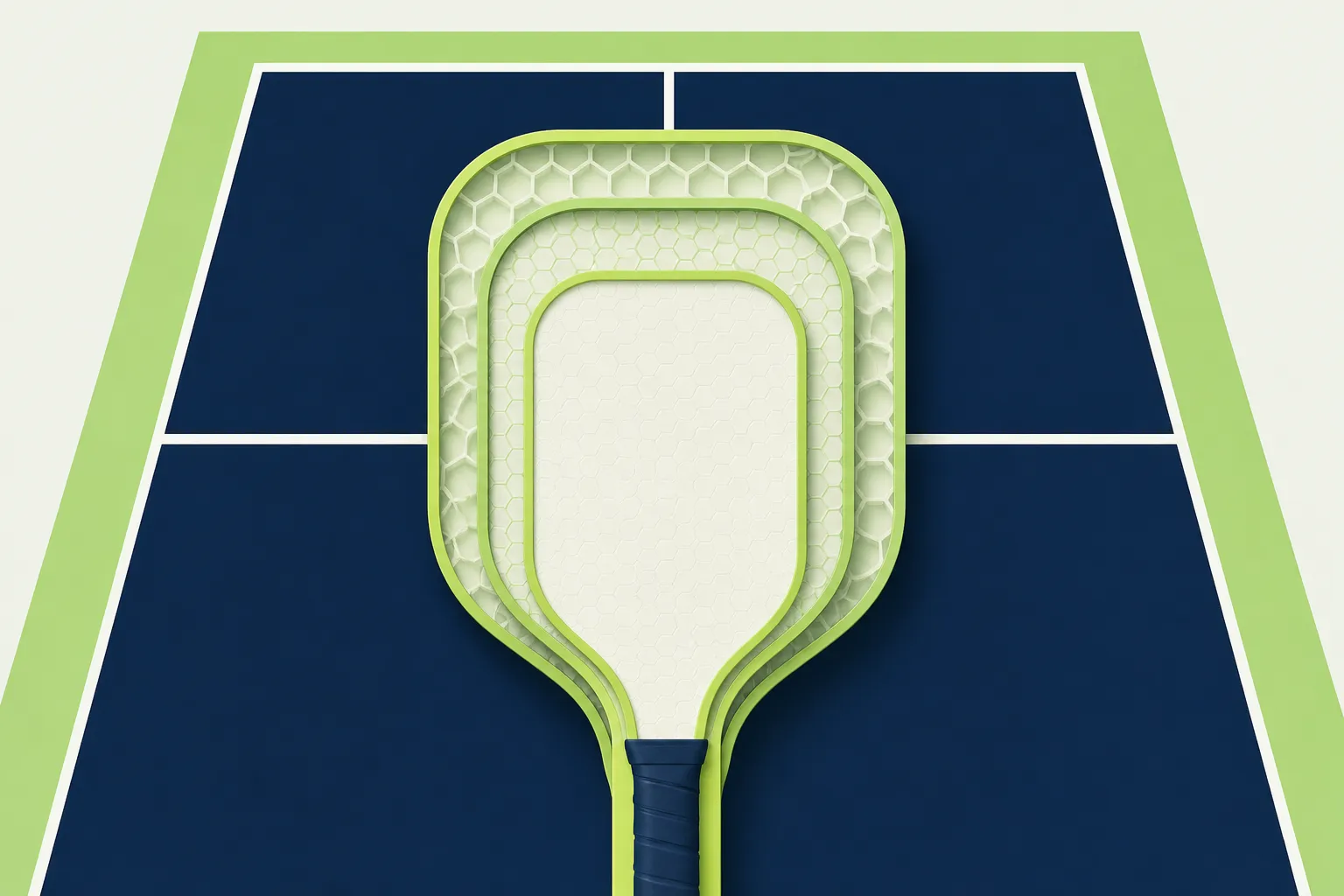
When brands list 13mm, 14mm, or 16mm, they mean pickleball paddle core thickness: the polymer between face layers, not total paddle height. Polymer honeycomb is the modern default because it balances weight, durability, and feel across price tiers.
Do not confuse that mm rating with core material. Two paddles can share 16mm and still feel different if one is polymer honeycomb and the other is foam. Keep material shopping on the core guide. Keep this page for how thick the stack is.
Total paddle thickness can include edge guards and face layup. Shop using the listed core mm when it is published. If only "overall thickness" appears, treat it as a rough hint, not a precise comparison.
Thin cores: power and responsiveness
Thin cores, roughly 11 to 13mm, store less energy in the core and return more to the ball on clean contact. Players describe them as crisp, fast, or poppy. Drives and serves can jump with less effort when timing is good.
The tradeoff is margin. Off-center hits feel harsher and spray more. Soft game and reset work demand cleaner technique because the core does less hand-holding. Thin setups often pair with elongated faces for power-oriented players.
Choose thin when you already control pace, want more put-away speed, and accept fewer mishit saves. Skip thin on day one if you still fight long balls and inconsistent dinks.
Mid cores: the all-court middle
Mid thickness around 14 to 15mm is the compromise band many improving players land in. You keep reasonable pop on drives without giving up all forgiveness at the kitchen. Brands market mid cores as "all-court" for a reason.
If you are unsure between thin and thick, mid is the sane experiment zone. It is wide enough for open play and tight enough that you can feel whether you want more touch or more speed next.
Pair mid cores with your shape choice: widebody mid for stability, elongated mid when reach matters but you still want some margin.
Thick cores: control and forgiveness
Thick cores at 16mm and above compress more on impact. Blocks and dinks feel cushioned. Mishits stay playable more often. That is why many beginner-friendly paddles sit here.
Thick does not mean dead. Modern 16mm polymer paddles still drive fine for recreational play. You may work harder on aggressive put-aways compared with a thin face, but your error rate on soft game often drops.
Players coming from tennis who spray long frequently benefit from thick cores while they retrain touch. Forgiving thickness buys time to fix swing path without punishing every late block.
How thickness interacts with weight and shape
Thickness is not isolated. A thick widebody midweight paddle feels stable and friendly. A thin elongated light paddle feels fast and demanding. Weight shifts swing speed; thickness shifts how much the core helps or hurries you.
When comparing two paddles, read weight range, thickness, and shape together. A 16mm paddle that is head-heavy can feel slower than a 14mm balanced build even though the thicker core suggests softness.
Use returns when experimenting across bands. Small millimeter changes are real, but hand size and swing tempo decide whether you love the feel.
Pick a thickness band in three questions
Ask:
- Do mishits hurt my games more than lack of power? Lean thick.
- Do I finish points when I set up cleanly but want more free pop? Lean thin.
- Am I still building kitchen consistency? Stay 14 to 16mm until timing stabilizes.
Then shop with our beginner paddle guide or the broader how to choose a pickleball paddle checklist. Thickness is one lever, but it is the lever most players should set before chasing spin texture or pro signatures.
Thickness vs face material: what to prioritize
Face material still matters for durability, texture, and fine feel. Carbon and fiberglass layups can change acoustic feedback and spin potential at the edge of the spec range. But two paddles with the same thickness and weight often feel closer than two paddles with different thickness and the same face badge.
Shop thickness first, then face material within your band. If budget forces a choice, spend on honest thickness and weight listings before paying up for exotic face marketing on a mystery core.
Real-world examples by play style
Kitchen-first dinker: Thick core, widebody, midweight. You want margin on blocks and a soft landing on resets. Power can wait.
Baseline banger at rec level: Mid thickness, hybrid or elongated shape, mid to heavy weight. You want pop without a completely unforgiving thin face until contact is clean.
All-court open play: 14 to 16mm, widebody or hybrid, midweight. This band covers the widest range of partners and court speeds without constant adjustment.
If you are between examples, default forgiving. Pickleball rewards touch long before it rewards max exit velocity at most rec levels.
Thickness with a real paddle example
If you need one Amazon reference for a forgiving 16mm all-court feel, use the JOOLA Ben Johns Perseus Pickleball Paddle (16mm). It shows why thickness still matters even when the face is lively carbon.
Curious about a thinner, poppier widebody? The JOOLA Anna Bright Scorpeus 3S 14mm Pickleball Paddle is the contrast case. Expect more launch and less free forgiveness on mishits.
Frequently Asked Questions
What is the best pickleball paddle thickness for beginners?
Most beginners do well with 14 to 16mm polymer cores. That range forgives off-center contact and helps soft game learning before you chase thinner power cores.
Is a thicker paddle always more control-oriented?
Generally yes. Thicker cores absorb more impact and feel softer on blocks and dinks. Thinner cores transfer more energy and feel poppier when you strike cleanly.
Does 13mm vs 16mm matter for recreational play?
It can, especially if you miss long or struggle on resets. The gap is feel and margin, not magic. Demo or buy with returns if you are between bands.
Are thin paddles bad for elbow pain?
Not automatically, but stiff thin setups with poor technique can feel harsher. Comfort also depends on weight, grip size, and swing mechanics, not thickness alone.
Should I match thickness to paddle shape?
Shape and thickness interact. Elongated thin faces lean power. Widebody thick cores lean forgiveness. Use both specs together when shopping.
What does pickleball paddle core thickness mean?
It is the polymer depth between the faces, listed in millimeters. It is not the same as core material. A 16mm polymer paddle and a 16mm foam-walled paddle can still feel different.
Is core thickness the same as paddle core type?
No. Thickness is the mm rating. Core type is polymer honeycomb, Nomex, aluminum, or foam. This page covers mm. Material names live on the core explained guide.
What pickleball paddle thickness should most rec players buy?
Start around 14 to 16mm. That band covers open play without forcing a thin power face. Drop thinner only after your resets stop spraying.