Pickleball Paddle Core Explained (Polymer, Nomex, and Feel)
Paddles
The core is the engine between the faces. Learn what polypropylene honeycomb and older core types actually do to power, control, and durability.
Our picks
Face materials get the ads. The pickleball paddle core does most of the quiet work on feel, forgiveness, and durability. Core type and thickness together shape how much energy stays in the ball versus how much the paddle absorbs on blocks, dinks, and drives.
Core construction is one building block, so the best pickleball paddles pillar shows the finished models, and the pickleball paddle section acts as the index.
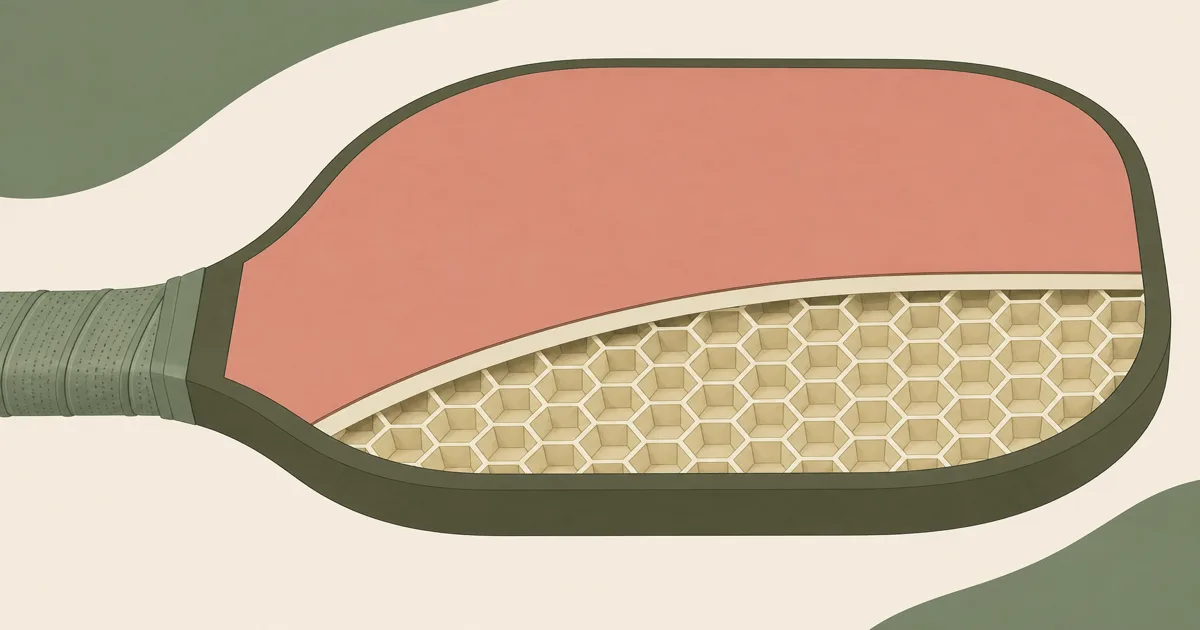
Think of the core as the engine between the faces. Polymer honeycomb is the modern default because it stays light, damps vibration, and still lets you reset at the kitchen. Thickness then tunes how much that engine compresses. A stiff thin core pops. A thick polymer core forgives.
Pair this with pickleball paddle thickness explained when you are choosing millimeters, and how to choose a pickleball paddle when you are ready to shop. If the product says foam instead of honeycomb, switch to the foam pickleball paddle explainer so you know whether that means a full foam core or just foam in the walls.
What the paddle core actually does
The core sits between face layers like filling in a sandwich. On contact, the core cells compress and rebound, storing and returning energy. More compression often feels softer and more controlled. Less compression can feel poppier when you strike center.
Core material sets the baseline stiffness and durability of those cells. Thickness scales how much compression you get. Face material fine-tunes feedback but rarely overrides a stiff thin core or a soft thick one.
Edge guards protect core rims from crush damage. Once core cells collapse at the perimeter, feel changes permanently. Core care is edge care, not just face cleaning.
Polypropylene honeycomb: the modern default
Polypropylene honeycomb dominates current paddle lines from budget recreational to mid-premium tiers. It is light, dampens vibration reasonably, and holds up to repeated impact when paired with a solid edge guard.
Brands tune poly cores by density and cell size, then by thickness. That is why two polymer paddles at 16mm can still feel different. One may feel plush on resets, another slightly firmer on drives. Published specs do not always list density, so demo and returns matter.
For most recreational buyers, polymer honeycomb is the assumed core unless the product page says otherwise. It is the sensible default when you want predictable feel without hunting legacy parts.
Nomex honeycomb: stiffer legacy feel
Nomex aramid honeycomb predates polymer dominance in some performance lines. It tends to play stiffer and louder with a snappier, more immediate response. Players who like crisp feedback sometimes seek Nomex, but many modern polymer stacks mimic that pop with thinner profiles.
Nomex can feel less forgiving on off-center hits compared with softer polymer at the same thickness. Maintenance and availability vary by brand. Recreational beginners usually should not chase Nomex unless they have tested it side by side with polymer and prefer the response.
If a listing vaguely says "composite core" without detail, check manufacturer pages or Q&A before assuming Nomex or polymer.
Aluminum cores: firm and niche
Aluminum honeycomb cores appear in older designs and niche paddles. They can feel firm with a direct response and add weight compared with polymer at similar thickness. Durability is strong, but swing speed and arm fatigue may suffer for some players.
You will see fewer aluminum-core paddles in mainstream beginner guides today. They remain relevant when shopping used gear or specialty listings. Treat aluminum as a deliberate feel choice, not an accidental spec.
How core affects power, control, and comfort
Power-oriented feel usually comes from stiffer, thinner cores that return more energy on clean contact. Control-oriented feel usually comes from thicker, softer-compressing cores that absorb pace and stabilize blocks.
Comfort ties to vibration and swing weight, not core label alone. A stiff thin core with a heavy swing weight can feel harsh on elbow-sensitive arms. A thick polymer core with balanced weight often feels smoother during long dink rallies even if top-end put-away speed drops slightly.
Your miss pattern should guide core and thickness together. If you spray long on drives, thicker polymer may help while you fix technique. If you already control pace and want speed, thinner polymer may be the next experiment.
Core material vs core thickness: shop both together
Material sets the baseline. Thickness scales compression. A 13mm polymer paddle and a 16mm polymer paddle can both be polymer while playing very differently. Comparing 16mm polymer to 13mm Nomex without holding both is harder than comparing two polymer paddles at different depths.
Use this order: pick weight band, pick thickness band for your skill and style, confirm core type on the listing, then choose shape and face details. That sequence avoids brand-war distractions.
See pickleball paddle thickness explained for the thin vs mid vs thick breakdown within polymer stacks.
Shopping without brand wars
Flagship brands argue about proprietary core names every launch cycle. For buyers, translate marketing into three questions: What core family is it? How thick is it? How heavy is the finished paddle?
Ignore slogan duels that claim one core "redefines power" without thickness, weight, and shape context. Read complete spec blocks. Watch return policies. Favor listings that state polymer honeycomb and millimeter depth clearly.
Name a model after the specs match your misses, not because a pro avatar held one in an ad. Your game and arm matter more than tour branding.
Common core misconceptions
Misconception: core material alone picks winners. Reality: thickness, weight, shape, and your contact consistency matter as much or more for recreational play.
Misconception: softer cores are only for beginners. Reality: many advanced players prefer thick polymer for touch at the kitchen even when they own thinner options for singles pace.
Misconception: Nomex always means elite. Reality: it means a stiffer baseline feel that some like and others do not.
Misconception: "composite core" is one thing. Reality: it is a vague label. Find the actual honeycomb material before you pay a premium.
Misconception: core upgrades fix footwork. Reality: cores add margin. Movement and timing still decide rallies.
When to prioritize core type vs other specs
Prioritize core family when you have tested polymer and want a stiffer response, or when you replace a legacy paddle you already liked. Prioritize thickness and weight when you are buying your first serious paddle or upgrading within polymer.
If budget allows one experiment, stay in polymer and move thickness or shape before jumping to exotic cores. That isolates variables and keeps returns simpler.
When you are ready to turn specs into models, continue with how to choose a pickleball paddle and thickness notes linked above. Browse Paddlefoundry for paddles, care, and setup guides that stack with core basics.
Core examples you can click
When people say they want a modern polymer core with all-court usefulness, they often mean something in the lane of the JOOLA Ben Johns Perseus Pickleball Paddle (16mm). Thickness and face work together.
Budget paddles still use polymer cores. The Niupipo carbon paddle set is a useful contrast: same broad category, different face feel and ceiling. Core talk only helps if you also judge the face and weight.
Frequently Asked Questions
What is the most common pickleball paddle core material?
Polypropylene honeycomb is the default in most modern recreational and mid-tier paddles. It balances weight, durability, and feel across thin and thick profiles.
What is the difference between Nomex and polymer cores?
Nomex honeycomb is stiffer and louder with a snappier response. Polymer honeycomb is softer and more forgiving for many recreational players. Nomex appears more in legacy or niche performance lines today.
Does paddle core material matter more than thickness?
Both matter together. Core material sets the baseline feel. Thickness tunes how much that core compresses on contact. Shop thickness within the core family you are considering.
Are aluminum cores still used in pickleball paddles?
Yes, but rarely in mainstream Amazon listings. Aluminum can feel firm and durable but heavy. Most buyers today shop polymer unless they seek a specific legacy feel.
How do I choose a core without falling for brand wars?
Start with thickness and weight targets for your game, confirm the listing says polymer honeycomb unless you want a specific legacy core, then compare shape and face specs. Ignore slogan battles between flagship brands.
Which core is best for a pickleball paddle?
Polypropylene honeycomb is the sensible modern default for most recreational buyers because it is light, damps vibration, and forgives on resets. Nomex is a stiffer legacy feel, and aluminum is firm and niche.
What is a 16mm polymer core good for?
A thick polymer core absorbs pace and stabilizes blocks, which suits kitchen resets and control. A thinner core returns more energy for a livelier, less forgiving feel.