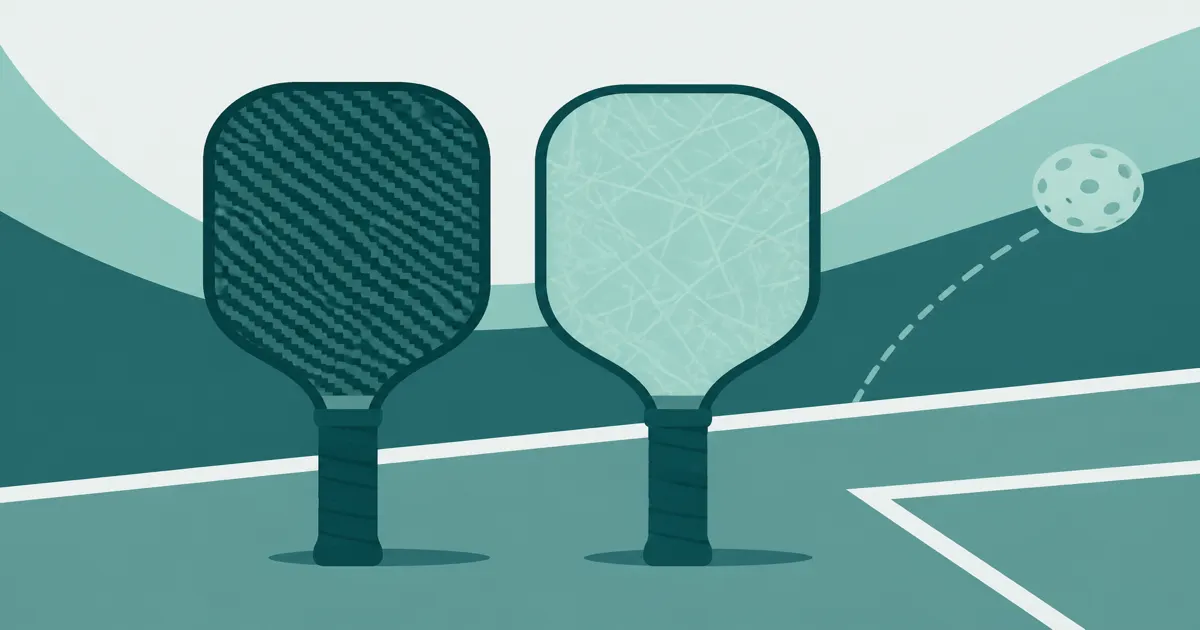
Carbon Fiber vs Fiberglass Pickleball Paddle: Face Material Guide
Paddles
Carbon faces often feel crisper and more connected. Fiberglass can feel springier. Pair either with the right thickness and weight or the label will not matter.
Our picks
Marketing loves face materials. Ads make carbon sound like a cheat code and fiberglass sound outdated. On court, both can play great. Both can play poorly if the core is wrong for your game.
Face material is one split, so the best pickleball paddles pillar shows how it plays out across models, and the paddle guide roundup keeps the guides together.
This guide compares carbon fiber vs fiberglass pickleball paddle faces in plain language: feel, power cues, durability notes, and how to shop without brand wars. Carbon usually gives more bite and a firmer pop. Fiberglass often feels livelier and a little less precise.
Start with how to choose a pickleball paddle if you have not set weight and thickness yet. Pair this page with pickleball paddle core explained for the honeycomb under the face.
What “face material” actually means
The face is the hitting surface bonded over the core. It spreads impact, shapes the trampoline effect with the core, and carries the texture that helps grip the ball.
Carbon fiber sheets are strong for their weight and often marketed for a connected, precise response. Fiberglass (and related composite faces) can flex more and feel springier for some players. Real paddles use different weaves, resins, and top coats, so two carbon paddles can still feel different.
If a listing says “graphite,” read carefully. Graphite language sometimes overlaps with carbon marketing. Focus on the published construction notes and, when possible, on-court feel. For the older control-face job, use our graphite pickleball paddle guide. For a direct face split, see graphite vs carbon fiber pickleball paddle. For textured modern faces, see raw carbon fiber pickleball paddle. When you are ready to buy carbon, use best carbon fiber pickleball paddle.
Feel and power: what players usually notice
Carbon faces often get described as crisp, firm, and feedback-rich. Mishits can feel more obvious. Clean hits can feel precise on dinks and blocks.
Fiberglass faces often get described as lively or trampoline-like, especially on drives. That can help players who need free power. It can also send balls long if your swing is already big.
These are tendencies, not laws. A thick carbon control paddle can feel soft. A thin fiberglass paddle can feel wild. Always read face material together with pickleball paddle thickness explained.
Spin, grit, and wear
Spin lives in texture and technique more than in the fiber brand name. Fresh grit bites the ball. Worn faces polish smooth and lose bite. Outdoor play and abrasive balls wear texture faster.
Clean the face without destroying the coating. Harsh scrubbing can strip grit. See pickleball paddle grit and how to clean a pickleball paddle for care that keeps texture honest.
If spin is your main goal, ask about surface texture and replacement habits, not only carbon vs fiberglass.
Durability and dent resistance
Both faces can dent, crack, or delaminate under hard edge hits and heat abuse. Carbon’s stiffness can feel durable day to day and still fail when a core bond gives way. Fiberglass can take some flex and still chip.
Construction quality and edge design matter as much as fiber type. Thermoformed shells change how faces wrap the rim. See thermoformed pickleball paddle if you are comparing modern sealed-edge builds.
Store paddles out of hot cars. Heat ages resins and cores across materials.
A practical shopping table
Hybrid and composite faces exist for players who want a blend. Treat hybrids as “try and compare,” not as a third religion.
How to decide in three steps
- Lock weight and thickness for your game.
- Pick shape: widebody for forgiveness, elongated for reach once contact is clean.
- Use face material as the tiebreaker between two paddles that already match those specs.
If you reverse that order, you will buy a carbon paddle that is still the wrong thickness and wonder why the expensive fiber did not “fix” your misses.
Common mistakes
Paying more for carbon when a fiberglass paddle with better thickness would play cleaner for you.
Assuming carbon always spins more. Worn carbon loses bite like anything else.
Ignoring grip and balance while arguing about faces online. Hand comfort and swing weight still decide whether you want to play tomorrow.
Where this fits in a full setup
Face material is one chapter. Core, thickness, weight, shape, and grip finish the book. Tennis transfers who overhit should prioritize thickness before fiber debates: best pickleball paddle for tennis players. Beginners should keep it simple with forgiving specs first: best pickleball paddle for beginners.
When you compare two brand families that both use modern carbon faces, criteria still beat logos. Selkirk vs JOOLA is a matchup page for that kind of shopping, not a requirement to pick either brand.
Outdoor vs indoor nuance
Outdoor balls are harder and wear grit faster. A fresh face feels grippy in week one and smoother by mid-season if you play hard courts often. Indoor balls are softer and can feel different on the same face. If you switch venues weekly, judge face material across both balls before you declare a winner.
Heat and sun also age coatings. Leaving a carbon or fiberglass paddle on a hot car seat is a fast way to soften resins and change feel. Store gear in the bag, not on the dash.
Quick myths to ignore
Myth: carbon always controls better. Reality: a thin carbon power paddle can launch balls past the baseline.
Myth: fiberglass is only for beginners. Reality: plenty of strong players like a springy face with the right thickness.
Myth: the more expensive fiber always lasts longer. Reality: edge hits, core bonds, and storage habits decide lifespan as much as the weave name.
Carbon vs fiberglass: two live examples
The Vatic Pro Prism Flash Carbon Fiber 16mm is a fair carbon example for players ready to invest in grit and stability. The Niupipo carbon paddle set is the honest budget fiberglass contrast for guests, backups, or first-month experimentation. Face material is one lever. Thickness and weight still matter.
Frequently Asked Questions
Is carbon fiber better than fiberglass on a pickleball paddle?
Not automatically. Carbon fiber faces often feel firmer and more precise. Fiberglass faces can feel springier with more trampoline. Thickness, weight, and shape still decide most of the result.
Do carbon fiber paddles have more spin?
Spin depends more on surface texture, technique, and ball condition than the fiber name alone. A worn carbon face can spin less than a fresh textured fiberglass face.
Which face material is better for beginners?
Either works if the paddle is midweight with a forgiving thickness and shape. Do not pick carbon just because it sounds premium. Pick the specs you can control.
Are hybrid carbon and fiberglass faces a thing?
Yes. Some paddles mix materials or use composite layups. Read the listing for the outer face you actually hit with, then judge feel after a few sessions.
Does face material matter more than core thickness?
For most recreational buyers, no. Core thickness usually changes control vs power more predictably. Face material is a useful second fork once thickness and weight are set.
Is a carbon fiber paddle worth the extra cost?
Only if the thickness and weight already suit your game. Paying more for carbon while the core is wrong will not fix your misses, so use face material as a tiebreaker between two matching paddles.
Which face lasts longer, carbon or fiberglass?
Both can dent, crack, or delaminate under hard edge hits and heat abuse. Construction quality, edge design, and storage habits decide lifespan as much as the fiber type.