Raw Carbon Fiber Pickleball Paddle: Feel, Spin, and Who It Fits
Paddles
A raw carbon fiber pickleball paddle brings textured grab and a crisper face. Here is how that feel differs from smooth graphite, plus three paddles worth buying.
Our picks
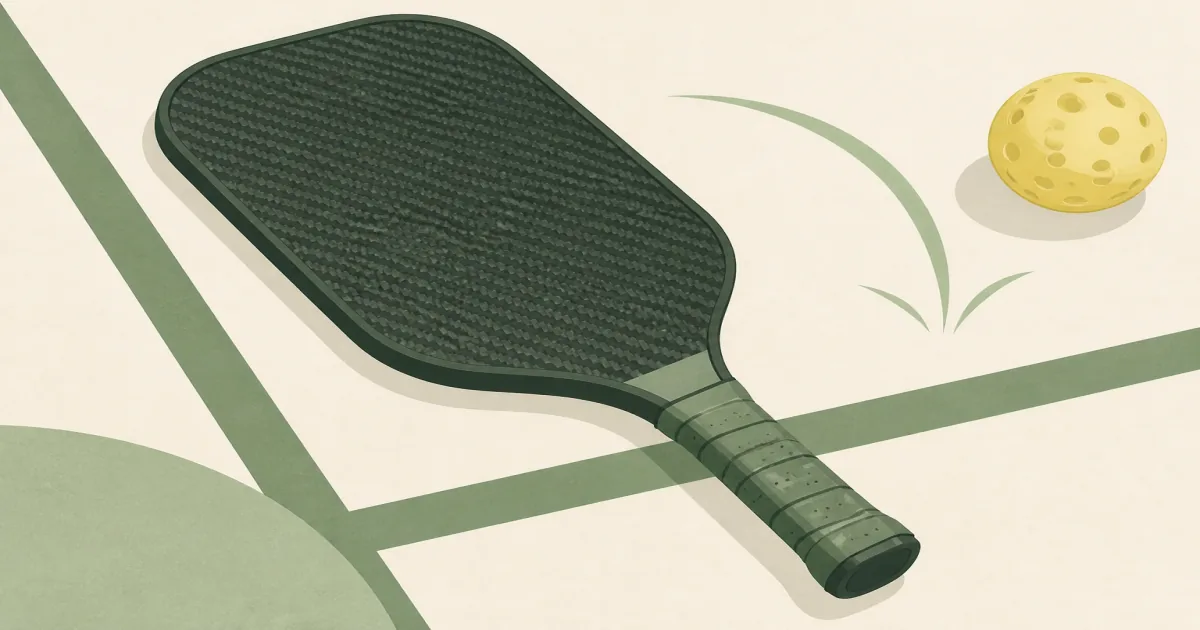
Raw carbon shows up in half the paddle ads you see now. The useful part is not the buzzword. It is how the face feels when you brush a serve or roll a ball off the kitchen. A raw carbon fiber pickleball paddle usually starts with more surface grab than a smooth graphite sheet. That grab helps spin. It also wears down outdoors, so you should treat texture like a consumable surface, not a permanent upgrade.
Raw carbon is one face lane, and the best pickleball paddles pillar places it among the other builds, while the pickleball paddle guides collect them.
If you are still sorting face materials in general, start with carbon fiber vs fiberglass. For the older control-first face, see graphite vs carbon fiber. Construction labels like thermoform sit on top of either face: thermoformed pickleball paddle.
What “raw carbon” actually means
In listings, raw carbon usually means the carbon weave is left unfinished or lightly finished so peaks of fiber and resin create friction. You feel it as matte grab instead of a glassy slide. Brands also sell “charged,” textured, or abrasion surfaces that chase the same job with different coatings.
Raw is not a magic thickness. A 16mm raw carbon paddle can still play soft and stable. An 11 to 14mm raw carbon paddle can feel hot even when the face bites. Read thickness and weight with the face name, or the label will mislead you.
Foam-injected walls and sealed edges are separate levers. They change stability and trampoline. They do not replace face texture. Decode foam language on the foam pickleball paddle page when a listing stacks every buzzword at once.
How raw carbon feels on court
On drives and serves, raw carbon often feels crisp and connected. The ball leaves with more rotation when you brush correctly. On dinks, a thick raw carbon face can still sit quietly if your contact is soft. A thin raw carbon face can launch balls long if you open the face late.
Players who already roll the ball will notice the grit first. Players who push flat will mostly notice pop and sound. If your soft game is still floaty, buy forgiveness first and raw carbon second.
Outdoor dust fills texture fast. Wipe the face. Do not sand it. When grit is gone, spin drops even if the core is fine. That wear path is covered in pickleball paddle grit.
Who should buy raw carbon
Good fit
- Intermediate players who already control resets and want more bite on rolls
- Spin-first players shopping for a textured primary paddle
- Buyers who will clean and sleeve the paddle outdoors
Skip or wait
- Brand-new players still learning contact depth
- Anyone chasing grit while ignoring weight and thickness
- Players who hate matte faces that polish after a summer of dust
If you want named spin shopping without this construction deep-dive, use best pickleball paddle for spin. For the wider buying framework, use how to choose a pickleball paddle.
Three raw carbon paddles worth buying
Vatic Pro Prism Flash Carbon Fiber 16mm
This is the raw carbon fiber pickleball paddle most shoppers should open with. Raw T700, foam-injected walls, and a 16mm core give you bite without the hottest trampoline reputation. It suits players who want modern carbon feel under a mid price and do not need a signature name on the throat.
Choose it if you play mixed open play, care about spin, and want a cover in the box. Skip it only if you already know you want a thinner power face or a specific brand demo feel.
JOOLA Ben Johns Perseus Pickleball Paddle (16mm)
The Perseus is the premium all-court step-up. Charged carbon and a fully encased build give drive pace while the 16mm core keeps kitchen work usable for intermediates who already trust their soft game. It costs more. You pay for a connected, lively face that still behaves on resets when contact is clean.
Choose it if you want a known performance paddle and play enough to justify the spend. Skip it if you are still deciding between graphite control and raw carbon in the first place.
JOOLA Vision Pickleball Paddle (16mm)
The Vision sits in the textured mid lane. It is less about raw-T700 marketing and more about a grip surface that helps rolls and serves while the 16mm core forgives mishits. Weekly players who want spin without jumping straight to the hottest power faces land here often.
Choose it if spin and control matter more than plow-through putaways. Cross-check feel notes with the pickleball paddle for spin explainer if you are still unsure how much texture you need.
Raw carbon shopping checklist
- Lock thickness first (most rec players do better near 16mm).
- Confirm weight you can swing for two hours, not one highlight reel.
- Read face language: raw, textured, charged, abrasion.
- Plan for grit wear outdoors: sleeve, wipe, replace when glossy.
- Demo or use a clear return window when you can.
Do not buy raw carbon because a forum thread said graphite is “dead.” Plenty of control players still prefer smoother faces. Buy raw carbon because you want face grab and you will maintain it.
Bottom line
A raw carbon fiber pickleball paddle is a face choice: more starting texture, crisper feedback, and a spin assist that ages with dust and play. Start with the Vatic Pro Prism Flash 16mm for value. Move to the JOOLA Ben Johns Perseus 16mm for premium all-court pace, or the JOOLA Vision 16mm when textured spin is the main job.
Pair the face with thickness and weight you can already control, then keep the surface clean so the grit you paid for lasts. Ready to shortlist beyond raw faces? See best carbon fiber pickleball paddle.
Frequently Asked Questions
What is a raw carbon fiber pickleball paddle?
It is a paddle whose face uses raw or unfinished carbon weave so the ball can grab more easily. The surface often feels matte and slightly rough compared with a smooth graphite sheet.
Is raw carbon the same as thermoformed?
No. Raw carbon describes the face material and texture. Thermoformed describes how the edge and face are heat-formed around the core. You can find raw carbon on both thermoformed and cold-pressed builds.
Do raw carbon paddles always spin more?
They usually start with more face grab than smooth graphite. Technique, ball condition, and grit wear still decide the result. A dirty outdoor face can spin less than a clean textured composite.
Should beginners buy raw carbon?
Only if the rest of the paddle is forgiving: about midweight, thicker core, and a shape you can control. Raw carbon alone does not teach soft hands. Many new players learn faster on a balanced midweight paddle first.
How long does raw carbon grit last outdoors?
Weeks to months depending on dust, bag abrasion, and how often you scrape the face on court. Wipe after dusty sessions and use a sleeve. When the face turns glossy and spin fades, treat it as normal wear.
Raw carbon or graphite for control?
Graphite often feels quieter and more connected for soft resets. Raw carbon usually adds bite for rolls and serves. If your game is kitchen-first and you hate trampoline, try graphite first, then compare on court.