Graphite vs Carbon Fiber Pickleball Paddle: Which Face Fits You
Paddles
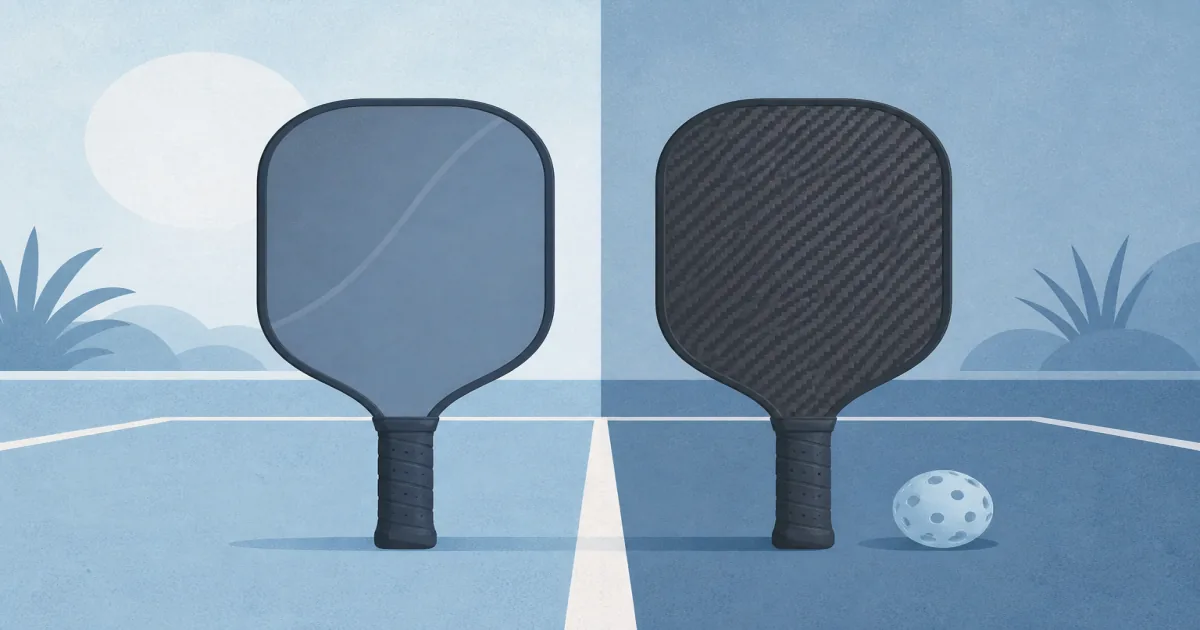
Graphite vs carbon fiber on a pickleball paddle is mostly a face feel choice. Graphite stays quieter and connected. Raw carbon usually adds grit and pop.
Our picks
Shoppers treat graphite and carbon like rival teams. On court they are face recipes with different starting textures and feedback. A graphite vs carbon fiber pickleball paddle choice should start with how you want the ball to leave the face on dinks and drives, not with which word looks newer in an ad.
Face recipes are one comparison, and the best pickleball paddles pillar covers the models that use them, while the paddle guide roundup keeps everything together.
For a graphite-only deep dive, see graphite pickleball paddle. For raw carbon shopping, see raw carbon fiber pickleball paddle. Fiberglass sits in a different bucket: carbon fiber vs fiberglass.
What graphite faces usually feel like
Graphite sheets on rec paddles often feel smoother and more connected. Soft resets sit a little quieter. Mishits can still sting on a firm Nomex core, but the face itself is less about aggressive grit and more about placement.
Classic widebody graphite paddles remain popular with tennis converts and control-first open-play players. The ONIX Graphite MOD Z5 is the clearest Amazon example of that lane: big hitting area, familiar graphite feel, and years of player feedback across colors.
Choose graphite when your soft game is the priority and you do not need maximum face bite for rolls. Skip graphite-as-default if you already brush the ball well and want more starting texture.
What carbon faces usually feel like
Carbon fiber, especially raw or textured builds, usually starts matte and grabby. Serves and rolls pick up rotation more easily when the face is clean. Many modern carbons also pair with thicker polymer cores, so the package can feel both grippy and cushioned.
The Vatic Pro Prism Flash Carbon Fiber 16mm shows the modern value version: raw T700, foam-injected walls, and a 16mm core that keeps kitchen work usable. Premium charged-carbon paddles push the same idea further up the price ladder.
Carbon is not automatically “more advanced.” A thin carbon power paddle can punish timing. A thick carbon control paddle can play softer than an old thin graphite. Read the full recipe.
Side-by-side: graphite vs carbon
Core thickness still overrides marketing. A 16mm carbon can play softer than an 11mm graphite. Weight changes hand speed either way. Shape changes the sweet spot either way. Face fiber is one dial among several. Lock the dials in how to choose a pickleball paddle.
Who should pick which
Pick graphite if you…
- Want a quieter, connected soft game out of the box
- Like classic widebody control paddles
- Are upgrading from a cheap fiberglass set and want familiar feel
Pick carbon if you…
- Already roll and brush the ball and want more face grab
- Prefer modern polymer cores with textured faces
- Will wipe and sleeve the paddle so grit lasts outdoors
If your main goal is soft resets and placement, also skim best pickleball paddle for control and the control pickleball paddle explainer after you lock the face family.
Two paddles that make the difference obvious
ONIX Graphite MOD Z5
This is the graphite side of the comparison for most shoppers. The widebody face and graphite sheet favor touch and a large sweet spot. It is not trying to win a raw-carbon spin contest. It is trying to feel familiar and controllable for rec play and tennis converts.
Buy it when you want graphite feel with a long review trail. Pass if you already know you want raw T700 texture and foam-walled stability.
Vatic Pro Prism Flash Carbon Fiber 16mm
This is the carbon side for value shoppers. Raw T700 grab, foam-injected walls, and 16mm thickness give you the modern package without forcing a signature-paddle budget. It is the clearest contrast to a classic Z5-style graphite face on Amazon right now.
Buy it when you want carbon bite and a thicker soft-game core. Pass if you specifically want Nomex click and a smoother graphite sheet.
Buying mistakes to avoid
- Choosing carbon only because the word sounds premium
- Ignoring thickness while arguing about fiber
- Expecting graphite to match raw-carbon spin without technique
- Leaving either face unprotected in a dusty bag
- Comparing a thin power carbon to a thick control graphite and calling it a fair fiber test
Shop the full paddle. Face, core, weight, shape. Then the graphite vs carbon fiber pickleball paddle debate gets simple.
Bottom line
Graphite vs carbon fiber is a face-feel choice sitting on top of thickness and weight. Take the ONIX Graphite MOD Z5 when you want classic connected control. Take the Vatic Pro Prism Flash 16mm when you want raw carbon grit and modern foam-walled stability. Demo when you can, clean what you buy, and let your soft game decide which leave you trust.
Frequently Asked Questions
Is graphite the same as carbon fiber on a pickleball paddle?
Not in the way shoppers use the words. Graphite usually means a smoother, control-leaning face. Carbon fiber, especially raw T700, usually means more texture and a crisper pop. Listings mix labels, so read the face description and reviews, not just the title.
Which is better for beginners, graphite or carbon?
Either works if thickness and weight are forgiving. Graphite often feels quieter for soft resets. Carbon can feel livelier. Do not pick carbon only because it sounds newer.
Does carbon always spin more than graphite?
Raw or textured carbon usually starts with more grab. Smooth graphite usually spins less until you add technique. Dirty outdoor grit can erase that gap fast.
Is the ONIX Z5 still worth buying?
Yes if you want that classic graphite widebody feel and a known rec control paddle. Skip it if you already know you want a thick polymer raw-carbon face for modern kitchen pace.
Should I buy graphite if I play outdoors a lot?
Graphite still works outdoors. The bigger outdoor issue for carbon buyers is grit polish from dust. Either face needs a sleeve and gentle cleaning.
Where does fiberglass fit in this comparison?
Fiberglass is a third face family, often springier and cheaper in starter sets. Compare it separately in carbon fiber vs fiberglass once you know you are not choosing between graphite and raw carbon.