Foam Pickleball Paddle: Foam-Core vs Foam-Walled Picks
Paddles
A foam pickleball paddle can mean a full foam core or just foam in the walls. Here is how those builds differ, and which Amazon paddles match each job.
Our picks
Foam showed up in paddle ads the same week everyone started saying Gen 4. The word is doing too much work. Some paddles are a foam slab from edge to edge. Others keep a regular core and add foam around the rim. Those are not the same paddle.
Foam is one construction story, and the best pickleball paddles pillar covers the honeycomb builds beside it, while the pickleball paddle guides hold the rest.
This guide covers the construction and the named winners together. For the older honeycomb story, stay with pickleball paddle core explained.
What is a foam pickleball paddle?
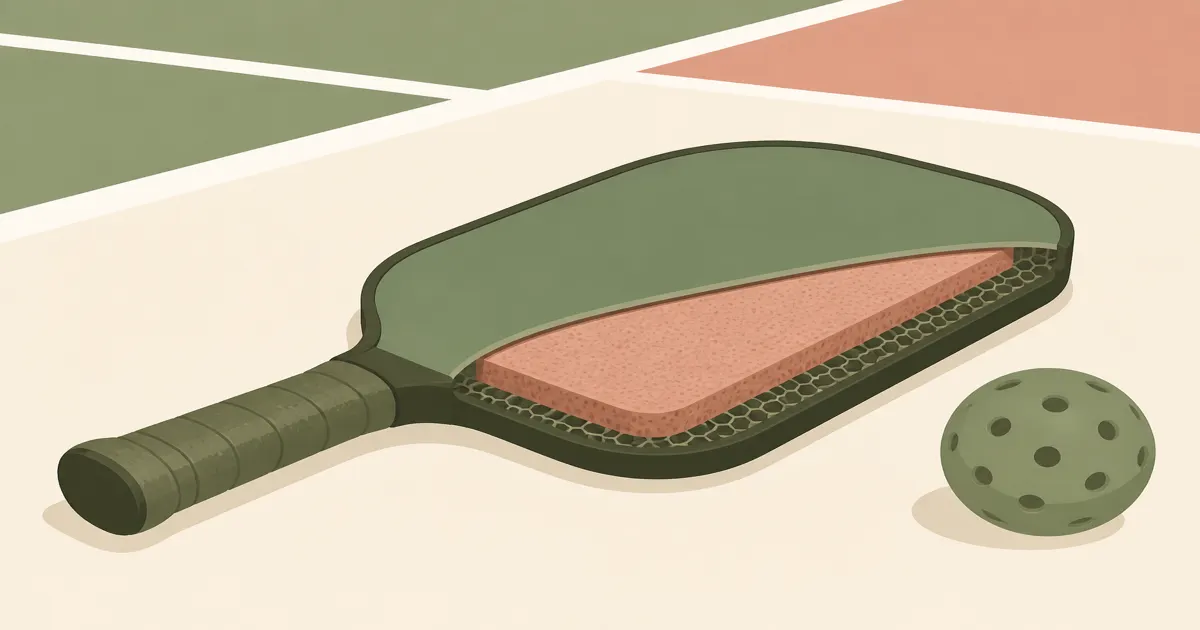
Two builds share the name. A foam-core paddle replaces the honeycomb with a foam slab, often EPP, sometimes with an EVA ring around the edge. A foam-walled paddle keeps a more traditional carbon or honeycomb core and injects foam only at the perimeter. If a listing says "foam" and nothing else, ask which one it is.
Foam-core
Foam-core replaces the honeycomb with expanded foam, often EPP, sometimes with an EVA ring around the edge. The pitch is a bigger sweet spot, more rebound, and a core that does not "crush" the way some honeycomb cores can after heavy outdoor use. It can also feel livelier than a quiet 16mm polymer paddle.
The Vatic Pro V-Sol Pro 16mm is the clearest true foam-core build in this price lane. Its listing names a floating EPP core, an EVA perimeter ring, a Toray T700 carbon face, about 8.0 ounces, and 16mm thickness. That is a foam-core build, not a foam sticker on a honeycomb paddle.
Foam-walled
Foam-walled means foam-injected edges over a more traditional sandwich or cold-molded carbon build. Foam at the perimeter adds stability and a bit of trampoline at the rim. The middle can still play like the carbon paddle you already understand.
The Vatic Pro Prism Flash Carbon Fiber 16mm is the foam-walled example here. Foam-injected edges, cold-molded carbon, familiar 16mm thickness. It plays closer to a modern hybrid carbon than to a boom-style foam core.
How to tell which one a listing is
Read three lines: the core material, the thickness, and the weight. A true foam core usually says EPP or "foam core" and pairs it with a perimeter ring. A foam-walled build says "foam injected" or "foam walls" and keeps honeycomb or carbon in the middle. If a brand will not say, shop elsewhere.
Foam-core vs foam-walled: which one do you want?
Match the build to your miss. If you already keep dinks down and want free depth, foam-core is the point. If you want a familiar carbon feel with a little extra stability at the rim, foam-walled is the safer buy.
Best foam-core paddle: Vatic Pro V-Sol Pro 16mm
The Vatic Pro V-Sol Pro 16mm Foam Core is the pick when you want the real foam build without a flagship price. It usually ships with a cover, which matters for protecting a new carbon face.
Buyer feedback says it plays like a paddle at double the price, with a near-perfect balance of power and control and a feel that settles in within one session. Durability is the split note, with some owners reporting a break inside a month, so a cover and edge protection are cheap insurance.
Choose this if: You want to try a foam-core carbon paddle without a $250 Gen-4 tag. Skip it if: You want the calmest possible kitchen paddle, or you only play twice a month and a polymer carbon is already plenty.
Best foam-walled paddle: Vatic Pro Prism Flash 16mm
The Vatic Pro Prism Flash Carbon Fiber 16mm is the paddle to buy when the foam you want is in the walls, not a full slab. It plays closer to a modern hybrid carbon than to a boom-style foam core. That helps a lot of shoppers who want extra stability from the edge foam, not a full foam slab.
Choose this if: You want foam at the edges and a carbon face you can reset with. Skip it if: You specifically want a full foam slab. That is the V-Sol job.
Check the Prism Flash on Amazon
Best premium foam-core paddle: CRBN TruFoam Genesis 14mm
The CRBN TruFoam Genesis Carbon Fiber Paddle (14mm Elongated) is the upgrade when you already know you want a full foam core and elongated reach with a thinner face. At 14mm, expect a livelier window than the 16mm Vatic foam-core pick. Clean drives and put-aways feel freer, while late contact and floaty resets get less forgiveness. The elongated outline helps stretch volleys and gives two-handed players more handle room.
Review count is smaller than the decade-old honeycomb classics. That is normal for a newer premium foam SKU. If you are still guessing about thickness, stay on the V-Sol Pro first. If you already like thinner foam, the Genesis is the premium elongated lane. Shopping the rest of the CRBN lineup? See best CRBN pickleball paddle.
Check the TruFoam Genesis on Amazon
Is foam better than honeycomb?
No, not automatically. Foam-core builds can feel more powerful and more crush-resistant in the middle, which is why they now dominate the premium shelf. Honeycomb polymer is still the known, quieter control lane for many recreational players, especially at 16mm. The right answer depends on whether you want free rebound or a calmer face. See pickleball paddle core explained for the full material story.
Do not stack foam, honeycomb, and thermoform as a single ladder.
You can own a thermoformed honeycomb paddle and a cold-molded foam-walled paddle and they will not feel related. Read each lever. The thermoformed guide covers the heat process. This page covers foam construction.
Is foam the same as thermoformed?
No. Thermoforming is a heat process that seals the edge of the paddle. Foam is a core or wall material. Some paddles use both, but they describe two different things. Shopping for edge durability and shopping for a foam core are separate trips.
Should beginners buy a foam-core paddle?
Usually no. Buy a foam-core paddle only when you already keep dinks down and you want more free depth. The extra energy return is the point, and it belongs with the power discussion in power pickleball paddle, not with beginner forgiveness.
Skip foam-core if your current miss is sailing balls long. More rebound will not teach you a shorter backswing. Start with control thickness and weight first, then come back. A midweight 16mm polymer control paddle, like the picks in our control pickleball paddle guide, usually teaches cleaner contact faster.
How long do foam-core paddles last?
Longer than older foam myths suggest, but the category is young. The EPP core itself resists the crushing that some honeycomb cores show after heavy outdoor use, and reviewers report the V-Sol Pro holding up well through months of shared play with only surface scratches. What wears first is the carbon face grit, not the core.
The honest caveat is that foam-core paddles have not been on outdoor courts long enough to show a decade of club wear on every model. Store it like any carbon paddle: in a cover, out of a hot car, and away from keys and bottles. See how long do pickleball paddles last for the care routine.
Mistakes that waste money
Buying foam to fix a late contact problem. Foam does not shorten your swing.
Assuming every "Gen 4" listing is the same foam recipe. Ask for core material, thickness, and weight.
Skipping thickness. A thin foam paddle and a 16mm foam paddle are different. Stay at 16mm unless you already like a hot face.
Ignoring the handle. The V-Sol Pro's 4.125-inch circumference feels thin to a lot of hands, so budget for an overgrip in the same order.
Bottom line
A foam pickleball paddle is a build, not a personality upgrade. Buy the Vatic Pro V-Sol Pro 16mm Foam Core when you want a true foam core at $109.99. Buy the Vatic Pro Prism Flash Carbon Fiber 16mm when you want foam-walled carbon with a calmer, more familiar feel at $99.99. If you are still choosing thickness and weight, go back to how to choose a pickleball paddle before you chase the next material buzzword.
Frequently Asked Questions
What is a foam pickleball paddle?
Two different builds share the name. A foam-core paddle replaces honeycomb with a foam slab (often EPP) plus a foam ring. A foam-walled paddle keeps a more traditional core and injects foam at the edges for stability. Read the listing, not the buzzword.
Is foam better than polymer honeycomb?
Not automatically. Foam-core builds can feel more powerful and more crush-resistant in the middle. Honeycomb polymer is still the known, quieter control lane for many rec players. See paddle core explained.
Is foam the same as thermoformed?
No. Thermoforming is a heat process that seals the edge. Foam is a core or wall material. Some paddles use both. Read thermoformed pickleball paddle if the edge construction is what you are shopping.
Should beginners buy a foam-core paddle?
Only if you already like a livelier face. Extra pop punishes late contact. Many beginners learn faster on a midweight polymer control paddle.
Are these tournament legal?
The V-Sol Pro listing includes PBCoR .43 language. Approval and ball-exit rules can change. Check the current Amazon page and USAP resources before a rated event.
Which foam paddle is best for control?
The Vatic Pro Prism Flash 16mm is the calmer foam-walled carbon option for resets, while the V-Sol Pro is the livelier true foam core. Choose the Prism Flash if you want a more familiar feel.
Are foam paddles more powerful?
Often they feel livelier in the middle than a quiet polymer honeycomb control paddle. That helps depth on blocks and drives, and it also punishes late contact. If your misses already sail long, fix swing length first.
Does foam last longer than honeycomb?
Brands pitch crush resistance and a more consistent middle. Outdoor dust, bag abrasion, and dead faces still happen. Store carbon faces carefully and replace the paddle when grit and pop are gone, not on a calendar.
Which foam paddle should I buy for spin?
Face texture still matters more than the foam noun. Raw or textured carbon helps brush contact. Pair foam construction with a face you can still feel. For face-first shopping, see our raw carbon fiber pickleball paddle guide.
How long do foam-core paddles last?
The foam-core category is still new, so long-term outdoor wear notes are still catching up. Store it like any carbon paddle and avoid leaving it in a hot car.