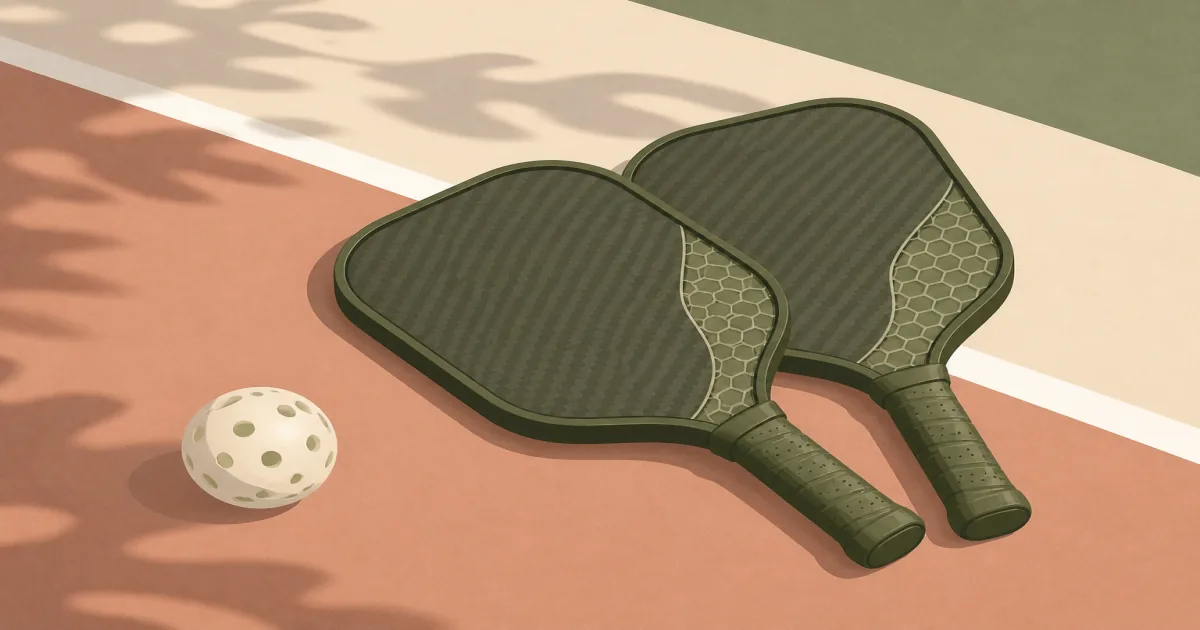
Best Carbon Fiber Pickleball Paddle (2026): Control, Raw Spin, and Value
Paddles
Carbon fiber faces are not one feel. Start with Perseus for charged all-court pace, Halo for raw-carbon spin, or Vision when textured control and value matter more.
Our picks
Shopping the best carbon fiber pickleball paddle gets noisy because carbon is a family, not a single feel. Charged faces, raw grit, and textured control skins can all say carbon on the listing while playing like three different tools. Name the miss you want to fix, then pick the carbon that matches that job.
Carbon is a whole family of faces, so the best pickleball paddles pillar shows how the rest of the market plays, and the pickleball paddle section keeps every guide together.
If you still need materials context, read raw carbon fiber pickleball paddle and carbon fiber vs fiberglass first. This page is the buy shortlist: Perseus for all-court pop, Halo for raw spin, Vision for control value. Spec primers live in how to choose a pickleball paddle.
What to lock before you open a carbon listing
Write down weight band, core thickness, and shape. Midweight keeps most club players stable through long doubles blocks. A 16mm core usually forgives late contact better than a thin hot face. Widebody or hybrid shapes forgive more than elongated power shapes.
Then decide whether you need free depth, raw spin grab, or quieter resets. Carbon can do all three, but not equally in one paddle. If you cannot name the priority, you will buy the loudest product photo and regret it after two open plays.
Quick comparison
Top pick: JOOLA Ben Johns Perseus 16mm
The JOOLA Ben Johns Perseus is the safest all-court carbon default for intermediates who already place the ball and want more depth without abandoning the kitchen. Charged carbon gives a crisp energy return on drives while a 16mm core keeps soft game playable for most club players.
It is not a beginner forgiveness paddle. If you mistime often and sails are already a problem, start elsewhere and return when contact is cleaner. For players ready for modern carbon pace, Perseus is the short path.
Who it is for: Intermediate and advanced recreational players who want one carbon paddle for open play and leagues.
Best raw carbon: Selkirk SLK Halo T700
The Selkirk Sport SLK Halo is the pick when raw T700 grit is the shopping reason. Brush contact gets more to work with when the face still has texture, and the thermoformed unibody story targets stiffness and a larger usable face.
Read the listing carefully for shape and weave variants. Halo is a family. Match the shape to your current miss pattern instead of buying the first colorway that loads.
Who it is for: Spin-first shoppers who want raw carbon without jumping straight into the most expensive Selkirk flagship lane.
Best control value: JOOLA Vision 16mm
The JOOLA Vision is the textured-control carbon for players who care more about grab and resets than signature branding. It is the paddle you buy when soft misses sail and you want a calmer carbon face with a big review base.
Expect less free put-away pop than Perseus. That tradeoff is the point. Quiet hands win more recreational doubles points than max swing speed.
Who it is for: Control-first players, budget-conscious carbon shoppers, and anyone coming from fiberglass who wants more spin without a hot trampoline.
How to decide in two minutes
Ask which miss happens most. Long soft balls → Vision or another calmer thick core. Short drives and blocked volleys → Perseus. Clean contact but no spin bite → Halo raw carbon.
Then confirm weight and grip size. A carbon face cannot fix a handle that is too small or a paddle that is too head-heavy for your shoulder.
Care that keeps carbon grit useful
Wipe chalk and ball residue. Do not scrape the face on fences. Store the paddle in a cover so bag zippers do not sand the texture. Grit is a consumable surface over seasons, not a permanent coating.
If residue builds into a film, a dedicated paddle eraser helps more than a wet towel scrub. Keep cooling towels for sweat, not for grinding the face between every point.
Who should wait on premium carbon
Absolute beginners who still miss the sweet spot by inches often blame materials when they need forgiveness and reps. A calmer fiberglass or hybrid starter can be kinder for a month, then you graduate into carbon with cleaner contact. That path is cheaper than buying Perseus twice because the first one felt too hot.
Players with elbow irritation should also be careful with ultra-stiff, head-heavy carbon builds. Weight distribution and grip size matter as much as the weave story. If arm comfort is the shopping reason, read pickleball paddle for tennis elbow before you chase the stiffest listing.
Shape and thickness still beat the weave label
Two carbon paddles with the same face marketing can play nothing alike once shape and thickness diverge. Elongated carbon helps reach and serve depth but shrinks the forgiveness window. Widebody carbon helps blocks and busy kitchen hands. A 16mm core usually gives more dwell than a thin trampoline face.
Write those three specs on a note before you compare Amazon photos. Carbon is the category. Specs are the decision.
Cross-links that keep the shopping trip honest
Materials primers: raw carbon fiber, graphite vs carbon fiber, and carbon vs fiberglass. Brand lanes: best JOOLA, best Selkirk, best CRBN, and best Franklin. Control-first money: best pickleball paddle for control.
Use this page when you already know you want carbon and need a shortlist. Use the primers when you are still arguing materials with yourself.
Bottom line
The best carbon fiber pickleball paddle for most intermediates is the JOOLA Ben Johns Perseus 16mm. Choose Selkirk SLK Halo when raw T700 spin is the job, or JOOLA Vision when textured control and value matter more. Carbon only helps after you name the miss; the listing buzzword alone does not.
Frequently Asked Questions
What is the best carbon fiber pickleball paddle for most players?
Start with the JOOLA Ben Johns Perseus 16mm if you already trust your soft game and want all-court carbon pop. Choose Selkirk SLK Halo when raw T700 grit is the priority, or JOOLA Vision when textured control and value matter more.
Is carbon fiber better than fiberglass?
Carbon usually means more spin potential and a firmer, more premium face story. Fiberglass often feels trampoliny and forgiving for brand-new players. Compare both in carbon fiber vs fiberglass before you force a materials tribe.
What does raw carbon fiber mean on a paddle?
Raw carbon usually means a less finished, grippier face texture that helps brush spin when your technique is clean. It is not magic. Dust and chalk still kill grit. Primer: raw carbon fiber pickleball paddle.
Should beginners buy a carbon fiber paddle?
Some textured carbon models work for new players, but hot thin carbon faces punish late contact. Absolute beginners often do better on a forgiving widebody first. See best pickleball paddle for beginners.
Perseus vs Vision: which JOOLA carbon?
Perseus is the charged all-court default. Vision is the quieter textured-control value play. If your misses sail long on soft balls, lean Vision until timing settles.
Do I need thermoformed carbon?
Thermoforming can stiffen the perimeter and expand the usable face, but it is not required for every player. Buy for miss pattern and thickness first, construction buzzwords second.
How long does carbon grit last?
Face texture fades with abrasion, balls, and bag rub. Wipe residue, avoid grinding the face on fences, and accept that spin faces are consumable surfaces over seasons.
Is CRBN the same as carbon fiber?
CRBN is a brand that builds carbon paddles. Carbon fiber is the material category. If you already want that brand shortlist, see best CRBN pickleball paddle.