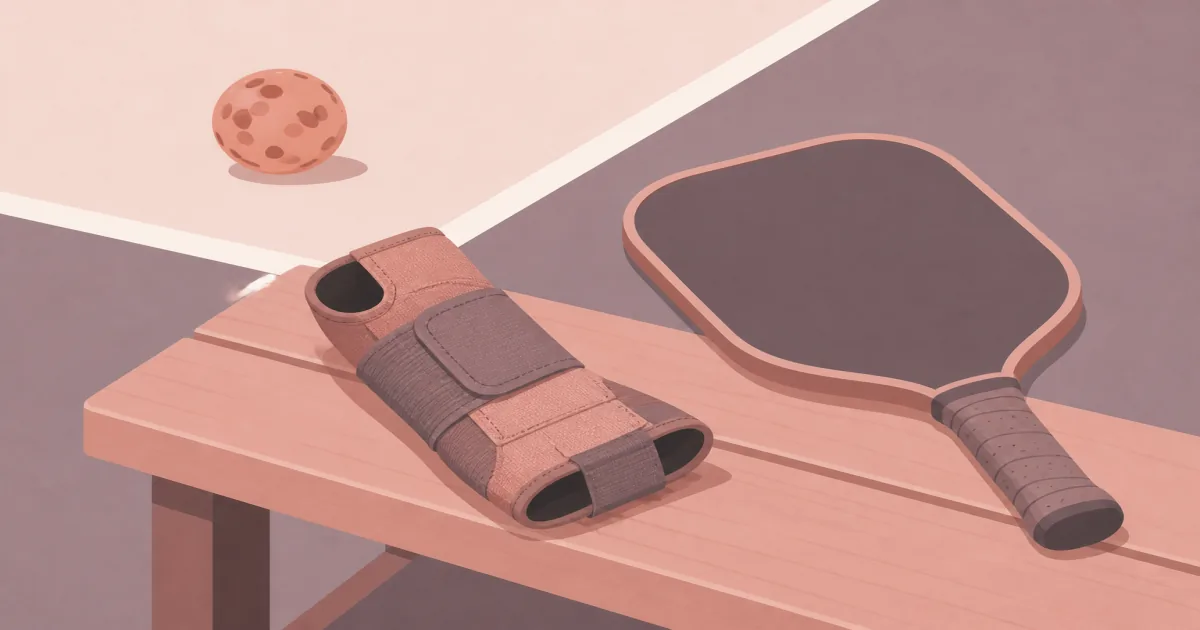
Pickleball Wrist Brace: Support Options for Sore Wrists
Accessories
A pickleball wrist brace can add stability when the joint feels cranky after long sessions. Here is how strap and wrap styles differ, who each pick fits, and how tight is too tight.
Our picks
A pickleball wrist brace is a stability tool for sore or unstable-feeling wrists, not a license to ignore load. Soft hands still need some wrist freedom. The right support adds confidence on blocks and drives without turning every dink into a forearm shove.
Wrist support is one part of the kit, and the pickleball gear guides cover the rest. If sweat is the only problem, a pickleball wristband is the cheaper buy. If elbow pain is the real issue, start with our pickleball elbow brace guide and paddle for tennis elbow notes.
What can a pickleball wrist brace actually do?
A brace adds stability and a reminder not to let the wrist collapse on blocks and drives. It does not heal a tendon, replace rehab, or make a heavy paddle feel gentle. Treat it as one part of a kit that includes grip, paddle weight, and session length.
Where a brace helps most
Mild ache after long days, a sense that the wrist wants a reminder not to fold, and short-term support while you dial in technique or cut volume. These are the problems a wrap or strap handles well.
What a wrist brace cannot fix
It cannot diagnose an injury, replace medical care, or fix a paddle that is too heavy for your arm. If numbness, swelling, or weakness shows up, get it checked before you order anything.
Should you choose a wrap or a strap?
Choose the wrap when you want the wrist held on drives and blocks. Choose the strap when you want light compression you can forget about between points. The difference is coverage, not quality.
Copper Compression Advanced Wrist Brace: the structured wrap
The Copper Compression Advanced Wrist Brace is built as an orthopedic wrist support with adjustable coverage. That matters when you want more structure than a thin sweatband and less bulk than a cast-style wrap. Right and left hands are separate orders, so check which wrist you are buying for.
Buyer feedback on the listing sits above 4 stars from a deep review base, which fits a general sports wrap with a clear purpose.
Who it is for: Players who feel wrist fatigue on drives and blocks and want a structured brace with sizing guidance.
Skip it if: Any wrap kills your soft game, or pain is sharp enough that you should not be playing yet.
Check Copper Compression on Amazon.
HiRui 2 Pack Wrist Compression Strap: the light two-pack
The HiRui 2 Pack Wrist Compression Strap is the lighter half of the kit. The listing covers 5 to 10 inch wrists, straps are fast to adjust between games, and a two-pack means you have a spare when one stretches out or a partner needs one. At about $7 for two, that is roughly $3.50 per wrist. Buyer feedback sits at 4.3 stars from more than 19,000 ratings, one of the deepest review bases in this category.
Who it is for: Players who want focused compression without a full wrap, and anyone who likes keeping a backup strap courtside.
Skip it if: You need broader coverage across the wrist and hand junction.
How tight should a wrist brace be?
Snug enough to feel present, loose enough that you can slide two fingers under the strap. If you cannot fit two fingers under it, it is too tight. If it slides down your hand on a drive, it is too loose.
The two-finger test
Wrap the strap, then try to slide two fingers under the band. They should pass with light resistance. Recheck after ten minutes, because sweat and warm-up change the fit.
Signs it is too tight
Tingling fingers, color change, or cold hands all mean the strap is cutting circulation. Loosen it before you blame the brace. Support should feel present, not numb.
Does a wrist brace change your grip or soft hands?
It can. A stiff wrap can push you into a death grip or block the small wrist hinge that roll shots need. Test in warm-up, not in a league game, and loosen the strap until the hinge returns.
How to test soft hands in warm-up
Hit ten dinks and five roll shots. If every roll dies or floats, the wrap is too restrictive for your game. Step down to the lighter strap or take the brace off for soft-game practice.
How long should you wear a brace on court?
Wear it for the sessions that include hard drives and blocks, not every casual dink. A two-hour open-play night is the usual test window. If the wrist feels worse the next morning, the brace did not give you a free pass.
Many players brace the first two or three sessions back from a flare-up, then test one session without it. If the wrist holds, keep the brace for long days only. If it does not, cut volume before you tighten the strap again.
When should you choose elbow support instead?
Outer elbow pain that lights up on topspin or serves is usually an elbow problem. A wrist brace will not target that tendon load. Use the elbow guide linked above, and consider a lighter paddle weight from pickleball paddle weight.
Sizing and care
Sizing by wrist circumference
Measure around your wrist where you would wear the band. The HiRui strap covers 5 to 10 inches. The Copper Compression brace comes in right and left hands in S/M and L/XL, so check the chart rather than guessing from a glove size.
Washing and lifespan
A soaked, salty wrap rubs and smells. Rinse it after sweaty sessions and let it air dry. Most straps and wraps hold their stretch for a season of regular play before the elastic softens.
Bottom line
A pickleball wrist brace is for mild stability needs when the joint feels cranky, not for playing through warning signs. Build a small kit with Copper Compression for structured support and HiRui straps for lighter days. Fix grip slip and session load at the same time, run the two-finger test, and the wrist has a better chance to settle.
Browse more accessory guides on the blog or start from the homepage.
Frequently Asked Questions
Does a pickleball wrist brace help?
It can add stability and reminder pressure for mild crankiness. It does not fix technique or overuse by itself. Sharp, swollen, numb, or worsening pain needs a clinician, not a tighter strap.
Should I wear a wrist brace for every session?
Only if it clearly helps and does not block soft hands. Many players use support for longer days, then leave it off for light practice.
Strap or full wrap: which is better?
Straps give focused compression and quick adjustability. Fuller wraps cover more of the wrist. Comfort and how much motion you still need decide the winner.
Can a brace fix tennis elbow?
No. Elbow pain is a different joint problem. See our pickleball elbow brace guide and paddle for tennis elbow notes.
Will a wrist brace change my grip?
Sometimes. Thick wraps can push you into a death grip or block wrist hinge on rolls. Start looser than you think, then adjust after a few points.
What else reduces wrist stress in pickleball?
A fresher grip, a paddle weight that does not feel head-heavy for you, and shorter sessions when pain starts. Gear helps; volume still matters.
When should I stop playing?
If pain spikes, strength drops, or swelling shows up, stop and get advice. A brace is not permission to smash through warning signs.