Pickleball Paddle Weight: Light, Midweight, and Heavy Explained
Paddles
Static ounces are only half the story. Use light, midweight, and heavy bands plus swing feel to pick a paddle that matches your game.
Our picks
Weight is the fastest paddle filter because you feel it on the first rally. If you already like your paddle and want tape products, use best pickleball paddle weights. This guide explains pickleball paddle weight in plain bands, how swing weight differs from the number on the scale, and who should choose light, mid, or heavy.
Weight is the first filter, and the best pickleball paddles pillar shows what each band buys, while the pickleball paddle guides keep the rest together.
Use this with the full framework in how to choose a pickleball paddle. If you want starter models after you pick a band, see best pickleball paddle for beginners. When light is the band you want, shop named options on best lightweight pickleball paddle.
The three weight bands that matter
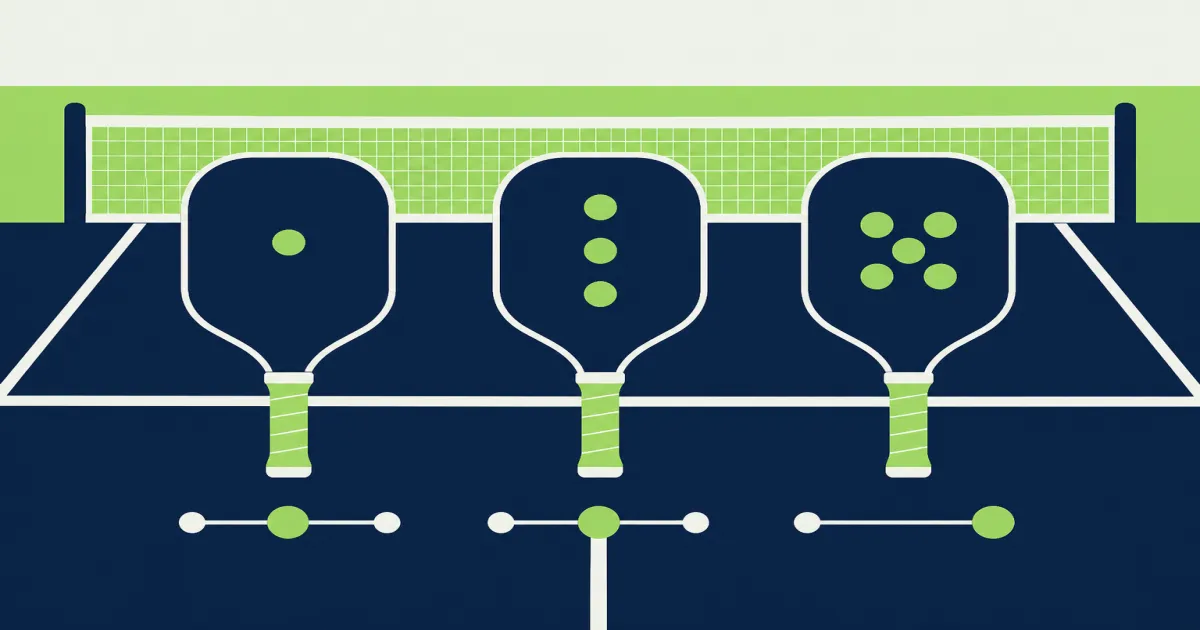
Manufacturers and retailers group adult paddles roughly like this:
- Light: under about 7.5 to 7.8 oz
- Midweight: about 7.8 to 8.4 oz
- Heavy: about 8.4 oz and up
Ranges blur between brands. A "7.6 oz" paddle with head-heavy balance can feel heavier than an "8.2 oz" handle-biased paddle. Treat bands as starting points, not laws.
Most open-play adults land midweight because it forgives off-center hits without feeling sluggish at the net. Ultra-light and heavy paddles are tools for specific problems, not default upgrades.
What light paddles do well (and where they fail)
Light paddles feel quick. Hand battles at the kitchen, fast resets, and rapid reaction volleys feel easier when the face does not lag behind your wrist. Players with smaller frames or slower swing speeds often like the maneuverability.
The tradeoff is stability. Mishits spray more. Blocks can flutter. You may swing harder to generate pace, which can load the elbow and shoulder even though the paddle is "light."
Choose light if you already make clean contact, prioritize hand speed, and feel worn out by midweight paddles after long sessions. Skip light if your blocks feel weak or you still miss the sweet spot often. Forgiveness usually beats whip for the first few months. When you are ready to shop that lane on purpose, use best lightweight pickleball paddle as the next stop.
Midweight: the default for most players
Midweight is the practical center. You get enough mass for drives and serve returns without feeling stuck in soft exchanges. For beginners and returning players, this is the safest first band.
Within midweight, small differences still matter. A 7.9 oz paddle and an 8.3 oz paddle can feel like different tools once you add an overgrip or change balance. Demo when you can. If you buy online, keep a return window open until you play two real sessions, not one warm-up.
If you are unsure, buy midweight and fix grip size next. Wrong grip circumference causes more arm tension than a half-ounce of static weight. See pickleball paddle grip size if the handle feels wrong after one night.
Heavy paddles: plow-through with a cost
Heavy paddles add stability and plow-through. Off-center hits stay quieter. Drives and counterattacks can feel more solid when your timing is already decent. Some tennis crossovers like the familiar mass.
The cost is hand speed. At the kitchen, a heavy face can arrive late on speed-ups. Long sessions can also fatigue the shoulder if you are not used to the load.
Choose heavy if your blocks spray, you want more put-away mass, and your soft game is already consistent. Avoid jumping to heavy just because a pro signature lists a high ounce number. Power without control is just longer misses.
Swing weight vs static weight
Static weight is what the product page lists. Swing weight is what your arm feels when the paddle moves. Head-heavy balance raises swing weight. Handle-heavy balance lowers it.
Two paddles can share the same listed ounces and feel nothing alike. That is why friend demos and return-friendly shopping matter more than spreadsheet comparisons alone.
Practical checks:
- Hold the paddle in a ready position and make small kitchen punches. Does the head lag?
- Hit a few soft resets. Does the face twist on mishits?
- Hit a few drives. Does the paddle plow or feel whippy?
If the head lags and twists, you may want more static mass or a more head-light balance, not necessarily a thinner core. Weight and thickness solve different problems. Thickness notes live in pickleball paddle thickness explained.
Who should choose which band
These are tendencies, not prescriptions. Your court surface, ball type, and session length change what feels right. Outdoor hard-court open play with firm outdoor balls often rewards a bit more stability than soft indoor gym nights.
How weight interacts with other specs
Weight is not a solo decision. A light elongated paddle can still feel demanding because the sweet spot is smaller. A heavy widebody can feel friendly because the face forgives.
Work in this order for most buyers:
- Grip size that fits your hand
- Weight band that matches your arm and hand-speed needs
- Thickness for control vs pop
- Shape for forgiveness vs reach
That sequence matches our full paddle choosing guide. Beginners who want models after locking a band should open the beginner paddle guide next.
Budget still matters. A well-matched midweight under $100 often beats a mismatched heavy "performance" paddle. See best pickleball paddle under 100 when price is the constraint.
Common mistakes with paddle weight
Buying the lightest paddle to "protect" your arm. Ultra-light faces can make you muscle the ball. Midweight stability plus a correct grip often feels better on the elbow.
Ignoring balance. Shopping ounces alone misses head-heavy vs handle-heavy feel. Read balance notes when listings include them, or demo.
Stacking overgrips without rechecking feel. Extra grips add weight and shift balance toward the handle. That can be good, but it changes the paddle you thought you bought.
Chasing heavy for power before contact is clean. Mass amplifies good swings and bad ones. Earn consistency first.
Skipping returns. Feel is personal. Two sessions tell you more than one aisle swing in a store.
Turning weight into a shortlist
Dial pickleball paddle weight before you obsess over face marketing labels. Start midweight unless you have a clear reason not to, then confirm swing feel on court. Continue with how to choose a pickleball paddle for the rest of the framework, or jump to best pickleball paddle for beginners for researched starter options.
More buying guides live on the Paddlefoundry homepage. Match the ounces to your hands and your misses, not to a product photo.
Weight in real shopping terms
The Selkirk Sport SLK Halo Control Max Pickleball Paddle is a useful hero when you are testing lighter swings without buying a whippy toy. Play a full session. Score forearm feel, block trust, and soft-ball height.
If the light paddle twists on mishits, the JOOLA Ben Johns Perseus Pickleball Paddle (16mm) is a steadier midweight all-court comparison. Overgrips add mass either way, so budget that before you celebrate the box label.
Frequently Asked Questions
What pickleball paddle weight should beginners use?
Most beginners do well in the midweight band, roughly 7.8 to 8.4 oz. It balances hand speed and stability while you learn contact.
Is a lighter paddle always better for elbow pain?
Not always. Ultra-light paddles can force you to swing harder for pace. Many players with arm fatigue prefer midweight stability or a grip fix before going extremely light.
What is swing weight vs static weight?
Static weight is the ounces on the scale. Swing weight is how heavy the paddle feels when you swing it, based on balance toward the head or handle.
Can lead tape change paddle weight?
Yes. Small amounts of lead or tungsten tape at the head or throat raise static weight and can stabilize mishits. Add gradually and keep the paddle legal for your group if rules matter.
Should power players always buy heavy paddles?
Not automatically. Clean contact and timing create more power than raw ounces. Heavy paddles help plow-through if you already control the face.
What is the best paddle weight for arm fatigue?
A mid to light midweight usually reduces load without going ultra-light. The lightest paddle can make you swing harder for pace, which can load the elbow and shoulder more.
How do I choose between light and midweight?
Pick light only if you already make clean contact and want hand speed at the kitchen. Stay midweight if your blocks feel weak or you still miss the sweet spot often.