Pickleball Paddle Lead Tape: Placement, Weight, and Safety
Accessories
Small strips can make a paddle steadier or more powerful, but placement matters. Start with a few grams, test one change at a time, and handle lead safely.
Our picks
Pickleball paddle lead tape lets you change balance without buying another paddle. A few grams can make off-center hits feel steadier, add power, or move the balance toward the hand. It can also make the paddle tiring if you add too much too quickly.
Lead tape is one tuning item, so the best pickleball grips pillar covers the handle side, and the pickleball accessories section keeps the rest together.
This guide is based on current product details, common customization principles, and live US Amazon feedback. We have not measured every tape and paddle combination in a lab. Read our paddle weight guide before changing a setup you do not yet understand. For product shortlists, see best pickleball paddle weights.
What lead tape changes
Static weight is the number on a scale. Swing weight describes how heavy the paddle feels while moving. Adding three grams near the handle and three grams at the top creates the same static increase, but the top placement feels much heavier during a swing.
Weight around the outer edge can also reduce twisting on off-center contact. That can make the sweet spot feel more forgiving. The paddle does not gain a larger legal face. It simply resists rotation better.
Every benefit has a cost. More head weight can slow hand speed at the kitchen, tire the shoulder, and change timing. Add the least amount that produces a useful change.
Where to place pickleball paddle lead tape
Picture the paddle edge as a clock with the handle at six.
Twelve o'clock: Adds the most swing weight per gram. Use this when you want more plow-through and power, but expect slower hands.
Three and nine o'clock: Adds stability on mishits and some swing weight. Equal strips on both sides keep the setup balanced.
Four and eight o'clock: Adds stability lower on the face with a smaller swing-weight jump than top placement.
Throat or handle: Moves balance toward the hand or adds total mass with less effect on swing weight. Handle weighting often requires removing the grip or using a product designed for that location.
Start with symmetrical placement unless you have a measured reason to do otherwise.
A simple setup kit
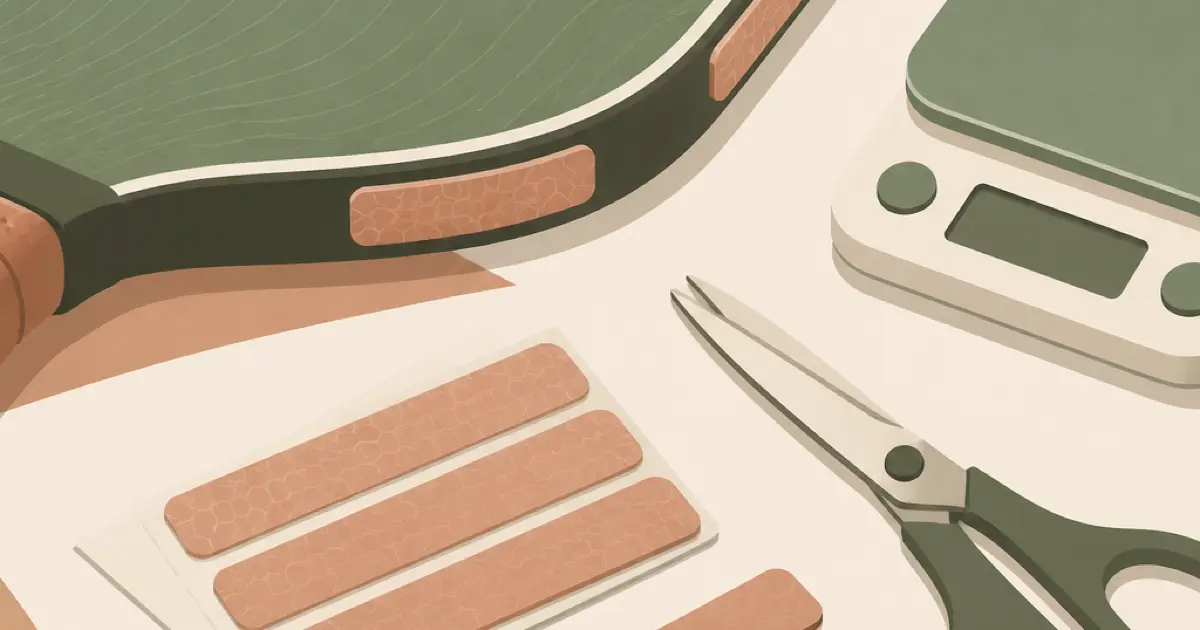
The easiest first setup uses pre-weighed tape, a small digital scale, scissors, rubbing alcohol, and edge-guard finishing tape. Clean the application area, let it dry, and record the paddle's starting weight.
The Neobadge Pickleball Lead Tape strips weigh three grams each. The live listing showed 4.8 stars from 626 reviews. Owners describe strong adhesive, easy cutting, and strips that stay in place during play. Pre-cut weight makes repeated tests easier.
The Roore Tungsten Weighted Tape Strips for Pickleball Paddles comes as pre-cut non-toxic tungsten strips. Its listing showed 4.3 stars from 50 reviews. Detailed feedback praises simple peel-and-stick use and repeatable three-gram increments.
Both links were live on Amazon.com when checked. Neobadge is less expensive and convenient, but it contains lead. The Roore tungsten strips cost more but avoid lead exposure.
Check Neobadge Pickleball Lead Tape on Amazon.
Check Roore Tungsten Weighted Tape Strips for Pickleball Paddles on Amazon.
How much weight to add
Begin with two to three grams total. If using equal side strips, split the weight evenly. Play a normal warm-up and several games before deciding whether to add more.
Write down the starting weight, added weight, location, and how the paddle felt on blocks, drives, serves, and quick exchanges. Memory becomes unreliable once you move tape several times.
Change one variable per session. If you add weight at the top and sides together, you will not know which placement helped. Return to the baseline when a change makes timing worse.
Do not chase another player's number. Two paddles with the same static weight can have different shapes, balance points, core builds, and swing weights.
Step-by-step application
-
Weigh the complete paddle. Include the grip, overgrip, and edge tape you normally use.
-
Clean the edge guard. Remove dust and oil with a small amount of rubbing alcohol, then let it dry.
-
Measure the tape. Confirm the grams per strip or inch from the product instructions.
-
Apply equal pieces. Press firmly and smooth the full length so corners do not lift.
-
Cover if directed. Finishing or edge-guard tape can reduce contact with lead and protect the adhesive.
-
Weigh again. Confirm the final number instead of trusting package tolerances.
-
Test gently. Start with dinks, blocks, and controlled drives before full serves.
Inspect the tape after each of the first few sessions. Remove or replace any strip that lifts.
Lead safety
Lead is toxic. Avoid touching your face or food while handling it, wash your hands afterward, and keep scraps away from children and pets. Do not leave cut pieces loose in a bag.
Cover installed lead tape according to the product directions. Remove it carefully and dispose of it under local household hazardous-waste guidance. Do not sand or heat it.
If you do not want to manage these precautions, use tungsten. Tungsten tape provides a dense weight without lead, though it often costs more.
How to test the change
Use the same balls and court if possible. Begin with soft shots to check hand speed and touch. Then test blocks against pace, drives from the baseline, serves, and a few overheads.
Pay attention to the arm. New soreness, slower reactions, or fatigue are reasons to remove weight. A setup that produces one harder serve but hurts quick exchanges is not necessarily better.
Compare results over more than five minutes. The first swings may feel impressive simply because the paddle is different.
Rules and paddle condition
Check current event rules before tournament play. Tape should stay secure and must not create a rough striking surface or other prohibited modification. Governing-body standards can change.
Inspect the edge guard before applying weight. Tape will not repair a loose guard or cracked structure. Fix damage first.
Remember that customization can affect warranty coverage. Read the paddle manufacturer's terms before adding adhesive or opening the handle.
Common mistakes
Adding too much at once. A ten-gram jump can transform timing and arm load. Start with two or three grams.
Putting weight only on one side. Unequal side placement can create an unintended balance change.
Skipping the scale. Package claims and cut lengths vary. Weigh the complete setup.
Ignoring lead safety. Wash hands, cover installed tape, and store scraps safely.
Changing tape every few points. Give one setup a fair session and record the result.
Bottom line
Pickleball paddle lead tape is a cheap way to test more stability or power, but small changes are enough. Use three and nine o'clock for twist resistance, twelve o'clock for the largest swing-weight increase, and lower placements for a milder change.
The Neobadge Pickleball Lead Tape is convenient when you want pre-cut three-gram strips. The Roore Tungsten Weighted Tape Strips for Pickleball Paddles is the better choice if you want to avoid lead. Measure, document, and stop adding weight when hand speed or arm comfort gets worse.
Frequently Asked Questions
Where should I put lead tape on a pickleball paddle?
Weight near the top adds the most swing weight and power. Weight at the sides can improve twist stability. Weight near the throat or handle changes balance with less effect on swing weight. Start small and test.
How much lead tape should I add to a pickleball paddle?
Begin with about two to three grams total and change one location at a time. Large jumps can strain timing and the arm. Weigh the complete paddle before and after.
Is lead tape safe to use?
Lead is toxic. Wash your hands after handling it, keep it away from children and pets, and cover installed tape according to product guidance. Choose tungsten tape if you want to avoid lead.
Does adding weight make a paddle illegal?
Weight tape is generally allowed when it does not alter prohibited surface characteristics, but rules change. Check the current tournament and governing-body rules before competition.
Does lead tape make a pickleball paddle more powerful?
Yes, weight near the top adds the most swing weight per gram, which can add plow-through and power. It also slows your hands, so add the least amount that produces a useful change.
Can I put lead tape on the handle of a pickleball paddle?
Yes. Weight near the throat or handle moves balance toward the hand or adds mass with less effect on swing weight. Handle weighting often needs the grip removed or a product made for that spot.
What can I use instead of lead tape?
Roore Tungsten Weighted Tape Strips is a non-toxic, pre-cut alternative. It costs more than basic lead tape but avoids the lead handling precautions.