Pickleball Ball Machine: What to Buy for Solo Practice Reps
Accessories
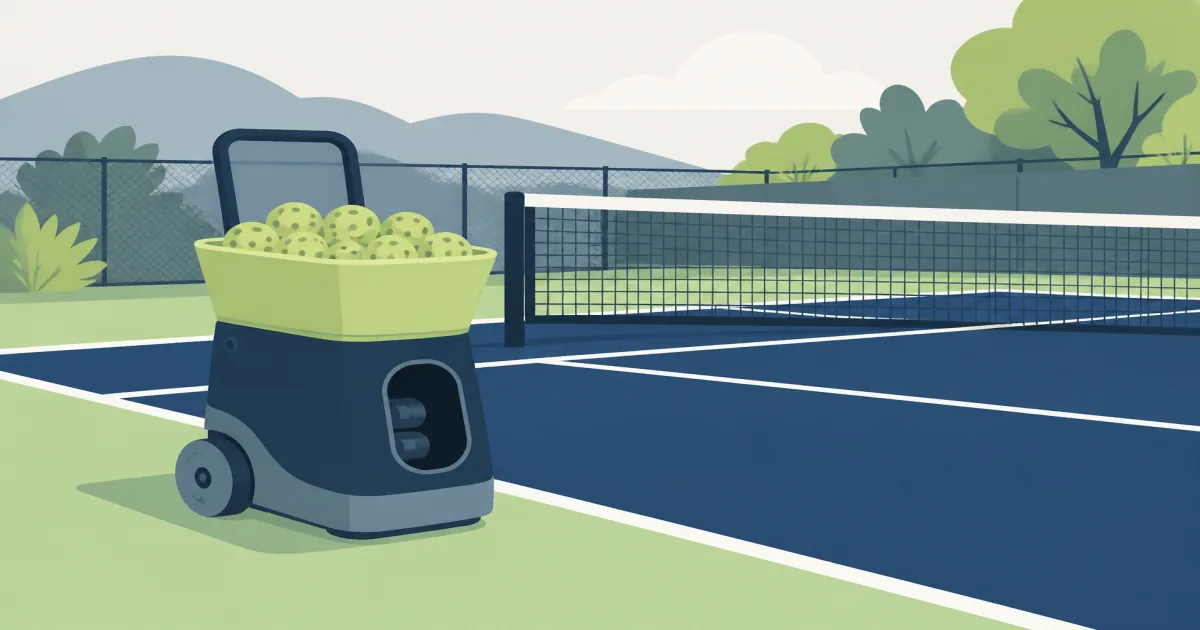
A pickleball ball machine turns empty-court time into real reps. Here is how to choose hopper size, spin, and portability, plus three machines that fit different budgets.
Our picks
Solo court time used to mean shadow swings and a wall. A pickleball ball machine changes that. You get consistent feeds so you can build muscle memory on returns, blocks, and transition steps without waiting for a partner’s calendar.
A ball machine is one practice tool, and the pickleball accessories section covers the rest of the kit.
This guide covers what specs matter, who each price lane is for, and three Amazon machines that fit budget, portable mid-tier, and premium app control. For routines that do not need a launcher, keep how to practice pickleball alone open beside this page.
What a pickleball ball machine is really for
Think of it as a patient feeding partner. You set speed and height, then take the same ball over and over until the contact feels boring in a good way. That boredom is how soft hands and early preparation stick.
It will not replace live doubles. Machines do not fake poaches, body language, or weird bounces off a live paddle. Use the machine for reps you control. Save open play for decision-making under chaos.
If your main problem is footwork lag, oscillation or auto-swing helps more than raw speed. If your main problem is late contact on pace, raise feed speed gradually after you can cleanly block slower balls.
Specs that decide the buy
Hopper capacity. Small hoppers force constant reloads. Fine for short driveway sessions. Frustrating for hour-long club practice.
Speed range. Beginners rarely need 60 mph on day one. They need a slow feed they can meet out front. Intermediate players want enough pace to practice drive returns without inventing artificial swings.
Spin. Topspin and backspin settings help you practice reading pace off the bounce. Dual-wheel designs often feel flatter and friendlier than aggressive single-wheel topspin for newer players.
Oscillation. Side-to-side feeds force recovery steps. Fixed center feeds are easier to groove, then too easy to outgrow.
Power and weight. Battery machines win on outdoor courts with no outlet. Weight and wheels decide whether you actually drag the unit from the car twice a week.
Controls. Knobs on the machine are fine. A remote or phone app keeps you practicing instead of hiking to the hopper between sets.
Best budget: Furlihong 3816PBH Pickleball Machine with Remote Control
The Furlihong 3816PBH Pickleball Machine with Remote Control is the entry lane when you want automatic feeds without spending club money. It is light, adjustable, and built for driveway or backyard volume where a 19-ball style hopper is enough for short blocks of work.
Who it is for: Newer players building contact confidence, parents setting up kids for return practice, and anyone testing whether they will actually use a machine before buying a premium unit.
Skip it if: You want long uninterrupted sets, heavy topspin programming, or match-simulation patterns every session. Reload breaks are part of the deal at this price.
Pair it with a cheap outdoor ball multipack and a simple pickup hopper so you are not bending for every miss. Keep expectations on “reliable feed,” not “private coach.”
Best portable: Posboll Pickleball Machine Ball Thrower
The Posboll Pickleball Machine Ball Thrower sits in the middle: serious enough for weekly solo work, light enough to live in a trunk. Dual launching wheels, spin control, external oscillation, and a removable battery make it a practical step up from toy launchers.
Who it is for: Intermediate players who practice two or three times a week and need spin variety plus movement feeds without hauling a 40-plus-pound club machine.
Skip it if: You already generate your own pace and need premium top-end speed or deep programmable libraries. The Posboll Pickleball Machine Ball Thrower caps below the fastest club units on purpose.
Fold the hopper down after sessions so storage does not eat the garage. Charge the battery off the court so setup time stays short when you arrive.
Top pick: Titan ACE
The Titan ACE Pickleball Machine is the premium answer when the machine is a training investment, not a novelty. App control, oscillation, and a larger hopper support longer sessions and more intentional patterns.
Who it is for: Dedicated intermediates and coaches who will program feeds, share patterns, and use the machine enough to justify the spend.
Skip it if: You only want occasional backyard tossing. A cheaper launcher plus more open play is a better use of money until the habit is real.
Treat Titan like gym equipment. Schedule sessions. Track what you practiced. A dusty premium machine is just an expensive coat rack.
How to choose in five minutes
- Count how many days per week you will actually set it up.
- If the answer is “maybe once,” start budget.
- If you already practice solo weekly, buy portable mid-tier with spin.
- If you coach or train for tournaments, shortlist premium app machines.
- Confirm wheels, battery, and hopper size before you fall for marketing adjectives.
Also check return windows. Machines are bulky. A clear return path matters when the first session reveals a quirk you cannot live with.
Common mistakes
Buying max speed first. Most players need clean contact at medium pace more than they need a rocket they cannot time.
Ignoring ball quality. Soft, cracked, or mixed balls jam feeders and create weird bounce lessons. Rotate outdoor balls and retire cracked ones early.
Practicing only from one spot. Move the machine and move yourself. Stationary groove work helps, then transfer into recovery steps.
Skipping warm-up feeds. Start slow. Raise pace after you can meet the ball out front without stabbing.
Expecting the machine to teach doubles IQ. It builds strokes and footwork. Partners still teach positioning.
Session template that actually sticks
Warm up with 10 minutes of slow mid-court blocks. Add 15 minutes of deeper returns. Finish with 10 minutes of oscillation movement. Stop while focus is still high. Three focused blocks beat an hour of mindless swatting.
Log one cue per session, like “contact out front” or “quiet face on blocks.” Review the cue next time before you change machine settings. The pickleball ball machine is only as useful as the intention you bring to it.
When you want a net for soft-game targets without a full court, look at best portable pickleball net. When you want rebound without powered feeds, see our pickleball rebounder guide.
Bottom line
A pickleball ball machine earns its keep when it removes excuses. Choose Furlihong 3816PBH Pickleball Machine with Remote Control to test the habit cheaply, Posboll Pickleball Machine Ball Thrower when portability and spin matter for weekly work, and Titan ACE when you want programmable, high-volume training. Buy the lane you will use, then show up with a plan.
Frequently Asked Questions
What is a pickleball ball machine?
It is a powered launcher that feeds pickleballs so you can practice returns, volleys, and footwork without a partner. Settings usually cover speed, height, interval, and sometimes spin or oscillation.
Do I need a pickleball ball machine if I already have a wall?
A wall is great for timing and soft hands. A machine adds paced feeds, depth changes, and movement patterns that a flat wall cannot fake. Many players use both.
How many balls should the hopper hold?
Recreational backyard machines often hold under 25 balls. Club-style units commonly hold 85 to 135. Bigger hoppers mean fewer reload breaks during long sessions.
Indoor balls or outdoor balls in a machine?
Match the ball to your surface and the machine maker’s guidance. Outdoor hard-court balls are common for driveway practice. Soft indoor balls behave differently in feed wheels.
Is a remote or app worth the money?
Yes if you hate walking to the machine every time you change pace. Remotes and apps keep you on the court adjusting feed rate, elevation, and patterns.
Will a cheap launcher ruin my form?
Not if you start slow and focus on clean contact. Cheap launchers may have smaller hoppers and less precise placement. Use them for volume, then graduate when you outgrow the feed.
What else should I buy with a pickleball ball machine?
Extra outdoor balls, a ball hopper for pickup, and a portable net if you practice off a full court. See our pickleball ball hopper and best outdoor pickleball balls guides.