How to Practice Pickleball Alone (Wall Drills and Solo Routines)
Paddles
No partner? Wall work, footwork reps, and a simple portable net setup can still move your game. Here is a solo practice plan that actually sticks.
Our picks
You do not need a full court or a standing partner to get better. Learning how to practice pickleball alone fills the gaps between open play, league nights, and the weeks when schedules never align. Solo work will not replace live points at the kitchen, but it sharpens paddle path, foot speed, and repeat contact in ways group drills often skip.
Solo practice is one routine, so the best pickleball paddles pillar covers the gear that supports it, and the pickleball paddle guides act as the index.
This guide covers wall routines, shadow work, portable net basics, and the mistakes that waste solo time. Keep sessions short and work one skill: dinks, drops, or a compact drive path.
If your paddle feels wrong during solo reps, start with the framework in how to choose a pickleball paddle. Weight and forgiveness still shape how honest your alone practice feels.
Wall practice: the fastest solo setup
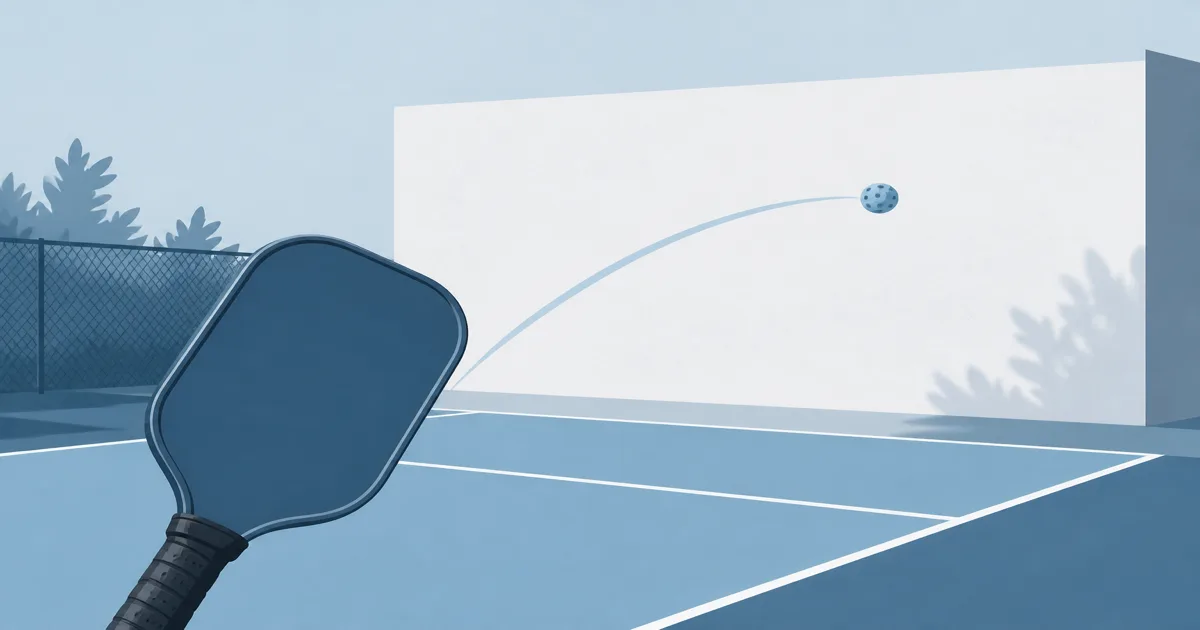
Find a flat, smooth wall with at least ten feet of clear floor in front of it. Tennis backboards, gym walls, and garage panels all work if the bounce is predictable. Mark a line on the ground seven feet from the wall for kitchen-style dinks and step back to twelve to fifteen feet for drive reps.
Start with twenty soft dinks in a row. Contact out in front, paddle face slightly open, minimal backswing. The goal is repeatable height on the rebound, not power. When ten consecutive returns land in a small target zone on the wall, add one step of lateral shuffle between hits.
For drive practice, stand farther back and strike with a compact swing. Watch where the ball rebounds. If it sprays left or right, your contact point or face angle is off, not your strength. Wall work exposes timing fast because there is no opponent to disguise your errors.
Shadow swings and footwork without a ball
Shadow reps train movement patterns you cannot fix by hitting alone. Stand at an imaginary kitchen line and cycle through ready position, split step, short dink motion, and reset. Say the steps out loud if that keeps you honest: ready, step, contact, recover.
Add cone or tape marks for lateral coverage. Shuffle to the forehand side, shadow a block, recover to center, shuffle to the backhand, repeat. Thirty seconds on, thirty seconds off for six rounds builds court habits without chasing balls.
Pair shadow work with your real paddle and shoes. Heavy trainers and an old racquetball paddle teach different balance than what you use in games. Match your game setup so muscle memory transfers.
Rebounder options when a wall is not available
Portable rebound nets give you a return angle when no flat wall is nearby. Most frames angle a tight net or panel so the ball comes back at chest or knee height. They help for quick hand reps in a driveway or patio, especially in HOAs that restrict permanent fixtures.
Set the portable net on level ground and anchor it if the frame wobbles. Start close, then move back as timing improves. Treat it like a wall: soft hands first, then add pace. Rebounders vary in bounce consistency, so spend five minutes learning the return before you commit to long sessions.
For a full buying shortlist, see pickleball rebounder. If you want paced feeds instead of reactive returns, compare a pickleball ball machine. You do not need a premium frame to start. A stable mid-range unit with clear setup instructions beats a wobbly bargain model that punishes every mishit with a dead bounce. If budget is tight, wall practice still wins.
Build a simple solo session plan
Pick two focus areas per session, not six. Example: fifteen minutes of wall dinks plus ten minutes of shadow footwork. Or drive consistency on the wall, then serve toss reps without hitting. Write the plan before you start so you do not default to mindless bashing.
Use rep counts instead of vague time blocks. "Fifty controlled dinks" or "three sets of twenty shadow resets" keeps quality high. Stop when your shoulders tighten or your contact gets sloppy. Solo practice rewards discipline, not exhaustion.
Log one note after each session: what felt clean, what sprayed. Over two weeks patterns show up. Maybe backhand blocks drift wide, or your reset footwork arrives late. Bring that note to open play so partner time targets real gaps.
Paddle and weight choices for solo work
Use the paddle you play with most often. Solo reps should match game feel. If you are still shopping, a forgiving midweight widebody makes alone practice less frustrating while you learn contact. See pickleball paddle weight for band ranges that fit most recreational arms.
Lighter paddles feel fast on shadow swings but expose weak contact on wall drills. Heavier paddles stabilize blocks but can slow hand speed during rapid dink reps. Midweight is the default recommendation for solo and match play until you know you need a shift.
Grip matters too. A slick handle sends extra shock into your forearm on repeated wall impact. Replace worn grips or add an overgrip before long solo blocks.
Common solo practice mistakes
Mistake one: only hitting hard. Power reps without soft touch carry over poorly to kitchen play. Balance drives with dinks and blocks every session.
Mistake two: skipping footwork. Standing flat-footed against a wall builds arm skill without court movement. Shadow steps between ball reps fix that gap.
Mistake three: practicing with dead balls. Cracked outdoor balls bounce unpredictably and teach bad timing. Keep a few decent practice balls for wall work.
Mistake four: sessions with no plan. Random hitting feels productive until you play a match and nothing changed. Two focused drills beat six unfocused ones.
Mistake five: expecting solo work to replace live play. Reads, pressure, and partner chemistry need people on the other side. Use alone time for mechanics, then test in open play.
When solo practice is enough, and when it is not
Solo work excels at contact, swing path, serve toss, and footwork patterns. It struggles with net clearance reads, attack timing against speed-ups, and the chaos of hands battles. Plan for both: two solo sessions and one partner or open-play session per week is a solid recreational mix.
If you are brand new, solo dinks and shadow reps accelerate week-one confidence. If you are plateauing at 3.5, solo work alone probably will not break the stall. Add coached drills or structured play against varied opponents.
For more on building a paddle setup that matches your practice goals, browse Paddlefoundry paddle guides or return to how to choose a pickleball paddle before you buy gear for solo work you have not tried yet.
Solo practice kit
The Franklin portable pickleball net gives you a portable rebound surface and a mini-net mode when a partner shows up. Set it up where a miss will not destroy a window.
Pair it with Franklin X-40 Outdoor Pickleballs 3-Pack for asphalt or driveway work. Use indoor balls only on indoor floors. Wall drills and portable net drills are literal practice tools. They work best with the right ball for the surface.
Frequently Asked Questions
Can you really improve at pickleball without a partner?
Yes, for fundamentals. Solo work builds paddle path, footwork, and contact consistency. You still need live play for reads, pressure, and kitchen timing.
What is the best solo drill for beginners?
Start with a wall dink at half speed from seven feet away. Focus on soft contact and a compact swing. Add shadow footwork between sets so your feet keep up with your hands.
Do you need a portable net to practice pickleball alone?
No. A flat wall and one ball cover most solo reps. Rebounders help when you lack a smooth wall or want varied angles, but they are optional, not required.
How long should a solo practice session last?
Twenty to thirty focused minutes beats an hour of random hitting. Pick two drills, set a rep count, and stop when form slips. Quality reps matter more than marathon sessions.
Does paddle weight matter for solo practice?
It can. A midweight paddle you already use in games keeps solo reps honest. Switching to a heavy demo paddle for wall work can hide timing issues you will feel at open play.
What should I bring to solo pickleball practice?
A flat wall or a portable net, a paddle you actually use in games, and a few decent practice balls. Worn or cracked balls bounce unpredictably and teach bad timing.
How do I practice dinks alone?
Stand about seven feet from a flat wall and aim for twenty soft dinks in a row with a compact swing. The goal is repeatable height on the rebound, not power.