Pickleball Rebounder: Solo Practice Nets and Boards That Return the Ball
Accessories
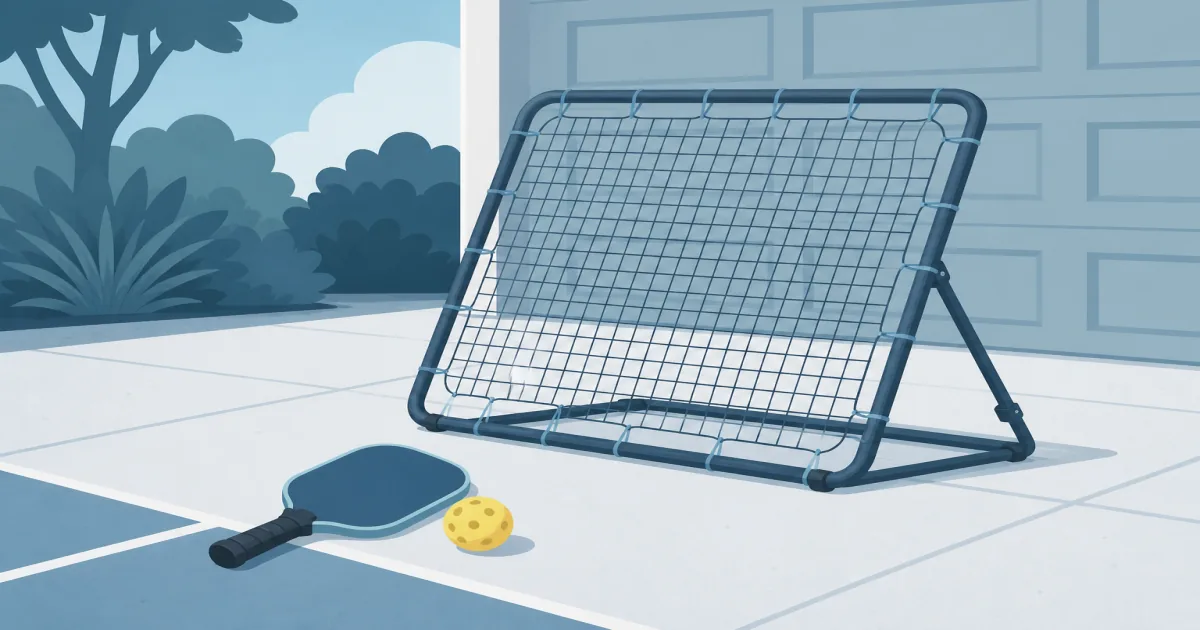
A pickleball rebounder gives you instant feedback without a partner. Here is how to pick a net or board setup, plus three Amazon options for different yards.
Our picks
Partners cancel. Courts fill. A pickleball rebounder keeps practice on your calendar anyway. You hit, the ball comes back, and you get honest feedback about contact quality without waiting for someone else’s free evening.
A rebounder is one practice tool, and the pickleball accessories guide collection covers the rest of the gear.
This guide compares net-style rebounders and dink boards, then shortlists three Amazon setups for different spaces. For partner-free routines that use a wall or portable net, keep how to practice pickleball alone nearby.
What a pickleball rebounder should feel like
A good rebounder returns the ball in a way you can read. Too dead and you invent fake pace. Too springy and every miss teaches the wrong timing. You want a return that rewards clean contact and punishes late, stabby swings.
Net rebounders usually feel softer and a bit less predictable, which is useful for reaction. Boards feel firmer and more like a wall with an adjustable angle, which is useful for soft-game groove work.
Neither tool teaches doubles poaching by itself. They build contact, recovery steps, and concentration. Bring those skills into open play.
Net vs board vs portable game net
If you already own a full portable net for games, a dedicated rebounder still earns a spot when you want returns without a second player. If you own nothing yet, a 2-in-1 kit can cover casual play and solo work in one purchase.
Top pick: Franklin 83-inch rebounder
The MerryMove 6FT Pickleball Practice Rebounder Net is the wide-target choice when space allows. The large face helps you take full swings without babying the frame, and the net-height reference bar keeps practice closer to real court geometry.
Who it is for: Players with a driveway, patio, or quiet outdoor lane who want serious solo volume and occasional partner feeding.
Skip it if: You need something that stores under a bed every night. Wide frames need honest storage space even when they fold.
Use the included court markers to fake a kitchen line. Soft-game work improves when your feet have a boundary to respect.
Best value kit: 2-in-1 rebounder net set
The G-SQAURED 6x6FT 2-in-1 Pickleball Rebounder & Game Net is the compact answer when you want rebound mode and a mini game net without buying two products. It is a practical starter for apartments with a shared courtyard or families who want casual play plus solo reps.
Who it is for: Newer households, small yards, and shoppers who want paddles in the box for guests.
Skip it if: You already have quality paddles and need the widest possible rebound face. Step up to a full-width net instead.
Set it up once, time the assembly, and decide whether the footprint fits your real space. Gear that never leaves the box does not improve anyone’s hands.
Best for dinks: adjustable dink board
The Pickleball Practice Rebounder Dink Board with Stand is for soft-game obsession. Adjustable angle lets you soften or firm the return so you can practice absorbs, rolls, and quiet blocks without chasing balls across the neighbor’s lawn every miss.
Who it is for: Players whose open-play mistakes are pop-ups and floaty dinks, not lack of power.
Skip it if: You mainly need groundstroke volume. A wide net covers that job better.
Keep sessions short and focused. Soft-game boards reward intention. Mindless tapping teaches little.
Setup tips that save frustration
Place the rebounder on flat ground. Uneven concrete makes frames rock and returns wander.
Face the rebounder so missed balls die safely. Cars, windows, and flower beds are expensive targets.
Start closer than you think. Groove contact, then step back. Distance without control just creates sprinting.
Wear court shoes even on a driveway. Lateral stops on slick concrete punish ankles fast. See how should pickleball shoes fit if your footwear is guesswork.
Mistakes to avoid
Using dead outdoor balls. Inconsistent bounce makes you “fix” contact that was never the problem.
Practicing only forehands. Force backhand and middle recovery reps on purpose.
Standing still for twenty minutes. Add a split step and a recovery step so the rebounder trains movement, not just arm swings.
Expecting tournament IQ to appear automatically. Add targets. Call the shot before you hit. Make practice intentional.
Buying the biggest frame for a tiny patio. Measure first. A smaller kit you use beats a giant net you resent assembling.
How a rebounder fits with other solo tools
Use a rebounder for reactive contact. Use a ball machine for paced feeds you do not create yourself. Use a wall when both are unavailable. The tools stack. They do not cancel each other.
If you want a full portable net for real games after practice, read portable pickleball net setup. If you want powered feeds next, open the pickleball ball machine guide.
Bottom line
A pickleball rebounder turns spare pavement into practice. Choose Franklin’s 83-inch rebounder for wide, realistic net returns, the 2-in-1 rebounder net set when space and budget are tight, and the dink board when soft hands are the whole project. Pick the shape that fits your yard, then show up often enough for the returns to teach you something.
Frequently Asked Questions
What is a pickleball rebounder?
It is a net or board that returns the ball so you can practice alone. Nets give a softer, more unpredictable return. Boards give a firmer, more consistent bounce for soft-game work.
Is a pickleball rebounder better than a wall?
A wall is free and useful. A rebounder is quieter for neighbors, often portable, and usually built with net-height cues or soft-game angles. Many players use both.
Net rebounder or dink board?
Choose a net when you want larger targets and groundstroke volume. Choose a board when soft hands and angle control are the priority.
How much space do I need?
Plan for the rebounder footprint plus your swing path and a safe miss zone behind you. Driveways and quiet garage bays work when the surface is flat.
Can two people use a rebounder together?
Wide nets like an 83-inch frame support partner feeding and doubles-style pattern work. Narrow boards are mostly one-player soft-game tools.
Will a rebounder replace a ball machine?
No. A rebounder reacts to your shot. A machine feeds on a timer. They train different habits. See our pickleball ball machine guide if you want paced feeds.
What balls should I use?
Match balls to your surface. Outdoor balls on rough concrete scuff faster. Retire cracked balls so bounce stays honest during practice.