Pickleball Paddle Balance Point: How Head-Heavy and Handle-Heavy Paddles Feel
Paddles
Pickleball paddle balance point explained: learn how head-heavy, even, and handle-heavy setups change hand speed, power, and stability.
Our picks
This guide explains balance point in plain English. Balance point is easy to overlook because product pages lead with face material and price. That can leave you with a paddle that looks right on a screen but feels awkward after two games.
Balance point is one spec, and the best pickleball paddles pillar shows how it plays out in real models, while the paddle guide roundup gathers the guides.
If you are sorting out several fit questions at once, start with our swing weight guide. Then come back to this one. Changing one variable at a time makes it much easier to tell what actually helped.
What balance point means
Where the paddle’s mass sits from handle to head, which changes the way the same number of ounces feels. It is a useful measurement because pickleball happens at two speeds. You need a calm, stable paddle for serves, returns, and blocks. You also need one that you can move quickly when the ball comes fast at the kitchen. A number or label only matters when it helps you predict those moments.
Manufacturers do not always present every measurement in the same place. Read the current specification panel, not only the product title. If a listing leaves out a number you care about, treat that as a reason to compare another option or ask the maker directly. Clear specifications are more helpful than vague claims about power or control.
What you will feel on court
A head-heavy setup can help drives carry through contact. A handle-heavy setup usually feels easier to maneuver. Neither is automatically better, because the right answer depends on your timing and where you miss. Those differences show up most clearly on your normal miss. A player who is late on hand battles needs a different answer from someone whose blocks get pushed around. Do not copy a teammate’s setup unless their timing, grip, and style are close to yours.
Pay attention to the first thirty minutes of a regular session. Are your resets landing short? Does the paddle feel slow when you switch from forehand to backhand? Are mishits harsh enough that you start steering the ball? Those are usable clues. They are better than trying to diagnose a paddle after one perfect drive.
A simple fit check before buying
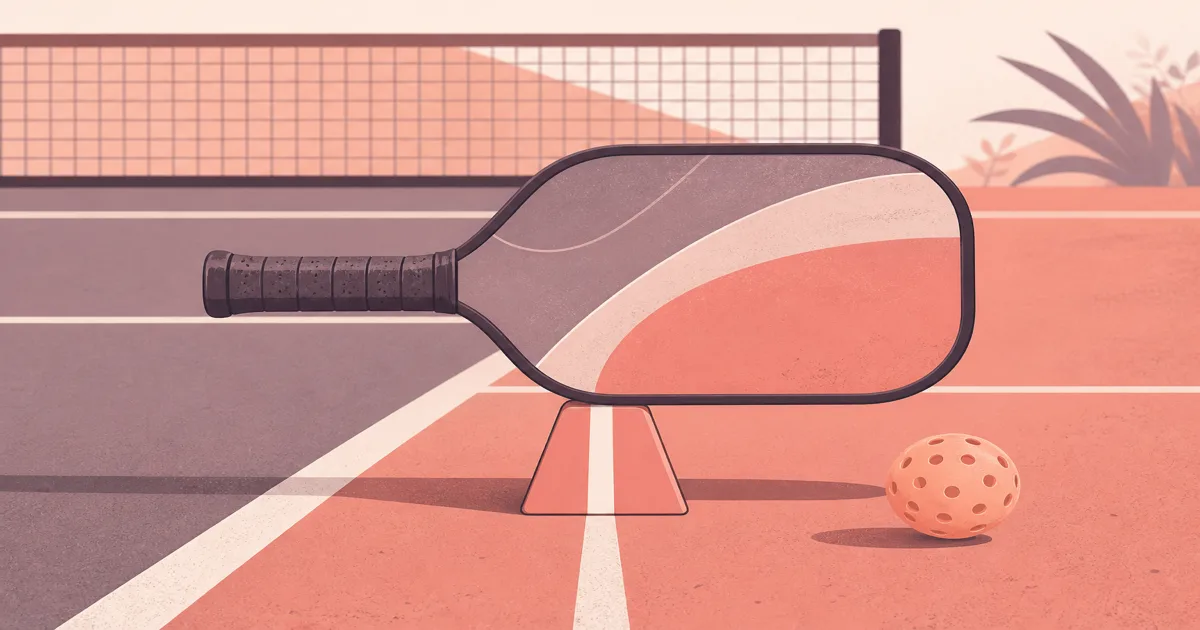
balance the paddle across one finger or a narrow ruler, then compare where it settles with another paddle. A point farther toward the head usually feels more demanding in fast exchanges. Use that result as a direction, not a pass-or-fail test. A comfortable paddle should let you swing without clenching your fingers or changing your stroke to make the paddle work.
When you shop online, confirm the exact variant. Retail pages sometimes group several weights, shapes, colors, or generations under one review section. Read the selected option, the stated return terms, and recent reviews that describe actual play. Look for repeat comments about hand speed, stability, grip comfort, or durability. One extreme review is not a pattern.
How this works with weight and shape
Balance point does not replace static weight, grip size, face shape, or core thickness. Think of the specs as a group. An overgrip can make the handle larger and shift the feel toward your hand. Small amounts of tungsten tape can change stability, but they also add mass. A long or wide shape can move the balance of the paddle even when the listed ounces look familiar.
Start with the problem that occurs most often. If the paddle feels too slow, do not add weight just because a player online says more stability fixed their game. If the face twists on blocks, do not buy a lighter paddle only because it feels quick in your hand. The useful choice is the one that improves the shot you actually miss.
A paddle example that shows the spec
The Selkirk Sport SLK Halo Control Max Pickleball Paddle is an elongated control example if extra reach is the job. It is not a universal answer. Compare the current product details with your own requirements, especially weight, handle, shape, and return policy. Check the current price and options on Amazon.
Choose it only if the current listing matches the fit you are trying to solve. Skip it if the handle, shape, or listed weight conflicts with your needs. A paddle can be well reviewed and still be wrong for your hand or game. That is why checking the exact variant matters.
Common mistakes to avoid
The first mistake is treating one specification as a verdict. A number can point you in the right direction, but it cannot tell you how your shoulder feels after a long session or whether your backhand has room. The second mistake is changing too much at once. If you add tape, an overgrip, and a new paddle in the same week, you will not know which change helped.
The third mistake is buying a description instead of a product. Confirm the selected US Amazon option, current rating, buyer reviews, and dimensions before checkout. Keep the packaging and use the return window if the paddle is new to you. A few normal games will tell you more than dry swings in the kitchen.
Bottom line
Balance point is worth understanding because it makes a practical difference in how a paddle moves and feels. Use it with Paddlefoundry’s latest pickleball guides, not in isolation. Pick the specification that solves your most common on-court problem, then give yourself enough sessions to decide whether the change actually worked.
Frequently Asked Questions
What is balance point?
Where the paddle’s mass sits from handle to head, which changes the way the same number of ounces feels.
How do I know if balance point fits me?
Balance the paddle across one finger or a narrow ruler, then compare where it settles with another paddle. a point farther toward the head usually feels more demanding in fast exchanges.
Does balance point matter for beginners?
Yes, but it is one part of the fit. Beginners usually do better with a comfortable, controllable paddle than with an extreme specification.
Can I change balance point after I buy a paddle?
Sometimes. An overgrip, a small amount of tungsten tape, or a grip change can shift feel, but start with small changes and play before adding more.
Should I choose by a spec sheet alone?
No. Use numbers to narrow the choices, then compare your grip, normal shot pattern, return policy, and the current product listing.
Where can I learn about related paddle fit choices?
Use the related Paddlefoundry guides for weight, shape, grip, and control. One clear fit change is more useful than replacing every part of your setup at once.