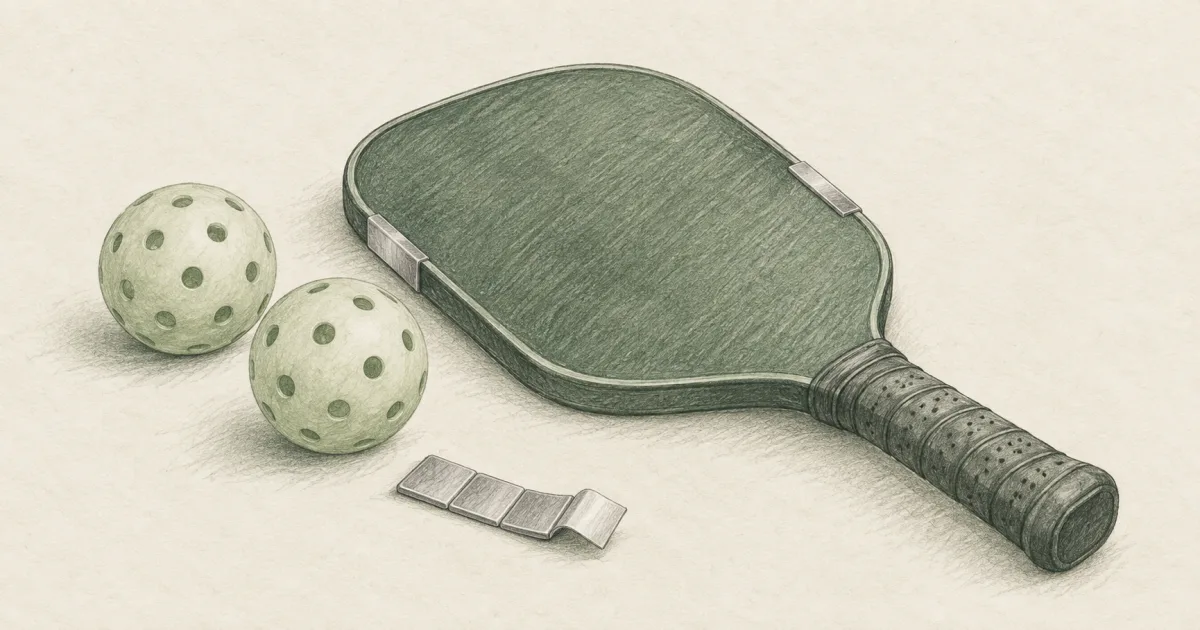
Weighted Pickleball Paddle (2026): Heavy Picks and How to Add Weight
Paddles
Weighted pickleball paddles are about balance, not just grams. Compare a head-heavy flagship, a cheap way to add 3 grams, and clip-on weights that leave no residue.
Our picks
Weight matters less than where it sits. Five grams at the tip and five grams at the handle produce two completely different paddles. That is why "weighted" is really a question about balance, swing feel, and how much mass you can move on time.
This guide covers both routes: buying a heavier paddle, or adding weight to the one you have. If you already know you want to tune an existing paddle, our best pickleball paddle weights guide is the accessory deep dive. The paddles category and the best pickleball paddles pillar cover the full shortlist when the face itself is the problem.
What a weighted paddle actually changes
Static weight is the number on a kitchen scale. Swing weight is how heavy the paddle feels while you swing it. Two paddles can both read 8 ounces and feel nothing alike, because an elongated frame carries more mass further from your hand.
Side weight at 3 and 9 o'clock adds twist stability, which helps on off-center blocks and returns. Tip weight adds plow-through and a heavier ball but slows your hands. Handle weight shifts the balance point back toward your palm, which can make a head-heavy paddle feel quicker.
Weight will not fix a dead face, a grip that is too small, or a core you dislike. It changes how the paddle behaves on contact. Learn the stock feel first, then add grams with a purpose.
Heavy stock paddles vs add-on weight
Buying a heavier paddle gets you one continuous build with no tape to peel. The mass is engineered into the frame, throat, and edge, so the weight distribution is deliberate instead of stacked on top.
Adding weight yourself is cheaper and reversible. A $7 pack of 3-gram strips can turn a light paddle into a stable one, and you can peel it off if your arm complains. The tradeoff is adhesive residue and a less refined balance.
Most players are best served by one of those two routes, not both at once. If you already own a paddle you like, tune it before you shop. If you are buying new and know you want a head-heavy feel, start with a frame built that way.
Quick comparison
Top pick: JOOLA Perseus Pro IV 16mm
The JOOLA Ben Johns Perseus Pro IV 16mm is the best weighted pickleball paddle for players who want mass engineered into the frame rather than taped on. It is elongated, head-heavy, and honest about what it is: a power platform with enough dwell time to reset.
The 16mm core gives you a plush feel on drops and resets. The carbon face holds its grab at high swing speeds, which is where cheap faces start to skid. Extra foam in the throat corners adds stability and expands the sweet spot, so mishits do not die as fast as they do on a thin power paddle.
It is also on a real markdown right now, which is rare for a current flagship. If you already handle an elongated paddle and want more put-away power without dropping to a 14mm shell, this is the lane. If you are still fighting late contact, the weight will expose that faster than it fixes it.
Best for: Baseline drivers, two-handed backhand players, and anyone who wants a head-heavy paddle out of the box.
Skip if: You play a soft game, your shoulder tires on long sessions, or you already struggle with slow hands.
Check the JOOLA Perseus Pro IV on Amazon.
Best add-on: Neobadge 3g lead strips
The Neobadge Lead Tape for Pickleball Paddles is the cheap, flexible way to weight a paddle you already like. Pre-cut 3-gram strips make repeatable changes easy, and the adhesive holds through sweaty sessions.
Placement matters more than brand. Start with one strip per side at 3 and 9 o'clock, play a full session, then decide whether you want more stability or a little tip weight. Side weight is the safer first move for doubles players because it fights twisting without slowing your hands as much as tip weight does.
If lead handling bothers you, use gloves or switch to a non-toxic tape. The performance is real either way. What you are buying here is a low-cost, repeatable way to test what your paddle has been missing.
Best for: Players who own a paddle they like and want 3 to 6 grams of extra stability.
Skip if: You refuse lead handling, or you already know you want a long custom tungsten layout.
Check the Neobadge lead strips on Amazon.
Best no-residue: Neobadge snap weights
The Neobadge Snap Weights for 16mm Pickleball Paddles are the cleanest way to experiment with weight. No glue, no tools, and no residue when you change your mind.
The 2-in-1 shape adds a small amount of mass while protecting the edge guard, which matters if you scrape the court on low balls. Because they clip on and off, you can move weight from the sides toward the top between sessions and feel the difference immediately.
They will not replace a full custom tape layout for players chasing exact gram targets. What they do well is remove the friction from experimenting. If you are weight-curious and want to keep your options open, start here.
Best for: Players who want to test weight without committing, and anyone who resells or shares paddles.
Skip if: You play a 13mm or 14mm frame, or you want to stack many small increments.
Check the Neobadge snap weights on Amazon.
How much weight and where to put it
Use a simple order. Play a stock session and note what fails. Blocks that twist, soft put-aways that lack pace, or a paddle that already feels tip-heavy are all useful signals.
Then add 2 to 3 grams total and retest the same drills. Side strips at 3 and 9 o'clock are the standard first move because they add stability without much swing-weight penalty. Only move a strip toward the top if you still want more plow-through and your hands can afford it.
Keep a cover over finished tape so bag grit does not peel the corners. If your edge guard is already cracked, fix that first. For the full clock map see our lead tape placement guide, and for the static bands see pickleball paddle weight.
Who should skip a heavier setup
Skip added weight if you are still changing paddles every month, because you have no baseline to compare against. Skip it if your elbow or shoulder already complains after long sessions. More mass does not help a tired arm.
Skip the heavy stock paddle if you win points with dinks, resets, and quick hands. Those players usually want a lighter frame they can move fast. Our control paddle guide is the better starting point.
Anyone dealing with nagging arm pain should read pickleball paddle for tennis elbow before adding grams. Comfort beats free power when your arm is the limiting factor.
Bottom line
The best weighted pickleball paddle is the one whose balance matches how you play. Buy the JOOLA Perseus Pro IV 16mm if you want head-heavy power built in. Add Neobadge 3g lead strips if you already own a paddle worth tuning, or clip on Neobadge snap weights if you want to test grams without residue. Change one variable at a time and let a full session tell you whether it helped.
Frequently Asked Questions
Are weighted pickleball paddles legal?
Adding weight to the edge or handle is generally allowed as long as you do not change the face or create an unsafe surface. Rules vary by event, so check the current tournament guidance before you compete with a modified paddle. Most recreational and league play is fine.
What does adding weight to your pickleball paddle do?
It changes balance and how the paddle feels while swinging. Side weight at 3 and 9 o'clock fights twisting on off-center hits. Tip weight adds plow-through and power. Handle weight can calm a head-heavy paddle and make your hands feel quicker at the kitchen.
Are heavier pickleball paddles better?
Not automatically. Heavier setups are more stable on blocks and add put-away pace, but they slow your hands in fast exchanges and load the shoulder over a long session. The right answer depends on your style, your arm, and how often you play.
What is the best weight for a pickleball paddle?
Most recreational adults land in the midweight band, roughly 7.8 to 8.4 oz static, before any tape. Read our pickleball paddle weight guide for the bands, then add only a few grams at a time if you still need stability.
Where should I put weight on a pickleball paddle?
Start at 3 and 9 o'clock on the edge for twist stability. Move toward 12 o'clock only when you want more swing weight and power. Handle or throat weight changes balance with less tip heaviness. The clock map lives in our lead tape placement guide.
How much weight should I add to a pickleball paddle?
Begin with about 2 to 3 grams total, play a full session, then decide whether another small strip helps. Big one-day jumps wreck your timing. Weigh the paddle before and after so you know what actually changed.
Is lead tape or clip-on weight better?
Lead tape is cheaper and more adjustable, but it needs handling care and can leave residue when removed. Clip-on snap weights are cleaner and faster to change, and they only fit 16mm frames. Pick by how often you expect to tinker.
Should a beginner use a weighted paddle?
Not on day one. Learn the stock feel first so you know what you are fixing. Add weight later when you can name a problem, such as a paddle that twists on mishits or feels light through contact.