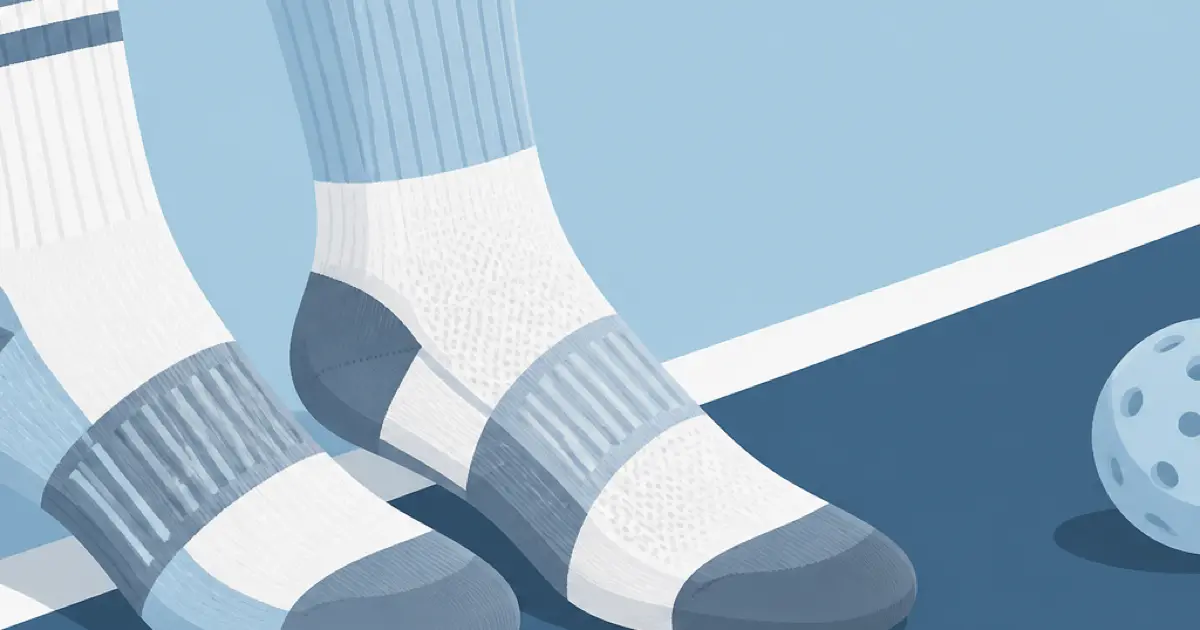
Best Pickleball Socks: Two Court-Ready Picks for Comfort
Accessories
Good pickleball socks should stay put, manage sweat, and add protection without making your court shoes feel cramped. These two pairs suit different cushioning preferences.
Our picks
The best pickleball socks do more than cover your feet. They manage sweat, reduce rubbing, and stay in place while you split-step and move laterally. A regular running sock can work, but loose fabric and soft, worn cushioning become obvious after a long session.
Socks sit under the shoes in the gear list, and the pickleball accessories section covers everything above them.
We researched current product details, live US Amazon listings, and buyer feedback. We have not wear-tested every size and color. Start with our main pickleball shoe guide if your footwear itself feels unstable or worn out.
Quick comparison
Both listings cleared our quality floor when checked. Thorlos showed 4.8 stars from 58 reviews, including detailed feedback from players who use the socks several times per week. Skechers showed 4.9 stars from 55 reviews, with useful comments about sweat control, durability, and a secure fit.
Best light cushion: Thorlos Pickleball Light Cushion
The Thorlos Pickleball Light Cushion Low Cut Socks are the easier choice if you want added protection without a strong compression feel. Padding sits around the forefoot and heel, where quick stops and repeated court contact usually create the most friction.
The fabric uses moisture-wicking fibers, and the instep includes lighter support. That balance matters because a heavily padded sock can make an otherwise correct shoe feel too small. Thorlos keeps the cushioning focused instead of filling every part of the shoe.
Buyer feedback is not huge in volume, but it is specific. One frequent player described using the socks four to five times per week and reported that they held up better than ordinary athletic pairs. That kind of ownership detail is more useful than a one-line comment about softness.
Choose Thorlos if your shoes already fit well and you want a modest comfort upgrade. Skip them if you prefer a very thin sock or dislike paying more for a single pair.
Check Thorlos Pickleball Light Cushion Socks on Amazon.
Best close fit: Skechers Men's 3-Pack Performance Pickleball Crew Socks
The Skechers Men's 3-Pack Performance Pickleball Crew Socks are cushioned crew socks with arch support and odor control. The three-pack means you always have a fresh pair for long tournament days, and the fabric wicks moisture so your feet stay drier inside court shoes.
This is the better pick for players who notice their socks moving inside the shoe. A secure sock will not fix a loose heel or the wrong shoe size, but it removes one layer of sliding fabric. That can make fit checks easier and help prevent folds under the forefoot.
The live listing showed 4.4 stars from 452 reviews. Detailed feedback included players wearing the socks for long sessions without the fabric slipping down or becoming soaked. Other comments praise blister protection and cushioning, though the snug fit will not suit everyone.
Choose the Skechers socks if you want cushioned crew coverage for long days. Skip them if you prefer a low-cut sock or a thinner race-day feel.
Check Skechers Men's 3-Pack Performance Pickleball Crew Socks on Amazon.
How pickleball changes what a sock needs to do
Pickleball packs repeated starts, stops, and side steps into a small area. Your foot pushes against the shoe upper in several directions, not only forward. A sock that twists or stretches loosely can create a ridge exactly where your foot takes pressure.
Outdoor courts also create heat. Sweat softens skin and makes friction more damaging, especially around the toes and heel. Moisture-wicking fabric helps move sweat, but it still needs breathable shoes and a chance to dry between sessions.
The goal is not maximum padding. The goal is stable contact between foot, sock, and shoe. Enough cushioning protects pressure points. Too much cushioning steals space and can make toes rub the upper.
Match sock thickness to your shoe fit
Put on the socks you intend to use before judging a new court shoe. Then check toe room, heel movement, and pressure across the widest part of the forefoot. Our pickleball shoe fit guide explains the full process.
If a shoe fits correctly with a light sock, do not add a thick pair just because it feels plush in your hand. Your feet swell during play. A snug morning fit can become uncomfortable after an hour outdoors.
If the shoe is slightly roomy but the heel remains secure, a lightly cushioned sock may improve contact. Do not use a thick sock to rescue a shoe that is too long or too wide. Replace the shoe with the correct size.
Cushioning, moisture, and blister protection
Cushioning spreads pressure, but placement matters. Forefoot and heel padding help with common impact areas. Dense material over the toes can make the toe box crowded, while excessive arch padding can feel like a lump.
Moisture control depends on both fiber and fit. Fabric needs to move sweat away from skin without holding wet folds. Change socks between long sessions if the first pair becomes soaked. Keeping a dry spare in your pickleball bag is an easy comfort upgrade.
Blisters usually come from repeated friction plus moisture. A good sock lowers both, but shoe fit still matters more. If your heel lifts every step, no premium sock can fully prevent rubbing.
Care that helps socks last
Follow the label, use a gentle wash, and avoid high heat when possible. Heat breaks down elastic and can change the close fit that made the sock useful. Turn pairs right-side out before drying so damp fabric does not stay folded inside.
Rotate at least two or three pairs if you play often. Elastic and cushioning recover better when the same pair is not washed and worn every day. Retire a sock when padding goes flat, the heel becomes thin, or the cuff no longer stays up.
Do not keep damp socks sealed in a shoe compartment after play. Empty the bag when you get home and let both shoes and socks dry. The habit costs nothing and helps control odor.
Common buying mistakes
Choosing maximum thickness. Thick is not automatically better. Your toes still need room to spread during a hard stop.
Ignoring the shoe. Socks cannot correct worn tread, weak lateral support, or a heel that slips.
Buying many pairs before checking fit. Try one pair through a normal session before committing to a larger rotation.
Keeping worn socks too long. Once padding thins and fabric slides, the sock no longer does the job you bought it for.
Bottom line
The best pickleball socks should disappear once play starts. Thorlos Pickleball Light Cushion Low Cut Socks suit players who want focused padding and a familiar athletic feel. Skechers Men's 3-Pack Performance Pickleball Crew Socks suit players who want a close anatomical fit with strong moisture control.
Choose based on the space inside your court shoes, not the thickest product photo. Test one pair during a normal session, check for pressure or bunching, and then build a small rotation that can dry fully between games.
Frequently Asked Questions
What are the best pickleball socks?
The best pickleball socks stay in place during side-to-side movement, move sweat away from your skin, and fit inside your court shoes without crushing your toes. Thorlos suits players who want light cushioning, while the Skechers pair offers cushioned crew coverage.
Should pickleball socks be thick or thin?
Choose the thickness that leaves enough toe room in your shoes. Light cushioning works for most players. Thick socks can help fill a slightly roomy shoe, but they should not make your forefoot feel pinched.
Can I wear regular athletic socks for pickleball?
Yes, if they fit well and stay dry. Pickleball-specific socks are useful when regular socks slide, bunch, wear through quickly, or leave hot spots during lateral movement.
How often should I replace pickleball socks?
Replace them when the heel or forefoot thins, the cuff stops holding, or the fabric stays rough after washing. Rotating several pairs also gives elastic and cushioning time to recover.
Which pickleball socks are best for blister protection?
Thorlos puts padding around the forefoot and heel, where friction usually builds, so it is the stronger pick for blister protection. Keep in mind that shoe fit still matters more than any sock.
How many pairs of pickleball socks should I own?
Rotate at least two or three pairs if you play often so elastic and cushioning can recover. Retire a pair when the padding goes flat or the cuff stops staying up.