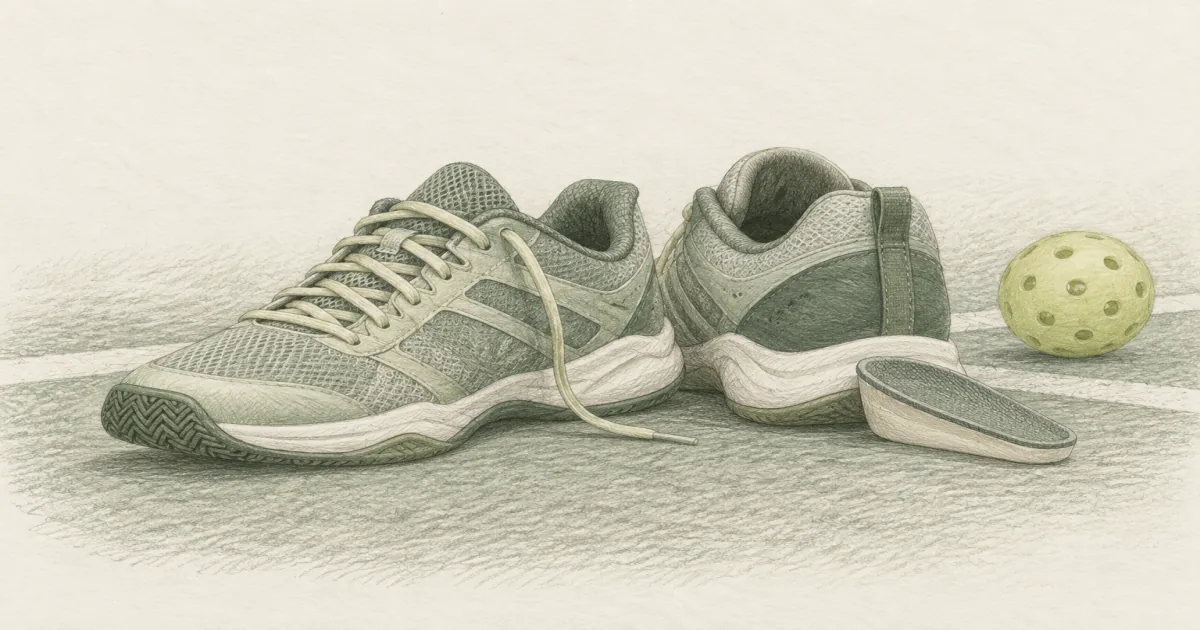
Best Pickleball Shoes for Achilles Tendonitis: Heel Cushion and Rearfoot Fit
Shoes
The best pickleball shoes for Achilles tendonitis cushion the heel, hold the rearfoot steady, and keep the heel raised. Here is what to check before you buy.
Our picks
An Achilles that flares up makes every stop feel risky. Shoes do not fix a tendon, but the right pair can lower how much strain the tendon takes on each step. The two things that matter most are how the heel lands and how well the rearfoot stays put inside the shoe.
Heel pain is one fit problem, and the pickleball shoe guides cover the other support and surface needs. If your pain is under the heel rather than at the back of the ankle, start with best pickleball shoes for heel pain instead. If the joint itself feels unstable, the ankle support picks are the closer match.
Compare against the full pickleball shoes roundup if you want the broad view, and check how pickleball shoes should fit before you order anything.
What a sore Achilles changes about shoe choice
Heel cushioning first. The tendon cares about how the landing feels. A cushioned sockliner and a padded collar take the sting out of a hard stop, and a shoe that needs no break-in saves you a week of pressure right where it hurts.
Rearfoot lock second. If your heel lifts or slides forward inside the shoe, the tendon takes a small tug on every push-off. A midfoot saddle or a well-shaped heel counter keeps the foot where you put it.
Heel-to-toe drop third. Drop is the height difference between the heel and the forefoot. A higher drop keeps the heel raised, which means the tendon stretches less on each step. Most court shoes sit lower than the guidance for Achilles trouble, so a heel cup or insert is often the practical way to get there.
Room for an insert fourth. If you wear an orthotic or a heel cup, the shoe needs a removable insole and enough width. A tight midfoot turns a helpful insert into a pressure point.
Skip running shoes for this job. They are built for forward motion, and pickleball asks you to stop and move sideways.
Quick comparison
Top pick: WILSON Pickle Pro Men's Pickleball Shoe
The WILSON Pickle Pro Men's Pickleball Shoe is the pick when you want comfort and stability without a stiff break-in period. OrthoLite cushioning and a padded collar give it a soft first step, and the Midfoot Saddle keeps the platform locked during side-to-side movement. That combination is what reduces the small repositioning your heel does inside a loose shoe.
The Duralast outsole is the durability half of the story. It grips on dusty outdoor acrylic and holds up at the pivot zones where most court shoes wear through first. The sandwich mesh upper breathes enough to keep the shoe from turning into a sauna by the third game.
It weighs a bit more than a light race-style court shoe, and that weight buys the cushioning and structure. The honest tradeoff is width. The toe box is roomy for a standard last, but if you already buy a wide or extra-wide court shoe, this is not the pair.
Who it is for: Men who want a cushioned, stable court shoe that feels broken in from day one.
Who should skip: Anyone who needs a published wide or extra-wide last.
Best for women and wide feet: Skechers Women's Viper Court Pro 2.0
The Skechers Women's Viper Court Pro 2.0 Pickleball Shoe is the pick when fit, not just cushioning, is the limiting factor. The wide width accommodates a custom orthotic and keeps the midfoot from feeling crushed, which matters if you are managing an Achilles problem with an insert or a heel cup. The removable Arch Fit insole means you are not stuck with the stock footbed.
The structured upper and slightly raised collar hold the foot in place, and the cushioned midsole lands soft on a stop. The Goodyear court outsole shows minimal wear after weeks of regular play, which puts it ahead of most shoes in this price band.
The one thing to know is the taper at the toes. If your forefoot is wide, order the wide width rather than relying on length to create room. The half-size-long fit is a feature for some players and a nuisance for others, so treat it as part of the sizing decision.
Who it is for: Women who want a cushioned court shoe with room for an orthotic or heel cup, and anyone who needs a wide fit.
Who should skip: Players with a wide forefoot who will not order the wide width, because the standard last narrows at the toes.
What to skip
Skip the flat court sneaker. A near-flat sole puts the Achilles under more stretch on every step. If the shoe has no published drop and no cushioning at the heel, keep looking.
Skip soft running shoes. Tall, soft foam feels good for five minutes and unstable on the first hard cut.
Skip sizing up for room. Extra length lets the heel slide, and a sliding heel is the exact motion you are trying to remove. Buy the right length and the right width.
Skip the worn-out pair. If the midsole has packed out or the pivot rubber is smooth, a new shoe is not optional. A collapsed platform changes how your ankle manages every stop.
Fit checks before you keep a pair
Try shoes on later in the day with your normal pickleball socks. Feet swell with heat and activity, and a pair that feels right in the morning can crowd the forefoot after an hour.
Lace the shoe and make a few controlled side steps. Your heel should stay down without painful lace pressure. The forefoot should have room for toes to spread, but your foot should not slide across the insole.
If you use a heel cup or an orthotic, put it in before you judge the fit. The insert changes how much volume you have at the back of the shoe, and the combination should not cause numbness or pressure points.
Check the collar on both sides. A padded collar should feel supportive, not sharp against the ankle bone.
When footwear is not the answer
A new shoe is not a treatment plan. Stop and get medical advice for sharp pain, swelling, pain that changes how you walk, or symptoms that get worse as you play. Reduce your court time while you work out what is going on rather than buying your way around it.
Once you are cleared to play, build back gradually. Sudden jumps in volume are the usual trigger for a flare, and the shoe only helps if the training load is sensible. Shoes reduce strain, they do not replace a rehab plan.
Bottom line
The best pickleball shoes for Achilles tendonitis cushion the heel, hold the rearfoot steady, and leave room for an insert. The WILSON Pickle Pro Men's Pickleball Shoe delivers that with a padded step-in, a midfoot saddle, and a durable court outsole. The Skechers Women's Viper Court Pro 2.0 is the better answer for a wide fit or a custom orthotic.
Replace shoes before the platform packs out, and if you add a heel cup, check the fit again with the insert in place. Then round out the rest of your setup with a bag that protects your paddles on the way to the court.
Frequently Asked Questions
Can I play pickleball with Achilles tendonitis?
Many players do, but it depends on what a clinician tells you and how the tendon is responding. The shoe job is to reduce strain at the back of the heel, not to treat the tendon. If you have sharp pain, swelling, or pain that changes how you walk, get it looked at before you keep playing on it.
What shoes do podiatrists recommend for pickleball?
The usual steer is toward a court shoe with a cushioned heel, a secure heel counter, and more heel-to-toe drop than a flat court sneaker. A removable insole helps if you use an orthotic. Ask your own clinician, because the right answer depends on the tendon and the foot.
How do I avoid an Achilles injury in pickleball?
Warm up before you play, build court time gradually, and replace shoes before the midsole packs out. Sudden jumps in play volume are the usual trigger. A cushioned heel and a secure rearfoot reduce the load the tendon takes on a hard plant.
Are Hoka or Brooks shoes good for Achilles tendonitis in pickleball?
Those are running shoes, and their tall soft foam is built for forward motion rather than a lateral stop. A court shoe with a flatter, wider base and proper court rubber gives you a more predictable landing. If you already love a running shoe for walking, keep it for walking.
What heel-to-toe drop is best for Achilles tendonitis?
A higher drop reduces how far the tendon stretches with each step. Guidance usually points to roughly 10 to 12mm rather than a flat or near-flat shoe. Most pickleball shoes sit lower than that, which is why a heel cup or a thin insert is often the practical fix.
Should I size up to fit a heel cup?
Usually no. Size up only if the shoe is genuinely tight through the toes. A heel cup raises the rearfoot and takes up volume at the back of the shoe, so confirm your heel still sits down without the laces pulling your foot forward. Try it before you wear the shoes outside.
How long do pickleball shoes last with Achilles pain?
Most players replace a shoe after one to two seasons of regular play, sooner on abrasive outdoor courts. Watch the pivot zones and the midsole. Once the foam packs out, the shoe stops cushioning the landing, which is the part your tendon relies on.
Do I need a brace with the shoe?
That is a question for a clinician, not a gear page. If you already use a heel cup or a brace, bring it when you try shoes. The combination should not cause numbness or pressure points, and it should not change how your heel sits in the shoe.